
Consumer sentiment remains fragile in 2026 and is redefining the way brands should engage with their audiences. This is reflected in the new report “Consumer Trends Report 2026” prepared by Warc, which analyzes the main factors that will influence purchasing decisions over the next year based on GWI surveys, own studies and case analysis.
The study indicates that financial pressure, job uncertainty and the geopolitical context are pushing consumers towards more conscious spending, aimed at small rewards. 50% of consumers consider economic stress to be the main factor in their dissatisfaction, while 45% of workers are concerned about the stability of their employment and 33% claim to be saving more or cutting expenses. In this context, consumption is oriented towards what the report calls “comfort consumption”: purchase decisions that provide emotional well-being at a low cost, such as everyday leisure, well-being or hobbies. “Spending is shifting towards small pleasures that bring joy”explains Stephanie Siew, Senior Research Executive at WARC, who adds that brands that manage to build relevant emotional connections will have an advantage in this environment.
AI redefines relationships and raises the demand for transparency
The report also points to a profound change in the relationship between people and technology. The use of artificial intelligence is no longer limited to utilitarian functions: it is beginning to cover social and emotional needs. One in ten consumers say they have had some type of relationship with a chatbot, and 62% of those who have said they would turn to AI over a friend for personal advice. This phenomenon is driving the development of new products, such as companion devices for seniors or smart toys designed to offer emotional interaction.
However, this progress coexists with a growing demand for control and transparency. 78% of consumers consider it “very or extremely important” that content generated with artificial intelligence is clearly identified, especially in sensitive areas such as health, politics or the legal field. Additionally, 85% say that knowing that a work has been created by a human makes it more valuable. This context forces brands to carefully manage the use of AI, balancing innovation with trust and clarity in communication.
Social restrictions and new routes of influence
The report also focuses on the role of social networks in shaping purchasing decisions, especially among younger generations. 64% of consumers consider social networks to be harmful to minors, and 51% support age verification on these platforms. This context is driving regulatory debates and possible restrictions that could significantly alter the usual communication channels.
For brands, this presents a strategic challenge: if access to young audiences is limited, touch points will need to be diversified. The report suggests exploring alternative channels such as private messaging applications or family streaming platforms, as well as developing your own environments that allow you to maintain control over the relationship with the consumer. It also highlights the importance of addressing parents as key decision-makers and reinforcing security and transparency as axes of trust.
The change in perception about “Made in China”
Another of the key vectors of the report is the evolution of the perception of Chinese products. Far from the historical association with low cost, 36% of consumers already recognize the innovation of technological applications and products from China, and one in four say they prefer to purchase electronic devices manufactured in this country, only behind the United States and Japan.
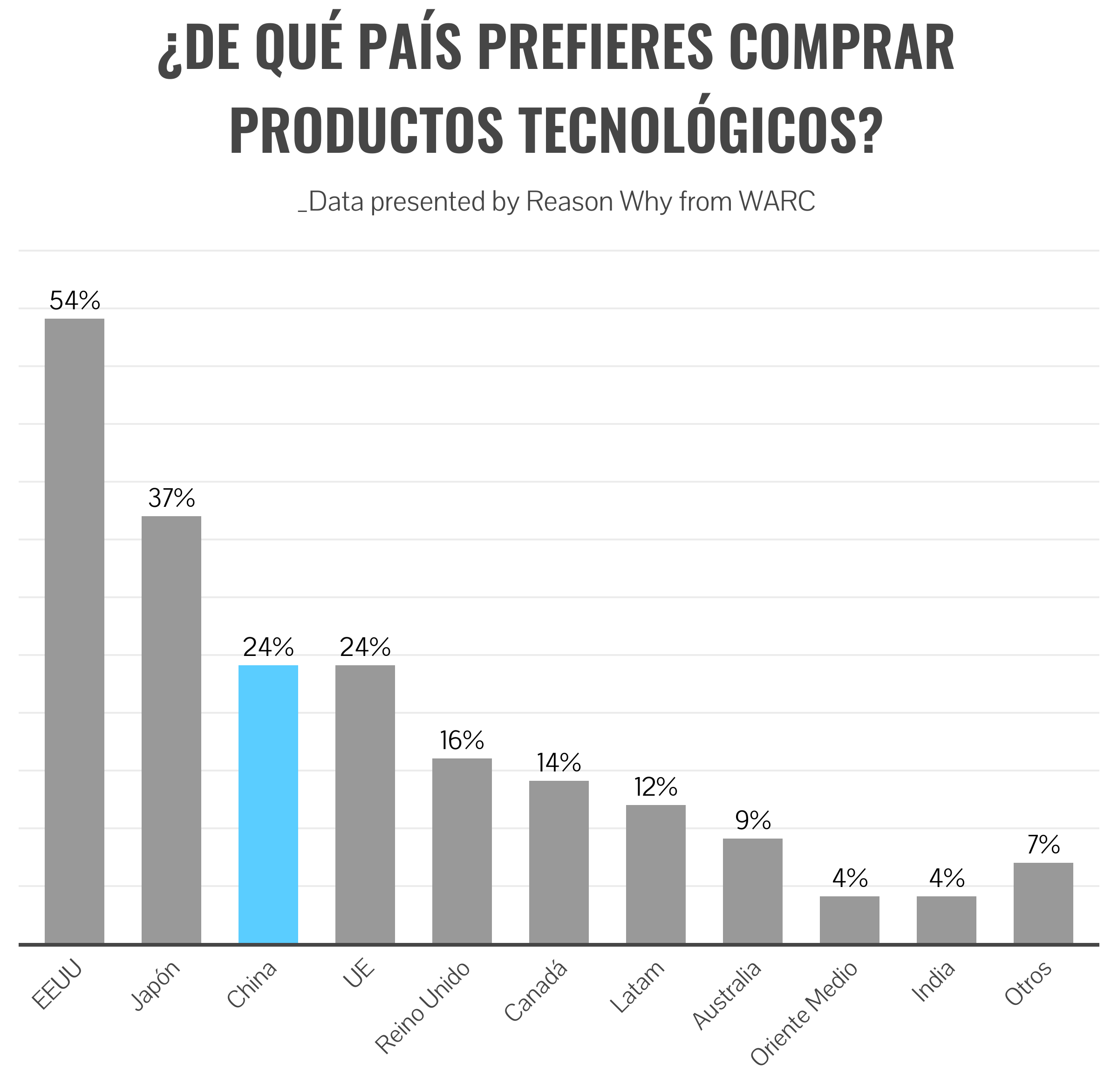
This change reflects a transformation in the strategy of Chinese companies, which are betting on brand development, technological innovation and emotional connection with the consumer. Although the price factor remains relevant, the report points to a growing ability to compete on value. In this context, Warc recommends brands invest in local knowledge, cultural understanding and building trust to sustain their positioning.
The Consumer Trends Report 2026 draws a scenario in which the tension between economic uncertainty and technological advance redefines the rules of marketing. On the one hand, consumers prioritize more rational decisions, but look for experiences that provide emotional well-being. On the other hand, artificial intelligence opens up new opportunities for connection, but also increases vigilance over authenticity and ethics.
In this balance, brands must be able to interpret what consumers buy, why they do it and under what emotional and social context. The ability to generate trust, offer tangible value and connect with real motivations will be decisive to compete in an increasingly demanding environment.