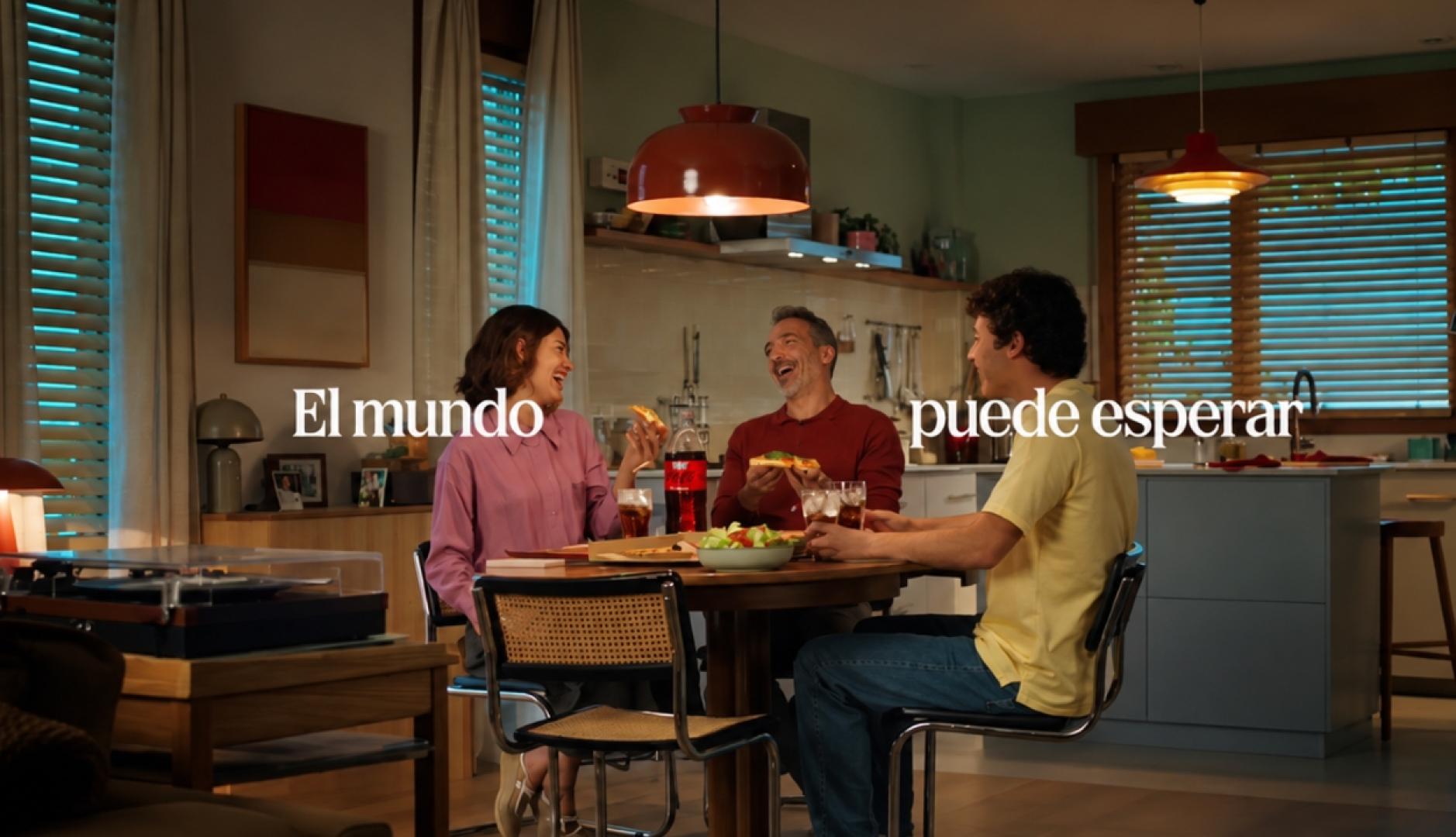
There are emails that can wait, meetings that may not be so important, and messages that do not need an immediate response. Coca-Cola starts from this everyday problem for its new global platform, “The World Will Wait”, with which it invites you to momentarily stop obligations and distractions to recover one of the brand’s historical territories: sharing a meal with other people.
The campaign focuses especially on the Z and Millennial generations, whom Coca-Cola places in front of a contradiction: they value personal connection and meetings with family and friends, but at the same time they live between demanding agendas and stimuli that permanently compete for their attention.
“Younger people feel overwhelmed by the pressures of daily life”
“In a world that constantly demands our attention, we have seen growing tension among our consumers, especially younger generations, who sincerely desire genuine connection but often feel overwhelmed by the pressures of daily life.”explained Arnab Roy, President of the multinational’s global category.
The proposal began its global rollout last August and is now landing in countries like Argentina, where the company also finds a cultural context especially linked to shared meals and after-meals. The idea is precisely to reverse priorities: what seems urgent can wait while you share a meal.
In Argentina, Coca-Cola expands the concept through #AFKMeals, an initiative that borrows the acronym “AFK” (“Away From Keyboard”), common in gamer culture, to give it a different meaning. Instead of using it as an apology for not being available, the brand proposes claiming it as a sign that attention is being paid to something happening off-screen.
Outdoor and digital advertising works on the same tension through phrases such as “The ‘urgent’ can wait, enjoying together can’t” or “No one ever said: ‘This pizza could have been an email’”, contrasting the language of productivity and work with situations of shared enjoyment.
“In Argentina, a country where the table and after-dinner talks are a sacred ritual, this proposal takes on an even more special meaning”says Victoria Castagnino, Senior Marketing Director for Coca-Cola Argentina and Uruguay. “When we come together, everything else can wait.”
When work is taken to the point of absurdity
The concept has taken on a different tone in Asia-Pacific. For its execution in Thailand, Ogilvy has taken work pressure to the realm of absurd humor, using deliberately extreme situations to question a culture marked by a high dedication to work.
The pieces “The Dentist” and “The Cable Guy” resort to surrealism to take to its ultimate consequences the idea of continuing working when, simply, perhaps it is time to stop.
The approach expands the territory of “The World Can Wait.” Compared to the more emotional tone of the global pieces, the Thai executions use excess and comedy to show the extent to which it has become normalized for work obligations to invade practically any moment of life.
The adaptation is especially significant in a campaign that is based on global tension but seeks to express itself through local cultural codes. In Argentina, the concept is based on the after-dinner meal and the digital language of being “AFK”; in Thailand, in an exaggerated representation of work culture.
In both cases, Coca-Cola recovers a territory deeply associated with its historical communication – meals, encounters and the connection between people – and confronts it with a contemporary tension: the growing difficulty of considering that being with someone can be, in itself, important enough to leave the rest for later.