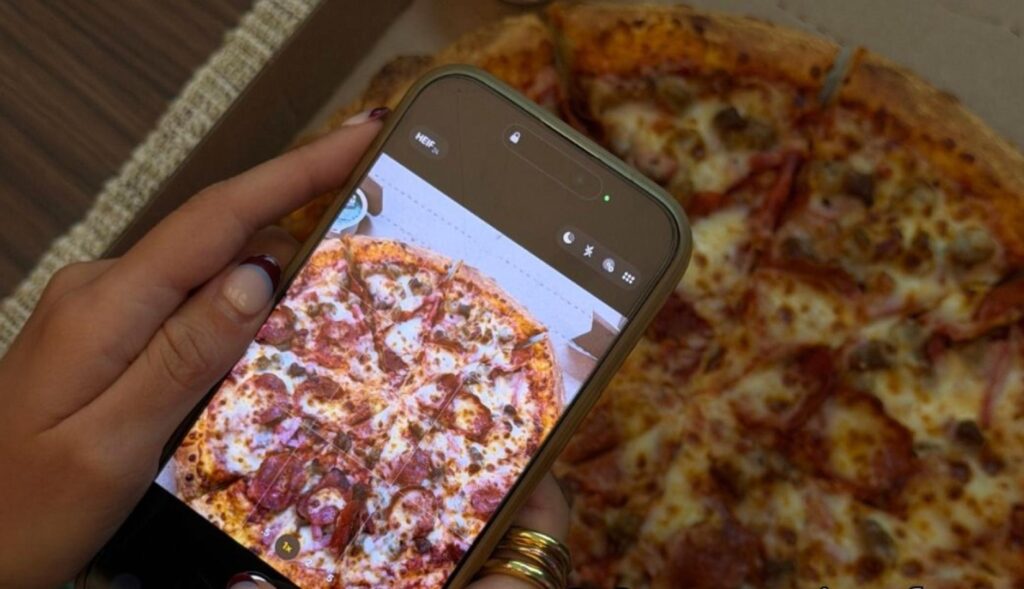
For years, the market has focused its efforts on the development of wireless headphones, presenting them as an evolution compared to their wired predecessors thanks to their greater freedom of movement, fewer accessories and an integrated user experience. However, a combination of nostalgia, aesthetics, functionality and the search for greater technological simplicity is bringing back wired headphones and opening opportunities for both brands in the category and other sectors.
The forces behind the return of wired headphones
The return of this accessory has its origins in multiple reasons. One of them is social change and cultural movements that, in the midst of digitalization and artificial intelligence, advocate a different relationship with technology. A certain feeling of technological saturation or exhaustion is leading many consumers, even those technological natives, to recover analog devices, objects or accessories or those with less connectivity to promote less dependence on the digital ecosystem.
There is broad global interest in technological objects from decades ago
Beyond headphones, the phenomenon is related to a broader, global interest in technological objects from previous decades. In this sense, compact or instant digital cameras, music players or retro telephones are regaining their appeal among consumers. Proof of this is the Boring Phone created by Heineken; Fnac’s commitment to dumbphones; or Repsol’s recovery of music in cassette format.
Consequently, the cable has ceased to be perceived exclusively as a technical limitation and has begun to acquire a symbolic value, a reflection of that desire for more authentic and physical connections, and even aesthetic ones. In this sense, compared to the discretion of wireless headphones, the wired component constitutes a recognizable element that helps people build a specific visual identity and express their individuality.
And an important part of the return of the cable has to do with fashion and popular culture, which for a few years has drawn on the aesthetics of the early 2000s. Thus, the appearance of traditional headphones in photographs of celebrities, video clips and social media content of artists such as Dua Lipa or Sabrina Carpenter has become frequent, which has contributed to modifying the perception of wired accessories.
However, there are also purely technical and functional reasons that are influencing the recovery of wired headphones. On the one hand, they do not need to be paired with the audio-emitting device via Bluetooth, a system that usually uses a codec to compress the data and which can affect the final sound quality. On the other hand, the cable reduces latency, that is, the time that exists between the action and the moment in which we receive the sound response, which can be beneficial for certain professional uses, such as music production or audiovisual editing.
Likewise, wired headphones do not require their own battery, they simply plug into the device. Among other things, this avoids interruptions related to wireless connection problems, ensures the availability of the sound experience, and reduces indirect costs associated with periodic electrical charging. Along these lines, durability and useful life are factors that can lead users to opt for wired headphones, although their resistance can also be compromised by wear of the connector or the cable itself.
All this has meant that consumer interest in wired headphones is beginning to be reflected in sales. According to data from the consulting firm Circana collected by Fast Company, the US market for wired headphones has recorded year-on-year growth of 15% between 2025 and 2026, reaching $354 million. After years of decline compared to Bluetooth devices, the category grew again in 2025 and appears to have maintained that evolution during the current fiscal year.
Sony and Bose launch their new wired headphones
The trend has also been driven by the commercial interests of technology companies, which have responded with products that recover traditional characteristics without giving up contemporary features. This is the case, for example, of Sony, which at the beginning of November presented the MDR-3R, a reinterpretation of the headphones that accompanied the first Walkman, launched in 1979.
The new model retains recognizable elements of that design, such as the metal headband and the colored pads, which are now customizable; but it includes a microphone for calls, a control integrated into the cable and a USB-C connection, which solves the barriers associated with the disappearance of the jack connections of the different devices. Additionally, Sony has responded to sustainability concerns by using recycled plastic in its production and plastic-free packaging for marketing.
“The MDR-3 helped create a new way to enjoy music freely and anywhere“, explains the brand in a statement. ““Almost half a century later, as listening habits have diversified, the value of wired headphones is being rediscovered for their simplicity, ease of use, and the freedom they offer from not having to charge or pair them.”.
In this case, Sony takes advantage of its history and legitimacy to recover a design associated with a decisive stage in music and technology and presents it to a new generation of consumers. To this end, it has also developed a special edition linked to the series “Stranger Things”, taking advantage of the eighties setting of the series to reinforce the connection between technology, entertainment and nostalgia.
Sony takes advantage of its legitimacy to recover a design associated with a decisive stage in music
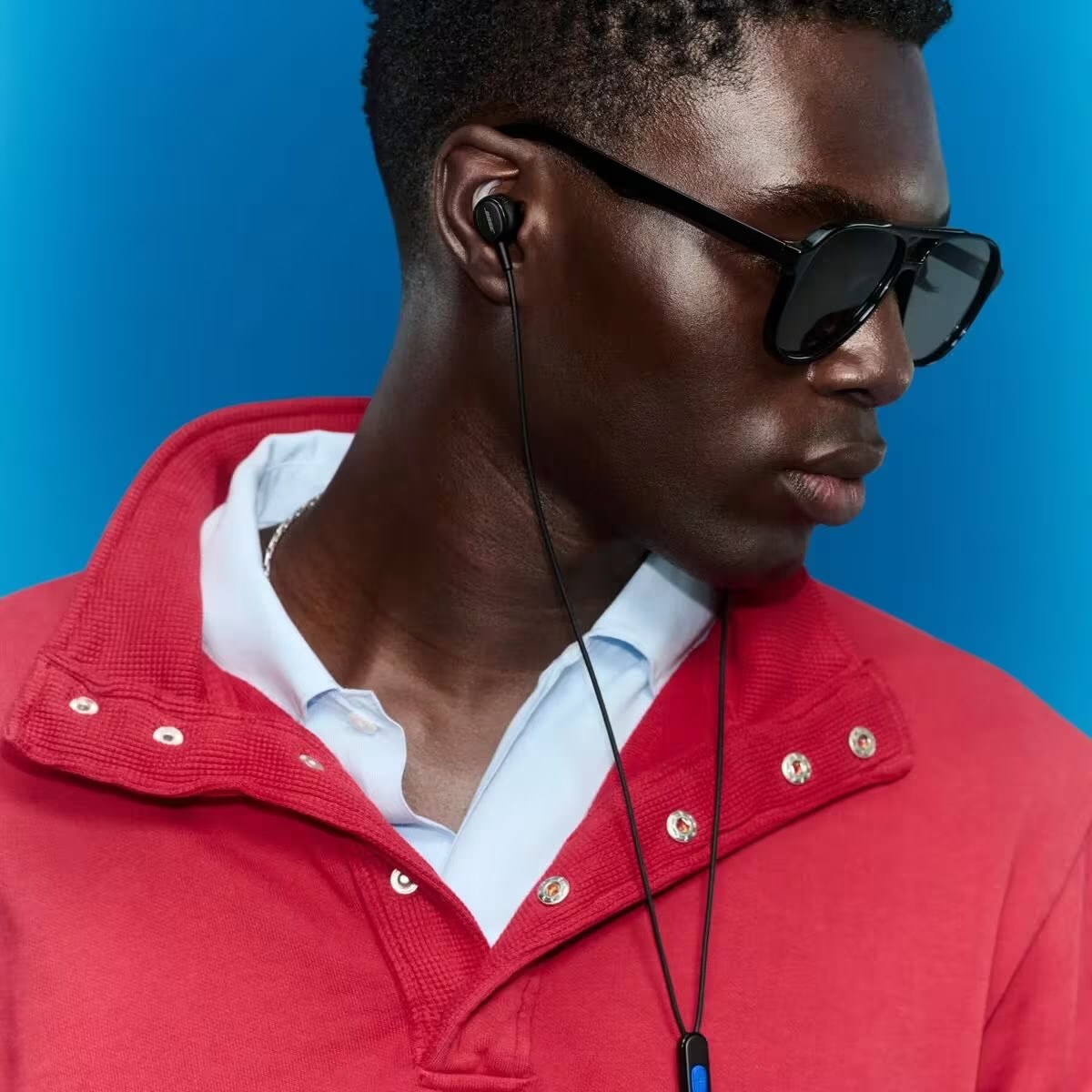
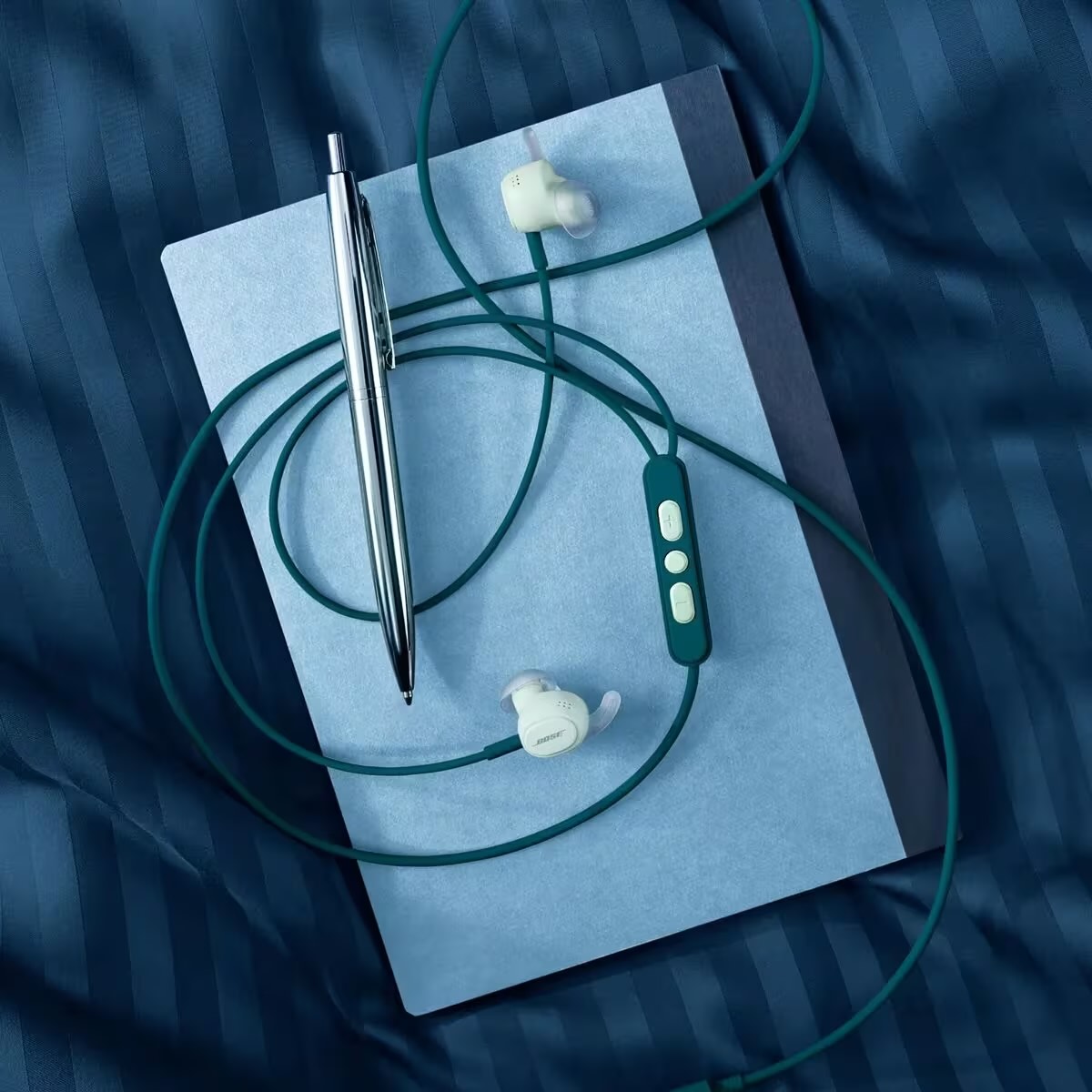
Bose, for its part, launched wired in-ear headphones in September, combining wired connection via USB-C with noise cancellation technology. They also have control integrated into the cable thanks to physical buttons that offer tactile feedback to manage volume, playback, calls and switching between the different noise cancellation modes; as well as a dedicated microphone, located on the back of the control, to capture voice.
“Wired headphones are experiencing a cultural renaissance; When we decided to bring them back, we knew we had to make them even better than before“said Raza Haider, President of Bose Premium Consumer Audio, in a statement. “Technology has come a long way since our last wired headphones, allowing us to bring our latest innovations to this category and setting a new standard for what wired headphones can be.”.


Insights for brands
Although wired headphones still represent a minority part of the market due to the penetration gained by wireless ones, their recovery shows that technological evolution does not always follow a linear trajectory in consumer preferences. Products can lose functional relevance during a stage and regain it later thanks to cultural changes, new needs or a reinterpretation of their attributes.
The return of this accessory leaves some interesting reflections for the marketing industry. On the one hand, innovation does not necessarily consist of incorporating new functionalities or developing new tools; It can also arise from recovering attributes that the market had relegated and presenting them under a different perspective. On the other hand, the ability of cultural trends to modify the meaning of a product, since the same attribute can go from being considered obsolete to being attractive when the context or consumers change.
And it also reflects the importance of brand equity value. Companies like Sony have historical products, visual codes and cultural associations that can regain relevance without resorting solely to technological innovation. The history and trajectory of a brand are a strategic asset of reference to navigate the market.
The recovery of wired headphones does not mean the disappearance of wireless headphones or a massive return to physical and analog connections, but it is one more example of the diversification of preferences among consumers and the business opportunities that are hidden in the understanding of social and cultural movements.