The global consumer has changed. Purchase decisions are no longer taken by desire or convenience, but also by necessity, economic caution and perceived impact. This is reflected in the “Retail Report 2025” report, prepared by Global Web Index (GWI), which draws a transformation panorama for retail trade internationally. The study analyzes the attitudes of consumption of people between 16 and 64 years connected to the Internet in more than 40 countries, and does so from its continuous global research, its monthly Zeitgeist studies and the annual Moments panel, with more than 6,000 Americans.
In this context, persistent inflation, high prices and economic concerns are molding a consumer that seeks more and more value, clarity and utility in their purchases. Thus, the study makes it clear that retailers can no longer limit products. They must offer omnichannel experiences, listen to the client, anticipate with relevant campaigns and assume that the customization and use of artificial intelligence are not a competitive advantage, but a minimal market requirement.
A more demanding and less impulsive consumer
One of the main conclusions of the GWI study is the global decline in consumer confidence. Inflation remains present and, as a consequence, caution when spending has increased. Buyers analyze more each purchase, compare prices more frequently and prioritize offers, discounts and added services. In parallel, 26% of consumers claim to want personalized products, and 42% expect brands to listen to their feedback.
Consumers continue to demand speed, convenience and relevance, but with more pressure on prices
Expectations have not fallen with purchasing power, on the contrary: consumers continue to demand speed, convenience and relevance, but now with more pressure on prices and perceived utility. Brands that do not respond to that equation are at risk of losing market share even if their products are competitive.
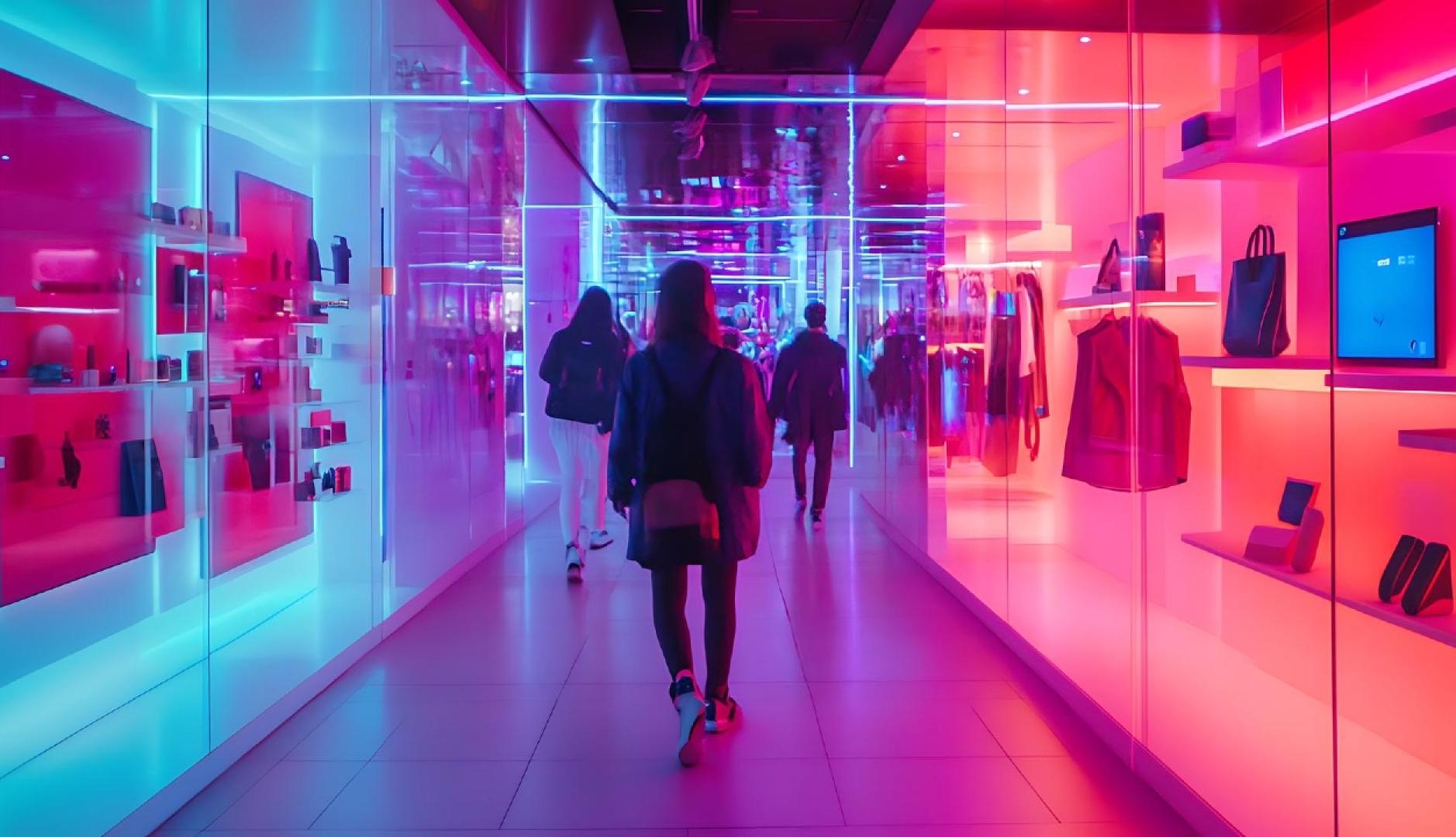
The physical store does not disappear, it transforms
Despite the rise of electronic commerce, the physical store maintains its appeal. According to GWI, 40% of the Z consumers prefer to buy in store, a figure higher than that of millennials. This data disassembles the belief that the physical channel only interests major generations.
The key is in experience: 65% of consumers especially value the availability of products; 57% offers in store; And 41% want to check the product quality In situ. The brands that are committed to more visual, interactive and connected stores with the digital channel – for example, by means of QR codes, scanning and automated payment or connection with the brand apps – will have an advantage.
Online grows, but it also diversifies
Although 58% of consumers prefer to buy online, the reasons vary according to the category. In food and home, for example, Europe and the United States have led growth in online purchases with an increase greater than 60% since 2018. In Latin America, the increase has exceeded 100% in home products and 70% in food.
Another expanding category is that of alcoholic beverages: alcohol online purchases have grown 122% in the Middle East and Africa, 60% in America and 23% in Europe since 2018. However, many brands still depend on point of sale (bars, restaurants, supermarkets …) and do not explore the potential of direct consumer data, which limits its ability to anticipate preferences.
Social Networks, the new consumption meeting point
Social platforms are not just a discovery channel. They have consolidated as an active part of the purchase process. In key moments such as the Christmas campaign, 33% of US consumers use social networks to find the best offers and 32% to inspire gift ideas. In addition, 25% are looking for entertainment content related to the season and another 25% recipes for those dates.
This phenomenon forces brands to design native strategies for each channel, with visible promotions, emotional messages and adapted creativity. Brands that offer inspiration, useful tips and real value are more likely to generate loyalty than those that are limited to selling.
Sustainability, but not at any price
One of the most significant turns of the report is the fall in interest in the ecological. At the global level, the proportion of consumers who claim that helping the environment is important. In Europe, for example, there has been a 17% drop since 2021 in this statement.
Consumers are not willing to pay more for sustainability in times of economic pressure
This does not imply that consumers no longer value sustainability, but they are not willing to pay more for it in times of economic pressure. The recommendation of the study is clear: brands must continue to communicate their environmental commitment, but integrating sustainability in affordable and durable products, with practical arguments rather than aspirational.
Artificial Intelligence: from promise to practice
AI has become a key tool in retail. Not only is it used to automate processes, but to build personalized campaigns, recommend behavior -based products and launch exclusive promotions that reinforce fidelity.
The report indicates that 39% of consumers would be more willing to buy if custom coupons or discounts are offered. Also, 14% value that the product includes exclusive content or services. Artificial intelligence allows to offer this level of customization, but requires that brands combine real consumer data with well -designed algorithms.
Examples proposed by GWi include from you may Custom in Tiktok and Instagram to capsule collections adapted to the tastes and budget of each user, with dynamic retargeting campaigns based on the answers.
The main conclusion of the report is that the winners of the new retail will not be the ones who have more points of sale or those who launch more products, but those who understand their customers better. That implies investing in data, but also in creativity, empathy and operational flexibility.
The 2025 client does not move by impulse, but by relevant experiences. It does not distinguish between physical and digital, but between comfortable or uncomfortable. It does not trust promises, but in social evidence. And he is not willing to pay more for a cause if that implies giving up the value.
This implies a new era of strategic responsibility in which the brands they hear, act intelligence and connect with authenticity will be those that lead the next consumption cycle.