There are products whose presentation requires something more than a studio photograph or an advertising campaign. Especially when they belong to categories as recognizable and disputed as fried chicken, where the crunchiness of the batter, the spiciness of a sauce or the juiciness of a piece can hardly be transmitted in all its dimension through a screen.
Foster’s Hollywood has chosen to bring its latest launch straight to the table, hosting a fried chicken tasting to introduce its new Nashville Chicken Selection range. The initiative is part of an increasingly visible trend in brand communication, which involves designing in-person experiences that allow you to learn about the product, relate to it and generate conversation beyond conventional advertising formats.
The proposal, organized and managed by Havas PR, brought together gastronomy, entertainment and content creators around a dinner in which chicken was the protagonist. The influencer Iban García served as master of ceremonies, going around the tables with questions and games that involved the attendees, while Eduardo Fernández Sampedro, Chef of Innovation and Product Development at Foster’s Hollywood, presented the different preparations and explained the work developed for their launch.
The chef also shared part of the gastronomic research process behind the new range, including a trip to Tennessee, the American territory from which the culinary tradition that inspires the recipe comes. “We have tried to make fried chicken as faithful as possible to the original recipe from the United States. Always in gastronomic fields, when people talk about fried chicken, fried chicken from Nashville, from Tennessee comes out. We went to Tennessee to see how they made it”explained Fernández Sampedro during the presentation.
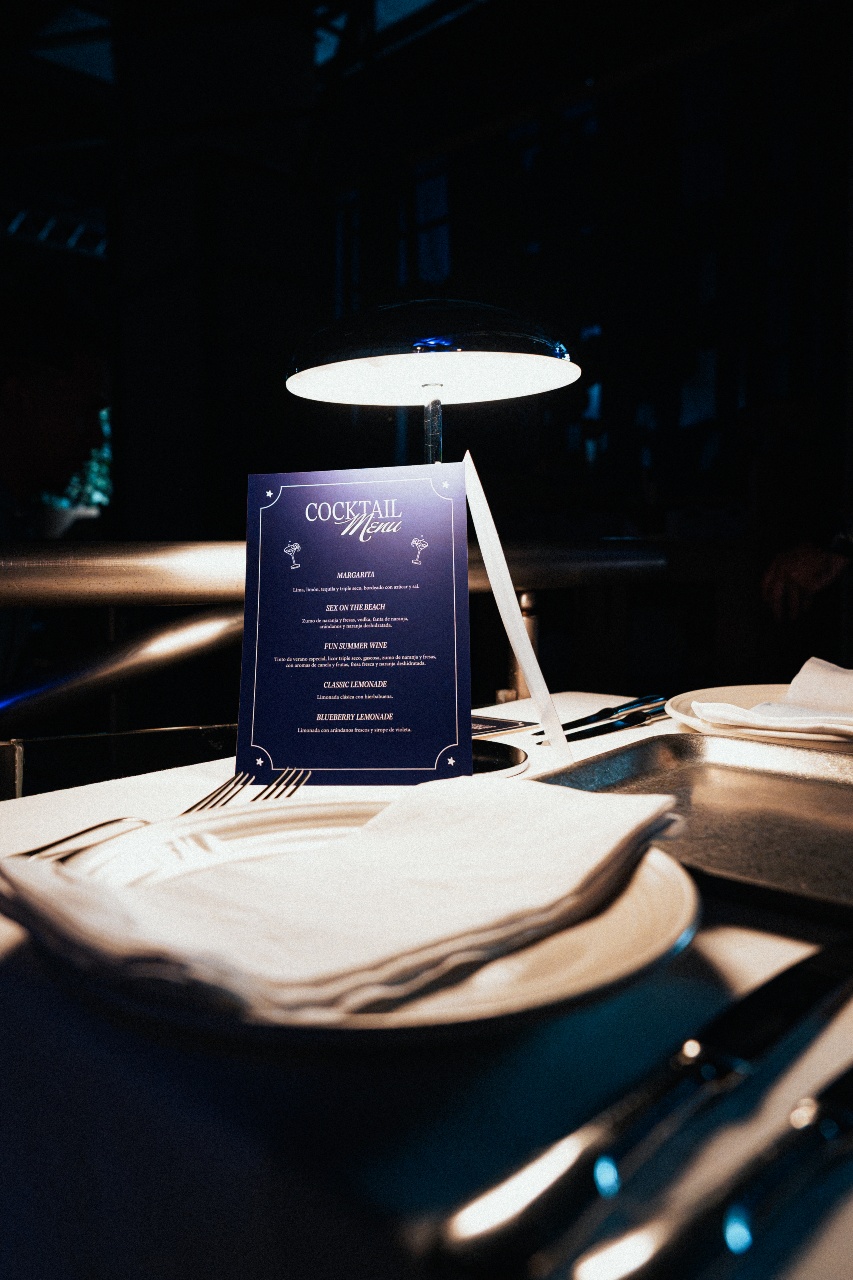
The music at the meeting was provided by the content creator Virtual Diva and the experience was completed with a selection of cocktails designed to accompany the tasting.
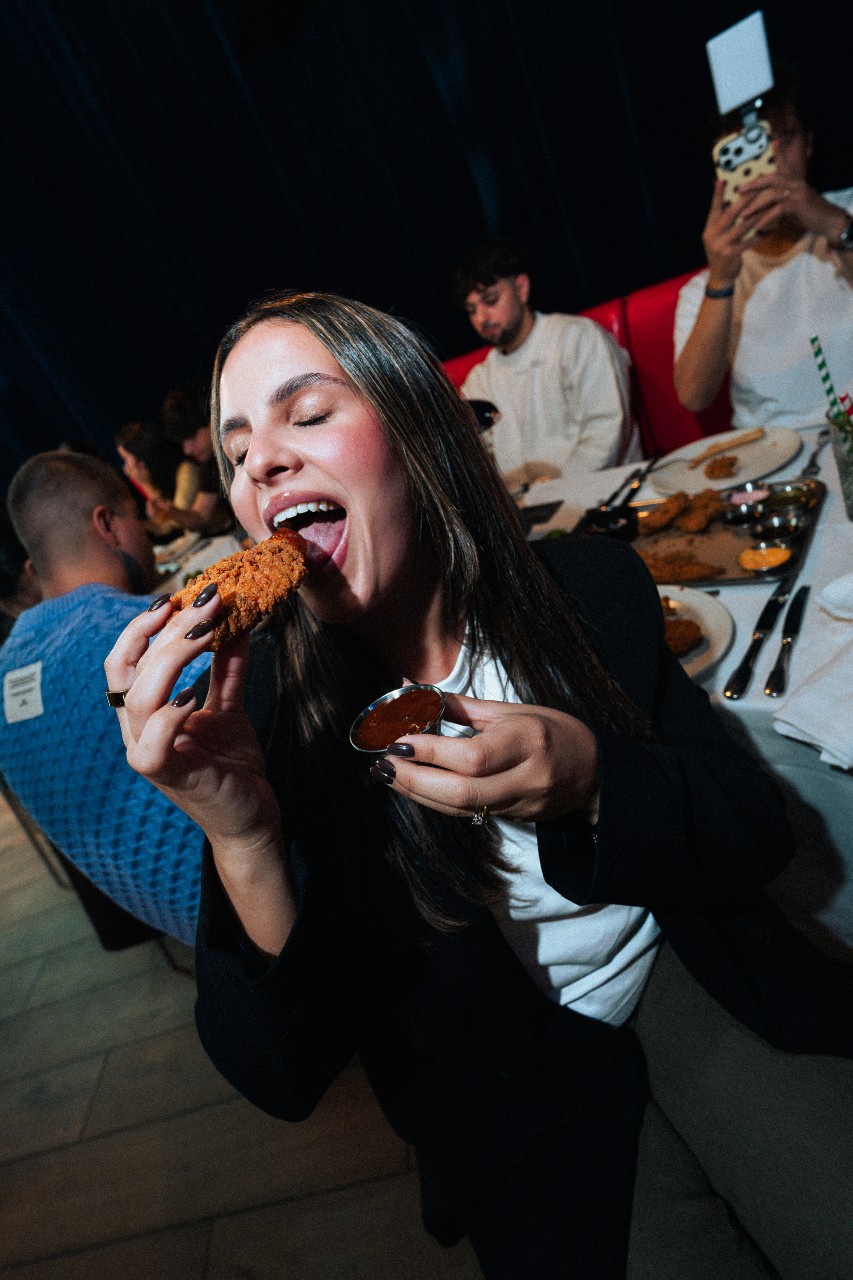

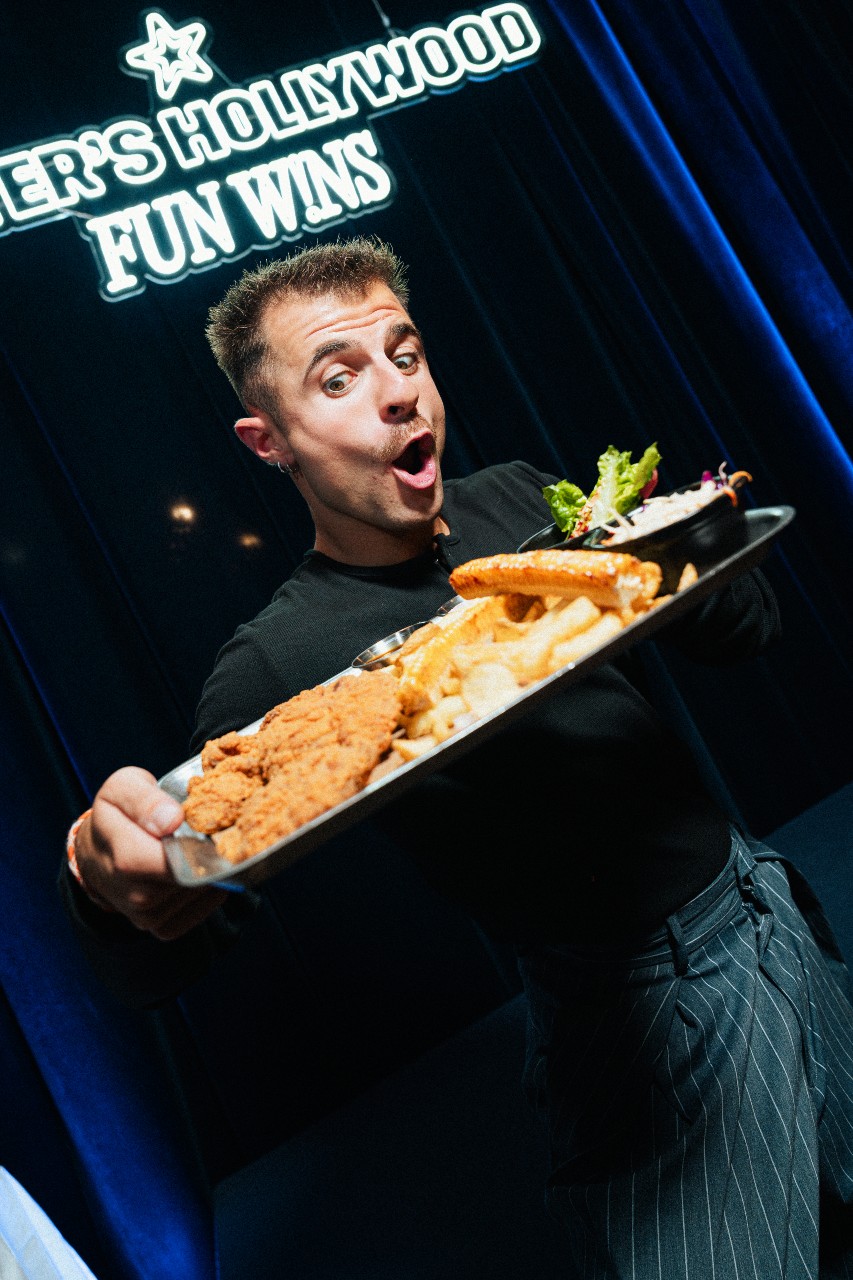
The result was a presentation that, instead of limiting itself to communicating the characteristics of the product, allowed it to be discovered through a collective experience, with attendees participating in the dynamics of the event while learning about the different proposals on the menu.
When a product launch becomes content
The organization of this tasting responds to a trend that has become relevant in experiential marketing, and that is that the presentation of a product can also function as a brand experience with the capacity to generate content and conversation. Given the saturation of stimuli in the digital environment, brands are looking for opportunities to establish more direct relationships with their audiences and offer physical experiences that deserve to be shared. The event thus becomes an extension of the communication strategy.
The presence of creators in this type of meeting allows us to connect the in-person experience with the codes of the networks.
In this case, Foster’s Hollywood has resorted to a combination of profiles with differentiated functions. Iban García provided the participatory and entertainment component; Eduardo Fernández Sampedro provided the gastronomic knowledge and story about the development of the product, and Virtual Diva completed the musical setting. This distribution of roles allowed the experience to alternate information about the product, interaction with attendees and moments of entertainment, preventing the presentation from being reduced to a succession of corporate speeches.
The presence of content creators in this type of meeting allows you to connect the in-person experience with the codes of social platforms. Their participation does not in itself guarantee a certain reach, but it does integrate digital entertainment in a format that is based on a physical experience.
It also allowed us to highlight an aspect that is difficult to convey through traditional advertising, such as the process of developing a recipe. The chef’s explanation of his trip to Tennessee introduced a dimension of research and culinary inspiration that reinforces the connection between the new range and American gastronomic culture, one of the historical territories of Foster’s Hollywood.
A category in which it is no longer enough to sell fried chicken
Foster’s Hollywood’s bet must also be interpreted in the competitive context of organized catering. Fried chicken has established itself as a category with its own identity, driven by specialized chains that compete through recipes, consumption formats, prices and brand positioning.
KFC, one of the leading operators, reached 300 restaurants in Spain in June 2026 and announced an investment of 100 million euros to open another 100 establishments by 2029. The company has doubled its Iberian turnover in four years, up to 500 million euros, according to data communicated by the chain itself.
Added to this expansion is that of Popeyes, which arrived in Spain in 2019 and has built its differentiation around the gastronomic tradition of Louisiana, marinated chicken and Cajun spices. Its growth has helped intensify competition in a category that for decades was especially associated with KFC.
For Foster’s Hollywood, the challenge is different. The brand does not operate as a chain specializing exclusively in fried chicken, but as an American-inspired restaurant with a broader offering. Therefore, their opportunity does not necessarily consist of competing with KFC or Popeyes for the same moment of consumption. Hence, it seeks to present fried chicken as a gastronomic proposal to share, integrated into a more complete restaurant experience.
“Not just any garnish would do, not a fried potato or a salad with lettuce and tomato”
This differentiation was also present in the chef’s explanations during the tasting. “Not just any garnish would do. A fried potato, which everyone likes, or a salad with lettuce and tomato would not do. We had to give it a lot of thought and we had to try a lot of things.”said Fernández Sampedro, who explained how the choice of accompaniments responds to the need to balance the texture and fatty sensation of fried chicken. His intention, he added, was to move away from a proposal focused exclusively on chicken and build an experience designed to be shared.
There, both the composition of Nashville Chicken Selection and the organization of a tasting make sense. Compared to communication focused exclusively on the price, the size of the portions or the flavor of a recipe, Foster’s Hollywood emphasizes the variety of pieces, the possible combinations and the social dimension of the food.
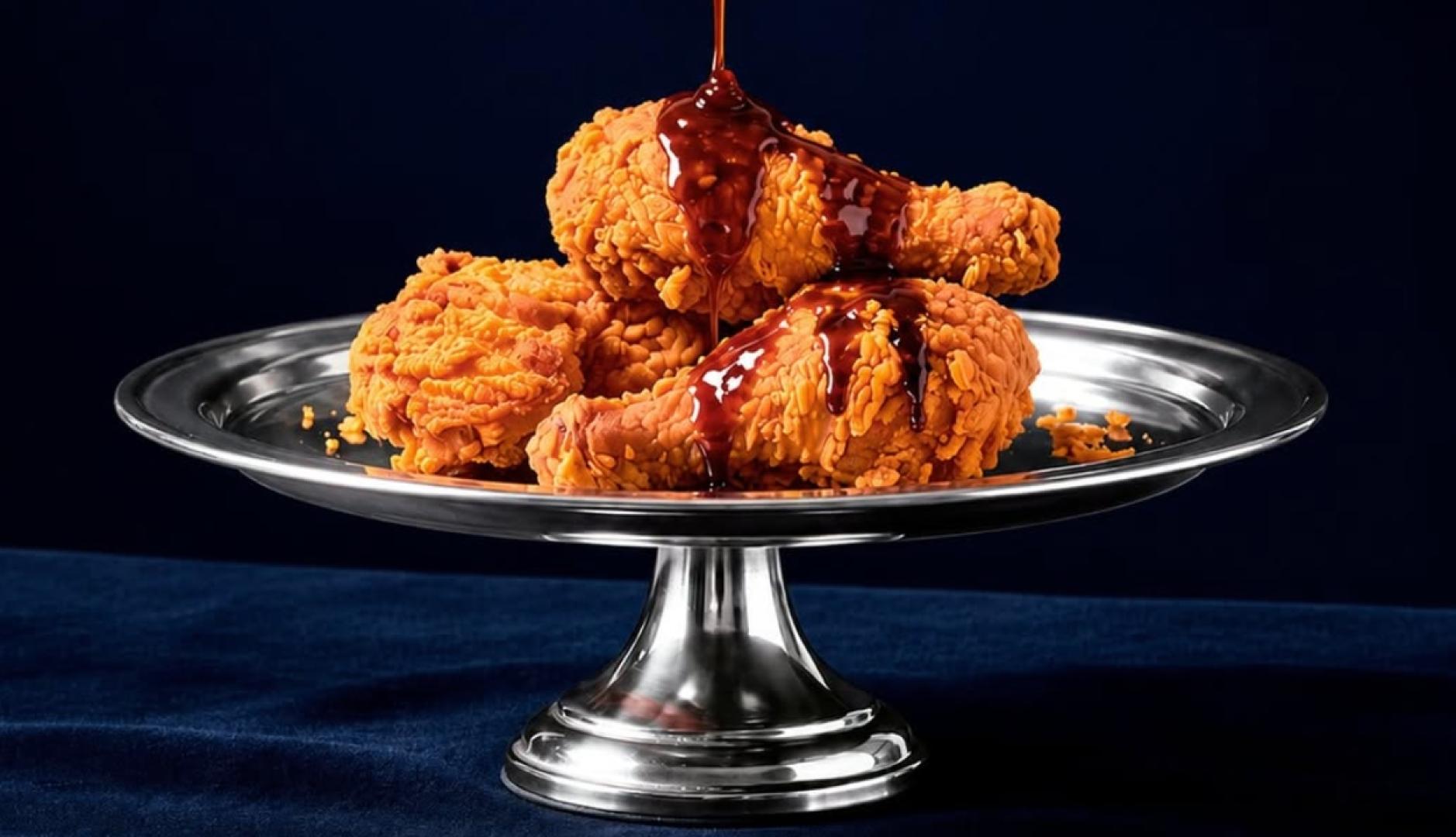
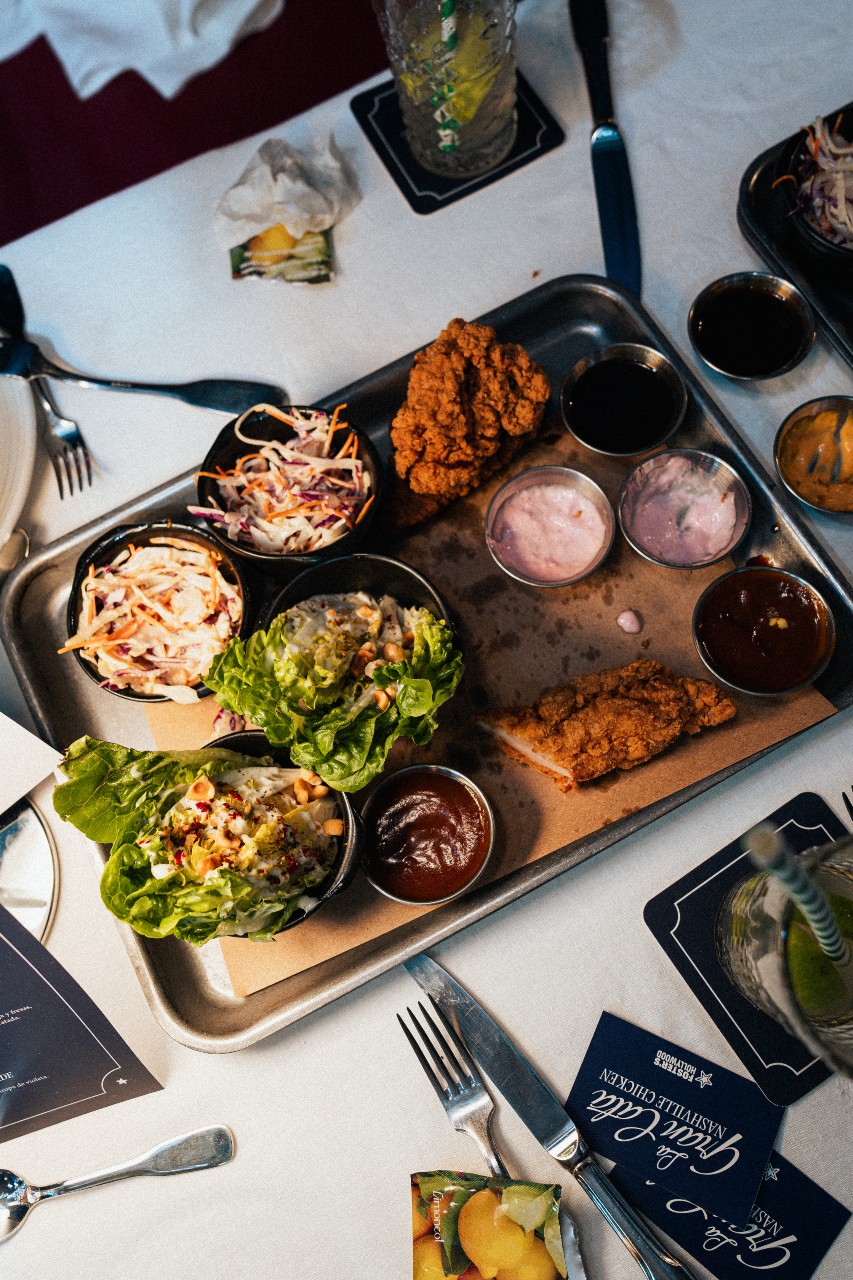
Nashville Chicken Selection takes as its reference Nashville fried chicken, a specialty associated with Tennessee and recognizable for its crispy batter and characteristic spicy profile. Foster’s Hollywood had already incorporated this inspiration into its menu in 2025, but now it is expanding the proposal with a tray designed to share that brings together seven pieces of chicken – breast tenders, thighs and wings -, four garnishes and different sauces.
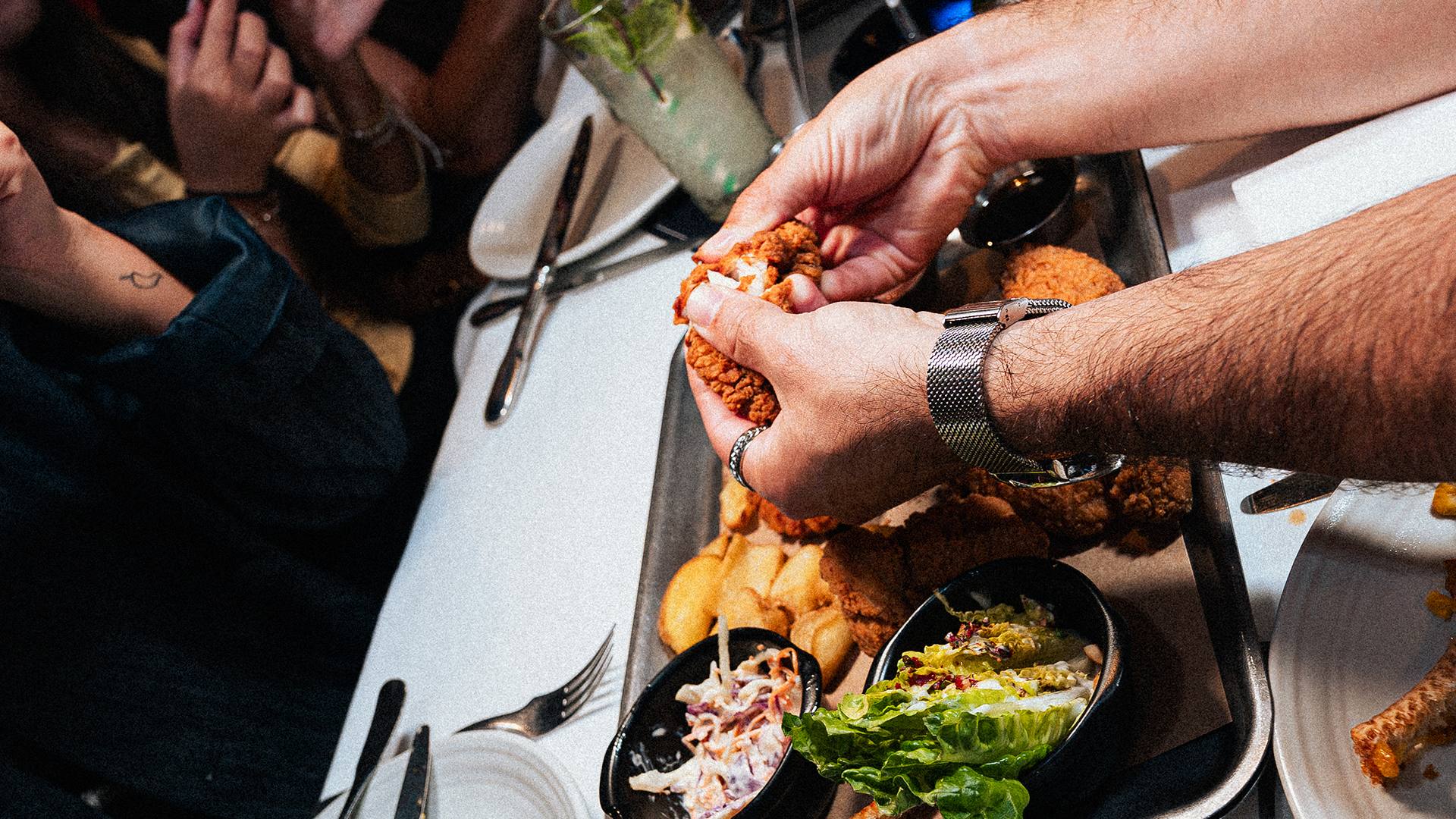
During the tasting, attendees were able to try the different preparations and learn about the particularities of the recipes from the chef responsible for their development. The format allowed us to appreciate how the experience of the same product changes when combining different pieces, accompaniments and sauces.
The brand has also transferred this proposal to the public through experiences marketed through Fever. Among them, a session of The Great Nashville Chicken Tasting with limited entries and an offer that combined chicken, side dishes, sauces and drinks.
The gastronomic experience is part of a broader launch, accompanied by an advertising campaign developed by McCann under the premise “Don’t give up what you like, if you can do it better.”
Creativity starts from an observation about the evolution of personal preferences: there are plans that we continue to enjoy, although over time our willingness to accept certain discomforts changes. Sleeping in an airport, sharing a tent or staying in a hostel may no longer be attractive without losing interest in traveling or attending festivals.
Foster’s Hollywood transfers that idea to fried chicken with the message “You’re not for just any fried chicken anymore,” which presents the new range as an evolution of a well-known product towards a more elaborate proposal.
The campaign is integrated into “Fun Wins”, the brand platform that claims enjoyment as a central element of its positioning.
The tasting has allowed us to take this approach to the physical field. If the campaign maintains that consumers can continue enjoying their favorite plans in a different way, the event offers a practical demonstration of that promise with a dinner around fried chicken presented with the codes of a gastronomic tasting.
For Foster’s Hollywood, this strategy allows it to simultaneously reinforce several attributes: its connection with American gastronomy, its capacity for culinary innovation and its positioning as a meeting space.