The confidence of managers in the growth prospects of their companies remains firm despite the persistent geopolitical instability and the context of economic complexity. 42% of global executives maintain very or extremely high confidence in what the next twelve months hold, a figure that grows slightly compared to eight months ago. For their part, 33% say their confidence has increased, and 26% say it has decreased.
This is the panorama of moderate optimism offered by PwC in its “CEO Survey Mid-Year Snapshot” analysis, with which it updates the results of its 29th global survey of CEOs. On this occasion, the perceptions of 351 executive directors from 59 countries and 27 sectors have been considered, in a survey carried out between the months of May and June.
The data reveals that general confidence in growth has remained stable over the last six to eight months, even rebounding compared to those recorded at the end of 2025; and all this despite the fact that managers report significant operational challenges derived from the global crises. Confidence levels improve when the focus is on the next three years, rising from 46% to 51%.
Currently, companies’ energy and non-energy costs are the main concern of CEOs: 70% of those surveyed claim that they increased due to market turbulence. Consequently, they face a more demanding management environment; Proof of this is that 27% report that pricing decisions have become more complex, or that a similar percentage thinks the same regarding supply chain management.
The adoption of artificial intelligence
The adoption of artificial intelligence and the pressure to demonstrate its results is another of the points that star in the business conversation, but August data from PwC does not show drastic changes compared to the end of 2025: around a third of CEOs report cost reductions (18%), revenue increases (4%) or both (9%).
39% now report positive results from AI
Additionally, 51% of CEOs surveyed said they have experienced a change in the business impact of AI over the past eight months, moving between positive impact, no change, or negative impact. Specifically, 39% now report positive results from AI.
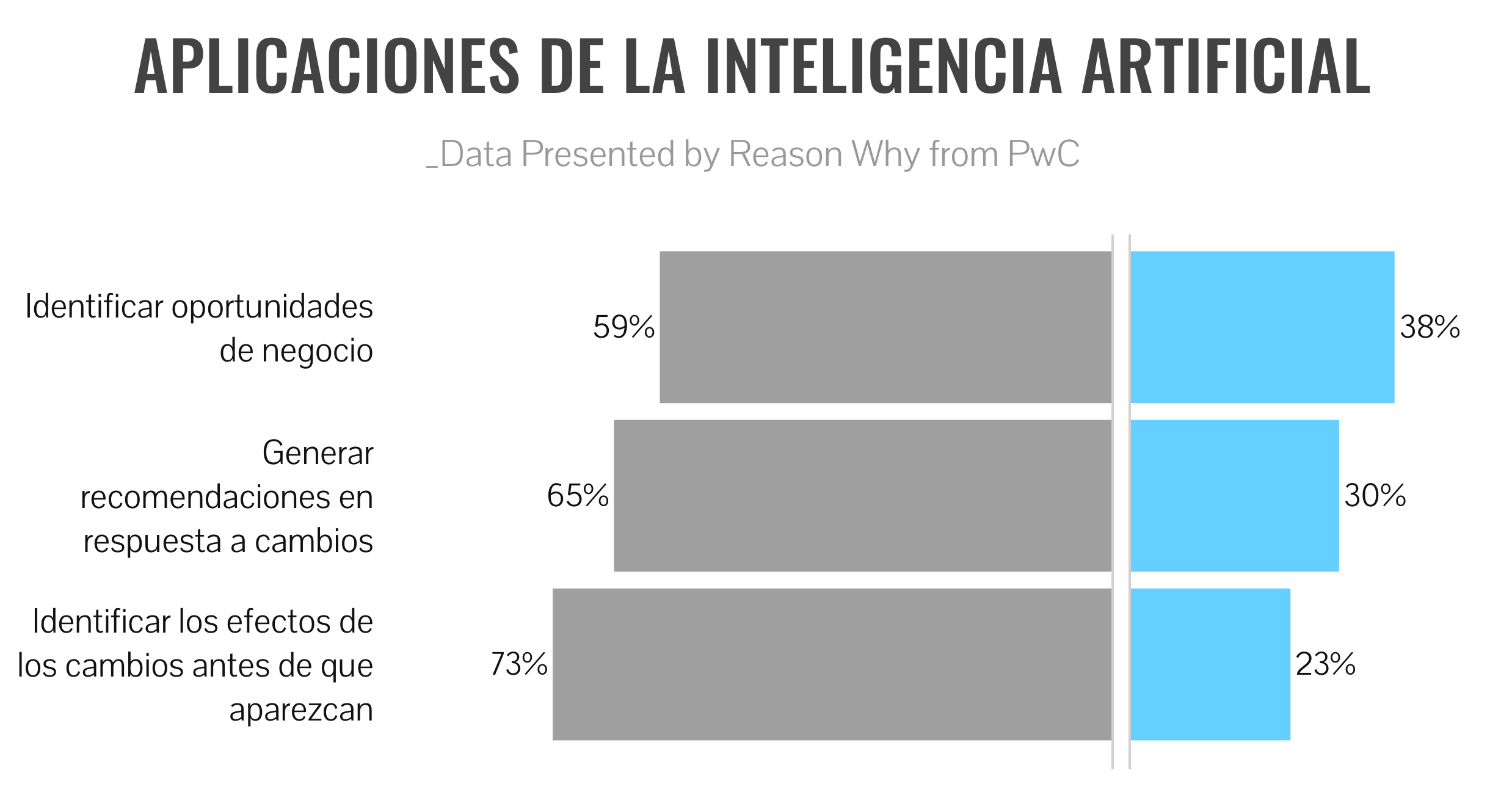
PwC has also analyzed the ways in which companies use AI to strengthen their resilience. Identifying new business opportunities associated with new market conditions is what 38% of those surveyed choose. They point out that it is the one they have used the most since January to identify changes in customer demand, opportunities to adapt products or services, or entry into geographic markets where new needs have emerged.
The least utilized application of AI is identifying potential supply chain impacts. Only 23% of managers say their company has used AI to recognize changes in supplier exposure, raw material prices or demand signals before they occur.
Technoresilience
According to the consultancy, this is where AI could become more strategically important, since it could help leaders detect early changes in inventories, input costs, supplier performance or customer behavior before these pressures are reflected in margins or unmet business objectives.
In this sense, PwC affirms that companies that combine the power of AI with resilience and human judgment will be better positioned to anticipate changes, test more quickly and coordinate responses across the organization. In contrast, companies that view AI as a set of isolated tools may have a harder time turning information into concrete actions.
Specifically, he talks about “techno-resilience”, which he defines as the combination of long-term vision, resilience and a solid AI foundation. It notes that companies with this quality are 74% more likely to report success in AI and 66% more likely to express high confidence in future revenue growth than companies with low techno-resilience.