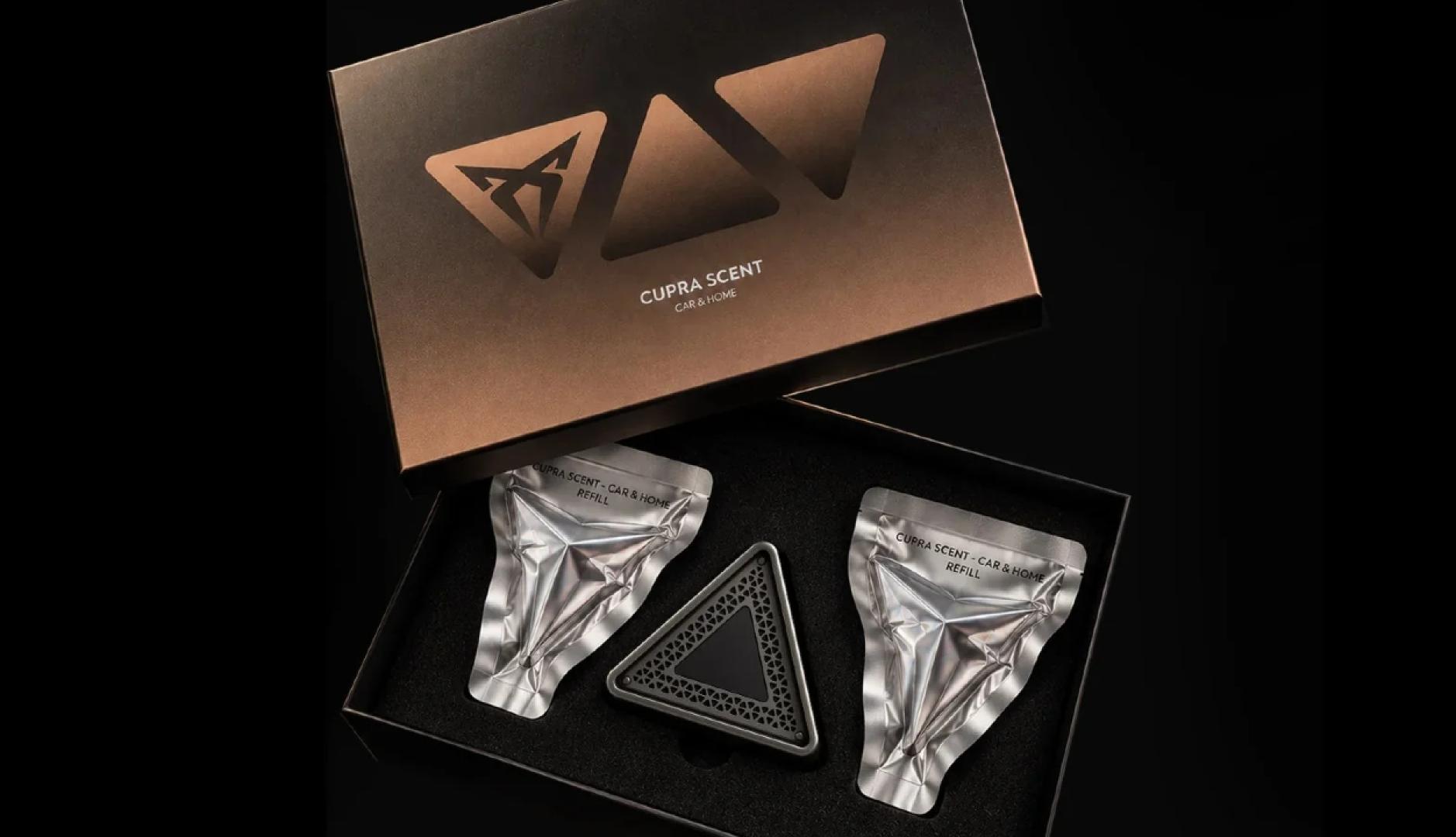
What does a car brand smell like? Cupra has sought its own response and has materialized it in Cupra Scent, its first signature fragrance, created to transfer the identity that it has built around design and performance to another sensory territory: smell.
The proposal has been developed together with Lucta and the Ernesto Ventós Foundation and is based on a combination of bergamot and ginger to which a less common ingredient in perfumery is incorporated: jalapeño. The composition is completed with different citrus, floral, smoky and woody notes to create what Cupra itself defines as “the aroma of performance.”
Rather than presenting it solely as a car air freshener, the brand presents the launch as an extension of its identity towards olfactory marketing, seeking that the recognition of Cupra can also be built through its own aroma.
The touch of jalapeño is a nod to his first Cupra City Garage in Mexico
Bergamot, ginger and a touch of jalapeño
The composition begins with bergamot and lemon, responsible for the citrus opening, and continues with ginger and jalapeño, which introduce the spicy component. The choice of this last ingredient also incorporates a reference to the company’s recent history: as Cupra explains, it works as a nod to its first Cupra City Garage in Mexico.
At the heart of the fragrance are orange blossom, wild resins and smoky botanical notes, while the base combines sandalwood, musk and amber to provide depth and warmth.
Cupra has thus developed the fragrance following the same exercise that brands carry out when they translate their identity into visual or sound codes: determining which elements can represent their attributes and keeping them recognizable at different touch points. In this case, the company resorts to an olfactory combination that seeks to express its character “bold, spicy and unmistakably Cupra.”
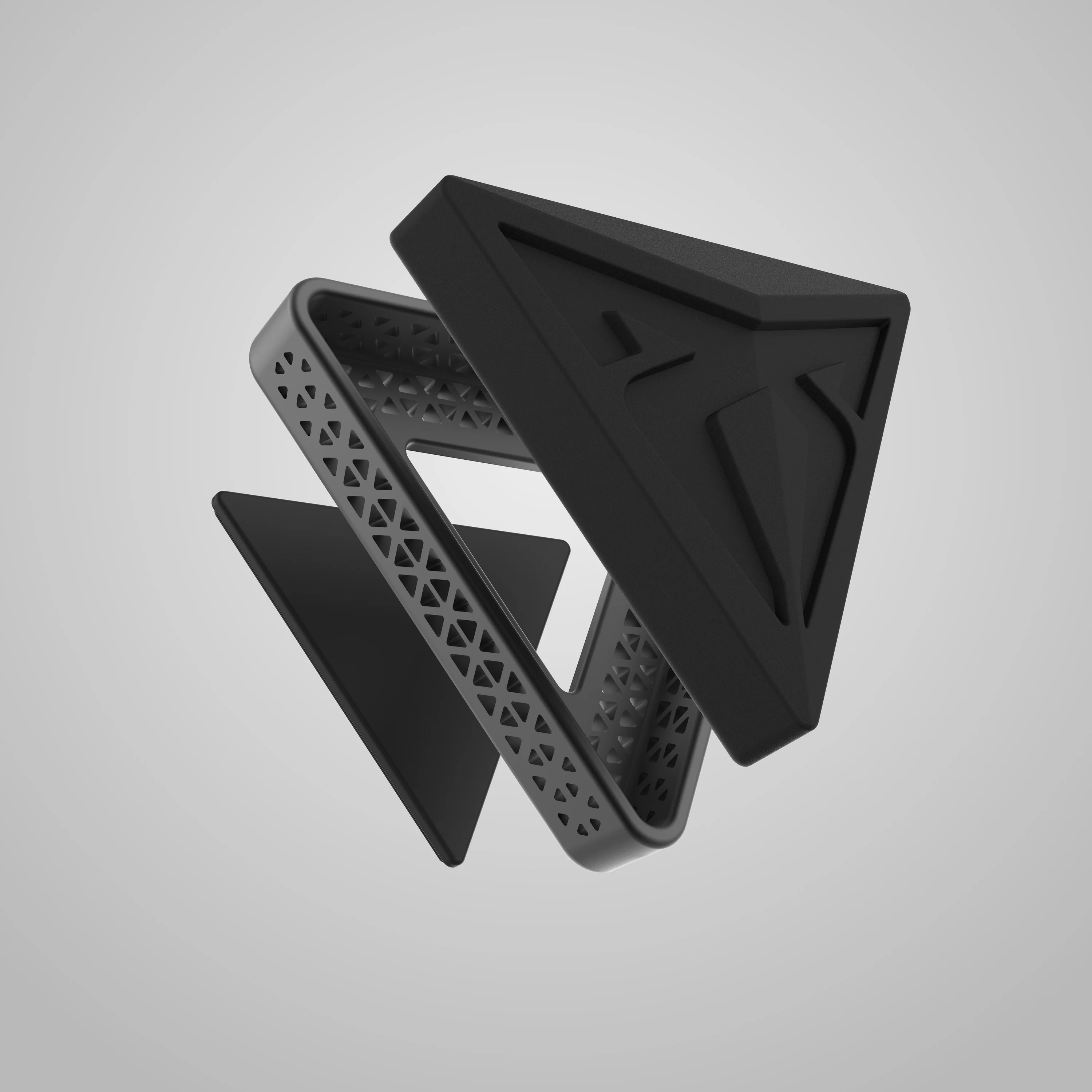
Olfactory marketing seeks to use aroma as an identifying code, taking advantage of its ability to generate associations with places, products and experiences. In the case of Cupra, this code is transferred directly to the interior of the vehicle. The fragrance is presented by two diatomite tablets impregnated with the aroma, which are placed in a reusable metal casing. This is fixed by means of an adhesive magnet on a surface of the cabin and releases the perfume gradually. Once the aroma is used up, the casing can be kept and it is only necessary to replace the tablet with a recharge. The product is sold in Spain for 35 euros.
The format allows the smell to be incorporated into the driving experience and the physical space of the car itself. The intention expressed by Cupra is that, upon entering the vehicle, the user can “connect with the essence and DNA” of the brand, making the identity also experienced through a meaning that has traditionally had less presence in the communication of automotive companies.
Cupra Scent also fits into the extension strategy that the company develops around Cupra Collection, from where it sells fashion, accessories and lifestyle products, in addition to promoting collaborations with other brands and creative profiles. The fragrance expands this catalog with a peculiarity: although it is marketed as a product, its function is directly related to the brand experience inside the car.
Cupra’s first fragrance is now available through Cupra Garages and the brand’s online channels in different European markets, including Spain, Germany, the United Kingdom and Italy, although digital purchase conditions vary by country.
More info: Cupra Scent