Globalization no longer works as it used to. For decades, big brands built their strength on a relatively stable combination of scale, awareness and consistency. The more visible a brand was and the more uniform its international presence, the greater its chances of growth. But the context has changed.
Artificial intelligence is disrupting the way people discover information, make decisions, and engage with brands. Trust in institutions and organizations shows signs of deterioration. Cultural influence no longer emanates solely from a few Western power centers. And the growing complexity of information is making it increasingly difficult to distinguish what is true, what is manipulated, and what has been artificially generated.
This is the scenario described in the new edition of “Truth About Global Brands”, the research developed by McCann together with Economist Enterprise based on interviews with more than 20,700 people in 20 international markets and conversations with global marketing managers.
The main conclusion of the study is that brands face a growth crisis derived from a phenomenon much deeper than a question of media, creativity or technology: the emergence of an economy based on doubt.
From excess information to the “labyrinth of truth”
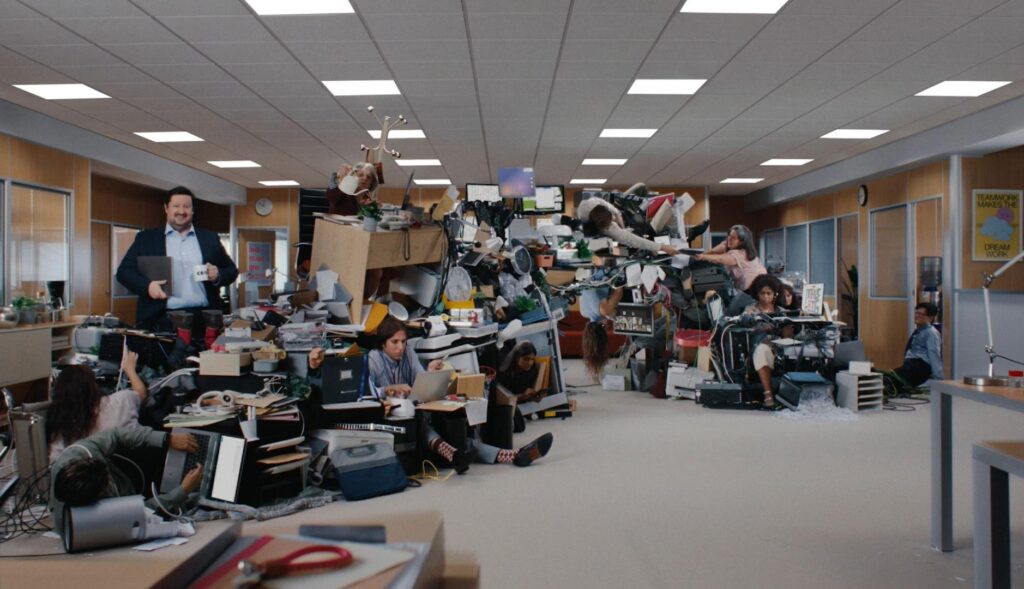
McCann defines the current moment as a “Truth Maze” either “labyrinth of truth.” An environment where consumers, professionals and managers must navigate between contradictory opinions, algorithms, content creators, automated recommendations and materials generated by artificial intelligence.
The consequence is an increasing difficulty in determining what information is reliable.
72% of people consider it more important than ever to prioritize the truth
The study reveals that 72% of people consider it more important than ever to prioritize the truth, while 55% think that brands are less truthful than twenty years ago. In Spain this perception is even more pronounced and reaches 63% of those surveyed.
Concern intensifies when artificial intelligence comes into play. 76% of participants fear that it will soon be impossible to differentiate between real and artificial people on the Internet. Among Spaniards the figure rises to 80%.
However, the study does not identify a rejection reaction towards the technology. On the contrary. 72% of consumers and 88% of B2B decision makers believe that brands must incorporate artificial intelligence to remain competitive. The difference is in how they do it.
Thus, transparency emerges as a decisive element. More than half of those surveyed say that clearly reporting the use of AI is the most effective measure to build trust, while a significant proportion expect brands to help explain which content is real and which has been artificially generated.
The economic cost of doubt
One of the most relevant aspects of the research is that it places trust outside the exclusively reputational field. In fact, McCann argues that trust has become an economic variable. And the data supports that idea. 69% of consumers say they have abandoned a brand because they stopped trusting it. Among B2B purchasing managers, the percentage reaches 79%.
At the same time, 81% of Spaniards say they are willing to prioritize brands they trust even if they have a higher price.
Trust appears as a precondition to participate in the purchase decision
The research thus proposes a paradigm shift. For years, many companies have understood trust as an indirect result of a good brand experience. Now it appears as a precondition to participate in the purchase decision and generate preference by eliminating uncertainty.
Therefore, the report proposes that brands evolve from building trust towards a more ambitious goal: eradicating doubt.
Global influence no longer has a single center
The second major finding of the study has to do with the transformation of global culture. For decades, cultural expansion followed a linear evolution: trends were born mainly in Western markets and were later distributed to the rest of the world. But that model is losing validity.
McCann observes the emergence of a reality that he calls “multimodal globality”. An environment in which ideas, behaviors and cultural references flow simultaneously between platforms, communities, creators and markets.
Thus, China, India and Saudi Arabia appear more and more frequently as generating poles of global influence and culture no longer moves exclusively from the top down or from the West to the rest of the world.
The data illustrates this transition. Twenty countries are currently perceived as influential in shaping global culture, compared to the twelve identified in 2018. Furthermore, 69% of respondents consider that the world is evolving towards a shared global culture. In Spain, 77% affirm that it is possible to feel like a global citizen without having to travel.
For brands, this transformation means that traditional models of local adaptation or centralized distribution are becoming less and less effective. Ideas must be designed to circulate among diverse communities and cultural contexts, maintaining coherence without losing the ability to adapt.
The new audience that concentrates the growth
The study also identifies a segment that is especially relevant for the future of global consumption. McCann calls it “Upward Class” either “rising class”.
These are people who have managed to improve their socioeconomic position compared to the generation in which they were born and who use brands as tools to express progress, aspiration and identity.
On a global scale, this group groups 1,020 million people and concentrates an annual purchasing power estimated at 29.5 trillion dollars. But its importance goes beyond purchasing power.
According to research, these consumers show a more positive relationship with brands and a lower level of skepticism than other segments. Furthermore, they exert a disproportionate influence on future consumer trends because they understand brands as symbols of advancement and personal mobility.
For McCann, much of the growth of the next decade will depend on the ability of companies to understand the cultural and aspirational motivations of this emerging audience.
What’s changing for B2B brands
The collaboration with Economist Enterprise provides additional insight into the behavior of business decision makers. Although they share some concerns with consumers, B2B leaders present relevant nuances.
For example, they are significantly more optimistic about brands and artificial intelligence. 45% consider that brands are more truthful today than in the past and 85% declare they trust those that use AI.
92% consider it essential that brands act as reliable guides
However, they also have higher demands. 92% consider it essential that brands act as reliable guides in complex contexts and 85% assure that brand values weigh more than price in their decisions.
The research concludes that business purchasing processes are increasingly distributed and are influenced by multiple internal actors. It is no longer enough to identify the final decision-maker. Brands must understand how trust circulates within organizations and how purchasing consensuses are formed.
In this sense, the study points to a central idea: the next generation of global brands will not compete solely for visibility or notoriety. It will compete to offer clarity in an increasingly ambiguous environment.
In McCann’s words, the companies that grow in the coming years will be those capable of acting as reliable guides within the information labyrinth, connecting with new emerging audiences and developing cultural ideas capable of circulating between markets and communities.
The research summarizes this challenge in three imperatives:
- Eradicate doubt
- Identify the audiences of the future
- Understanding how influence moves in an increasingly decentralized global culture
An approach that shifts the focus, therefore, from building notoriety to building credibility.