50 years ago, on June 16, 1976, South Africa in the midst of Apartheid went through one of the darkest episodes of this period: the bloody riots from Soweto
What are the Soweto riots?
Context
Before the uprising of June 16, 1976, numerous demonstrations had already broken out in the country. These demonstrations take place in the context of Apartheid: a political regime of strict racial segregation, created by the National Party made up of Afrikaners (South Africans of mainly Dutch European origin) imposing the domination of the white minority over the black majority from 1948 to 1991.
On April 30, 1976, a handful of students in Soweto went on strike and refused to go to class. This movement is thus spreading to other schools. It was student Tsietsi Mashinini from Morris Isaacson High School who decided to bring together classmates to organize a peaceful march on June 16, 1976 in the suburbs of Johannesburg, Soweto.
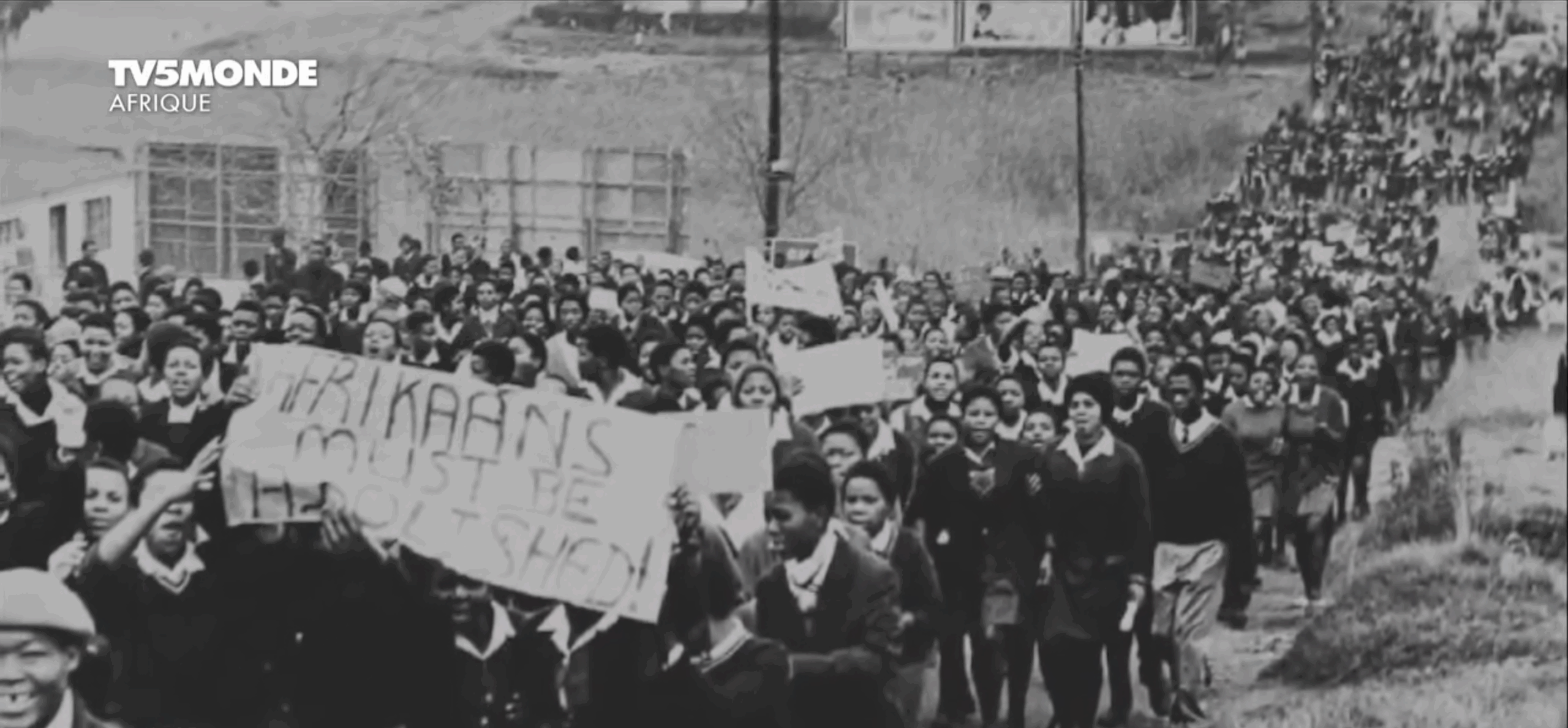
That day, students demonstrated against the introduction of Afrikaans, the official language of teaching derived from 17th century Dutch and enriched with African influences, imposed in local schools.
A bloodbath: a bloody repression
Between 10,000 and 20,000 young students attended this peaceful demonstration.
The procession must reach Orlando Stadium, however, the South African police stand in their way. Then, the students sing a forbidden song: Nkosi Sikelel’ iAfrika (God bless Africa). The police disperse the crowd by firing live ammunition at the 20,000 students.
According to official figures, 21 people died and more than 200 people were injured among the ranks of the demonstrators. The bloody repression of the demonstration consequently led to deadly riots in Soweto and then in several cities in South Africa.
The Prime Minister at the time promised to react firmly. Two months of violence and between 200 and 600 deaths: calm did not return until the end of August 76.
This uprising marked a decisive turning point in the anti-Apartheid struggle.
A tragically unforgettable death
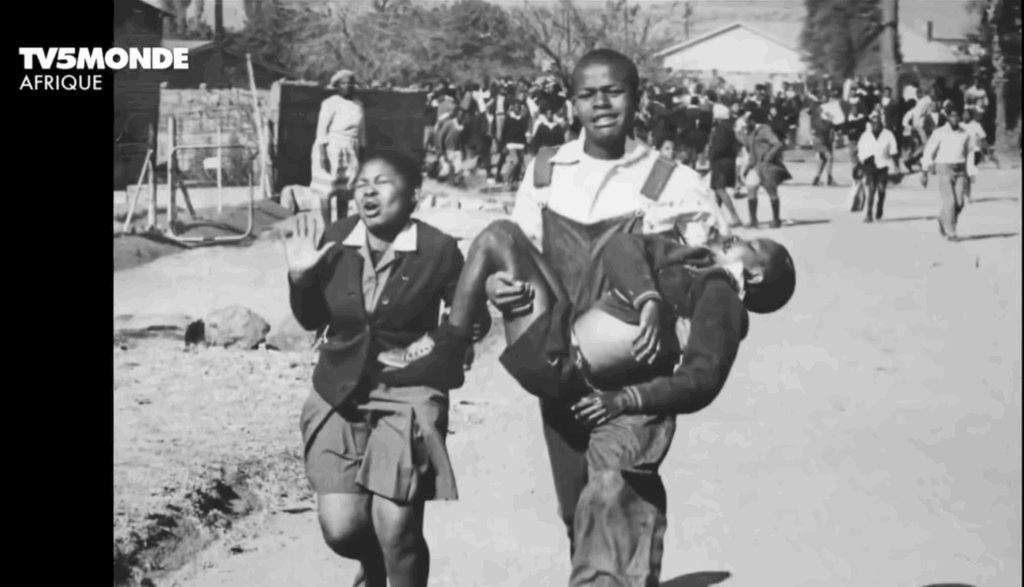
This is the death of Hector Pieterson, photographed by Sam Nzima, showing the 12-year-old Hector, injured by a bullet in the back, being carried in the arms of his friend, in tears, driving him to the hospital alongside his sister. This photo sparked a huge wave of international indignation. Today he embodies a symbol of this overwhelming event.
“When the police spotted me, they immediately snatched my camera and took out the film to erase everything that was inside. Luckily I had hidden the film in my shoe and replaced it with another one. Otherwise, this photo of Hector Pieterson, no one would have ever seen it. »
Testimony from photographer Sam Nzima
The abolition ofHASpartheid
Faced with international isolation, economic sanctions and internal revolts, President Frederik de Klerk (leader of the National Party) began negotiations in 1990. He released Nelson Mandela after 27 years in prison and legalized the ANC. L’Apartheid was officially abolished in 1991.
“Youth Day”
In 1994, Nelson Mandela was elected in the presidential elections and became the country’s first black president. Subsequently, June 16 becomes a public holiday: Youth Day.