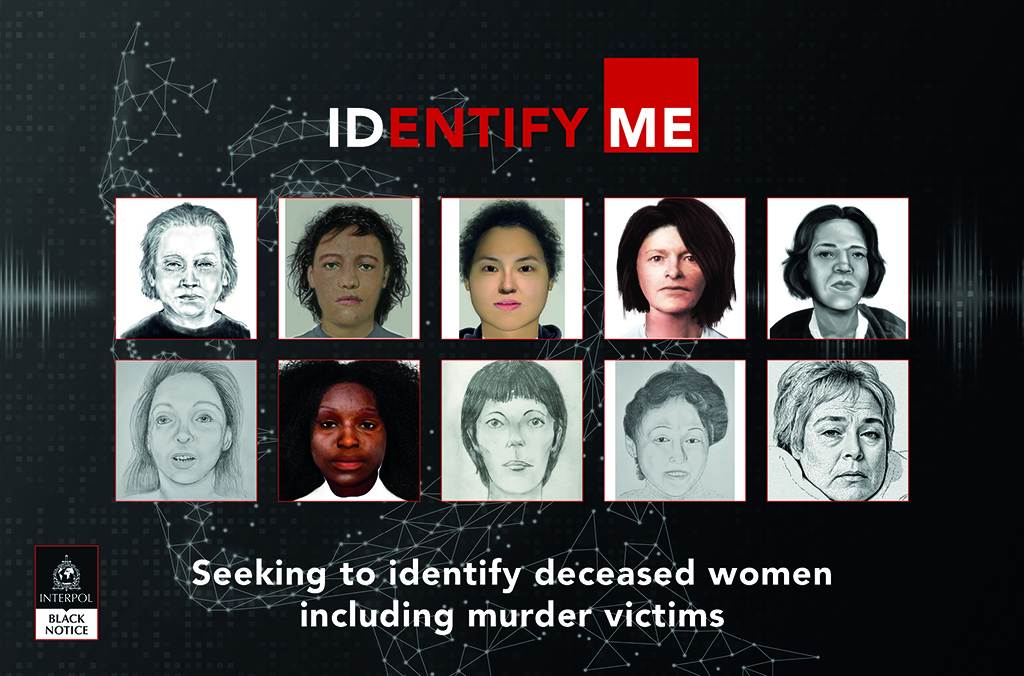
Faced with the rise in transnational crimes, Interpol has launched a discreet but powerful tool: “Identify Me”. This initiative mobilizes the public to restore an identity to unknown, often forgotten victims. Another way to get the scientific police talking, with the help of citizens
An investigation open to the world
Since 2023, “Identify Me” has been based on a simple but powerful conviction: showing faces to make memories speak. Behind each file, there is a woman found dead somewhere in Europe, without a name, with no known story, sometimes for more than twenty or thirty years. Investigators tried everything. The classic tracks have died in a dead end. So they turn to people.
Interpol publishes everything we know about her: her face reconstructed by experts, the color of her jacket, the shape of a jewel worn on her wrist, a scar, a color of hair. Seemingly innocuous details, but which can suddenly resonate with someone, a former neighbor, an ex-colleague, a family member who has been looking for her for years without knowing where to look.
What makes this program unique is also its scale. These women have often crossed several countries, lived elsewhere, disappeared far from home. With its 195 member states, Interpol can circulate this information to all corners of the world.
Between technology and duty to remember
If “Identify Me” is based on citizen participation, it also relies on advanced scientific tools. Investigators use DNA, dental analyzes and even forensic anthropology to refine profiles. These techniques sometimes make it possible to determine the geographical origin, approximate age or lifestyle of the victims. But despite this progress, certain identifications remain impossible without external intervention. This is where the program takes on its full meaning. It is not only about solving investigations, but also about restoring dignity to forgotten people. Without a name, a victim remains in the shadows, and their loved ones, if they are still alive, cannot mourn.
By publicizing these cases, Interpol also seeks to create an emotional connection with the public. The goal is to transform cold information into a human story. Each face broadcast becomes an enigma, but above all a life interrupted. This approach changes the way criminal investigations are viewed, placing the emphasis on victims rather than the facts.
Today, “Identify Me” largely depends on its visibility. The more portraits circulate, the more the chances of resolution increase. In this chain, the media and citizens play a determining role. In the age of social networks and continuous information, a simple publication can change an investigation that has been stuck for years. This program made it possible to discover a woman whose body was found in a plastic rainwater barrel 20 years ago in France and was identified by the French authorities. This is Hakima Boukerouis.
This is also the first arrest in connection with a case presented as part of the Identify Me campaign.