The images of October 17 in France went around the world. A weekend of demonstrations which were not limited to France. In several European countries thousands of people took to the streets for similar demands.
This is the subject that has transcended public opinion since last Saturday. How can we explain such violence on the sidelines of the processions and what response should be provided by the government at the dawn of a new day of mobilization on Saturday October 24? If this question has not yet been answered, it also arises abroad. And for good reason, several of our European neighbors suffered the same pattern of confrontation and looting on the sidelines of the demonstrations.
Similar scenes of violence between France and Italy
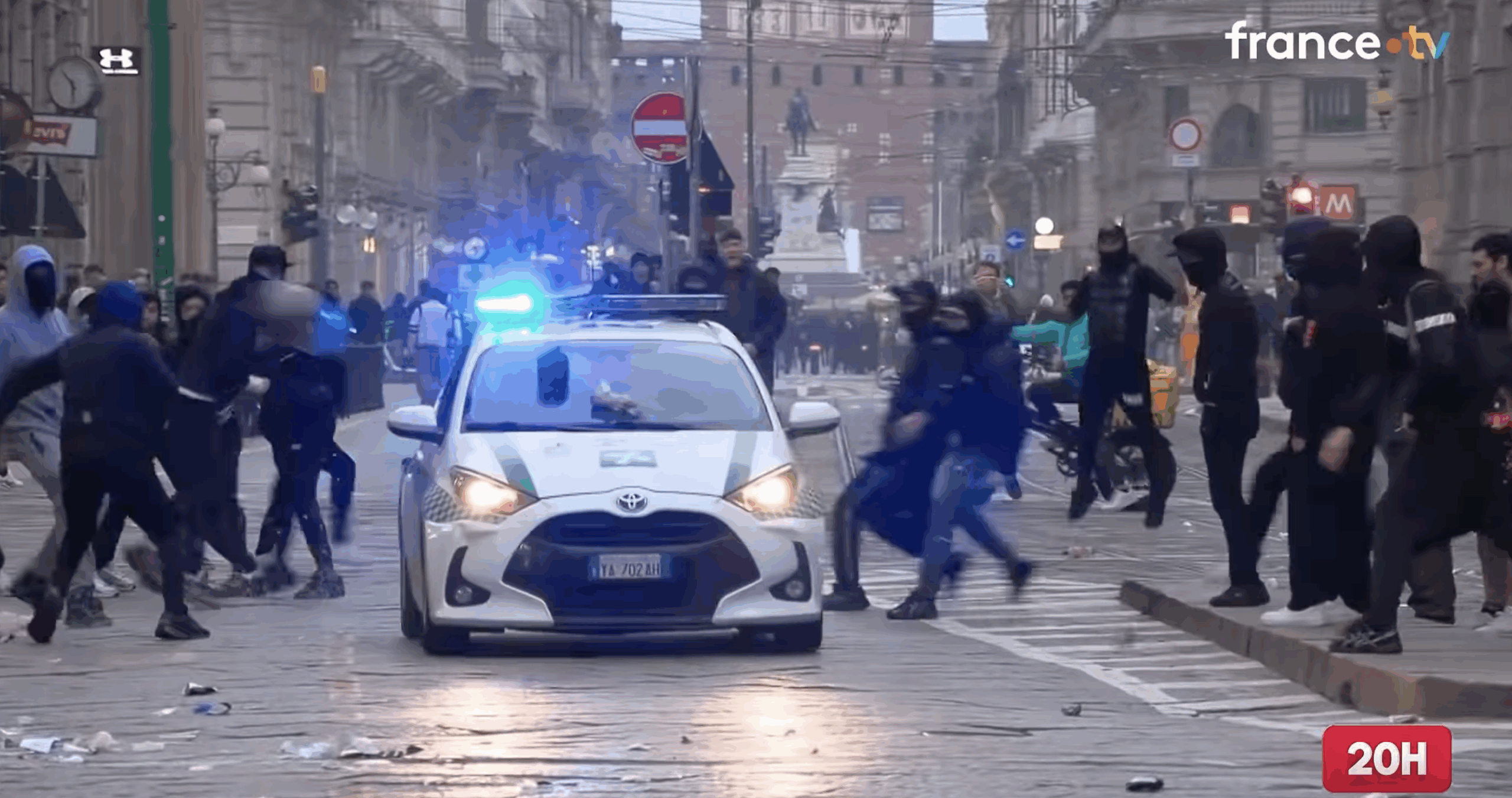
Milan was another theater of violence last October 17 and 18. The economic capital of Italy experienced violence comparable to that of Paris, Lyon or Marseille. Broken windows, burned trash cans and overturned furnitureMilan’s famous Duomo square became a battlefield last weekend with several scenes of looting and clashes between protesters and police. The anger of the Italians first came from high school and university students, drawing inspiration from their French neighbors.
In the same way as in France, the demonstration of October 17 also took place against the high cost of living before being hampered by thugs and looters, as well as clashes with the police. 200 people were arrested that weekend. Far-right Prime Minister Georgia Meloni responded to this episode of violence by deploying 500 soldiers until the end of the year. Other large northern cities such as Bologna, Turin, Genoa and Florence have been victims of urban violence.
The mobilization continues in Albania
For several months now, the Albanian people have been demonstrating in what is called the “ flamingo revolution“. The demonstrators are peacefully opposing the construction of a tourist complex led by the couple Jared Kushner and Ivanka Trump, son-in-law and daughter of Donald Trump. Peaceful since the beginning of the movement, the revolt radicalizes.
Since October 13, Tirana, the capital, has been in the grip of riots. The youth of the capital joined the movement to fight against university registration fees too high, poor teaching conditions and the corruption. Violent clashes between demonstrators and the police take place daily while public buildings have been destroyed. The protesters are demanding the resignation of Edi Rama, socialist Prime Minister in place since 2013. The latter sticks to his positions and rules out a resignation.
Belgium, Greece, Spain, the protest has no borders
The Belgian demonstrators are making the same demands as in France. The first high school movement was followed by the mobilization against the high cost of living. Hundreds of people demonstrated last Saturday with dozens of arrests and street furniture set on fire. The housing crisis adds to the demands in Greece and Portugal.
It was also a housing crisis that launched a large-scale mobilization in Spain. The movement began at the end of September after the expulsion of an octogenarian, now deceased, from his home. In protest, thousands of Spaniards marched through the streets of Madrid setting up their tents in front of Puerta Del Sol. Under pressure, Prime Minister Pedro Sanchez announced the organization ofearly legislative elections which will take place on November 29.
The protest has spread across Europe and will continue to put pressure on with new days of mobilization in the coming days, particularly on Saturday October 24. Also in Mexico, demonstrations against unsafe tap water degenerated in Guadalajara. Violence is therefore not limited to France or Europe.