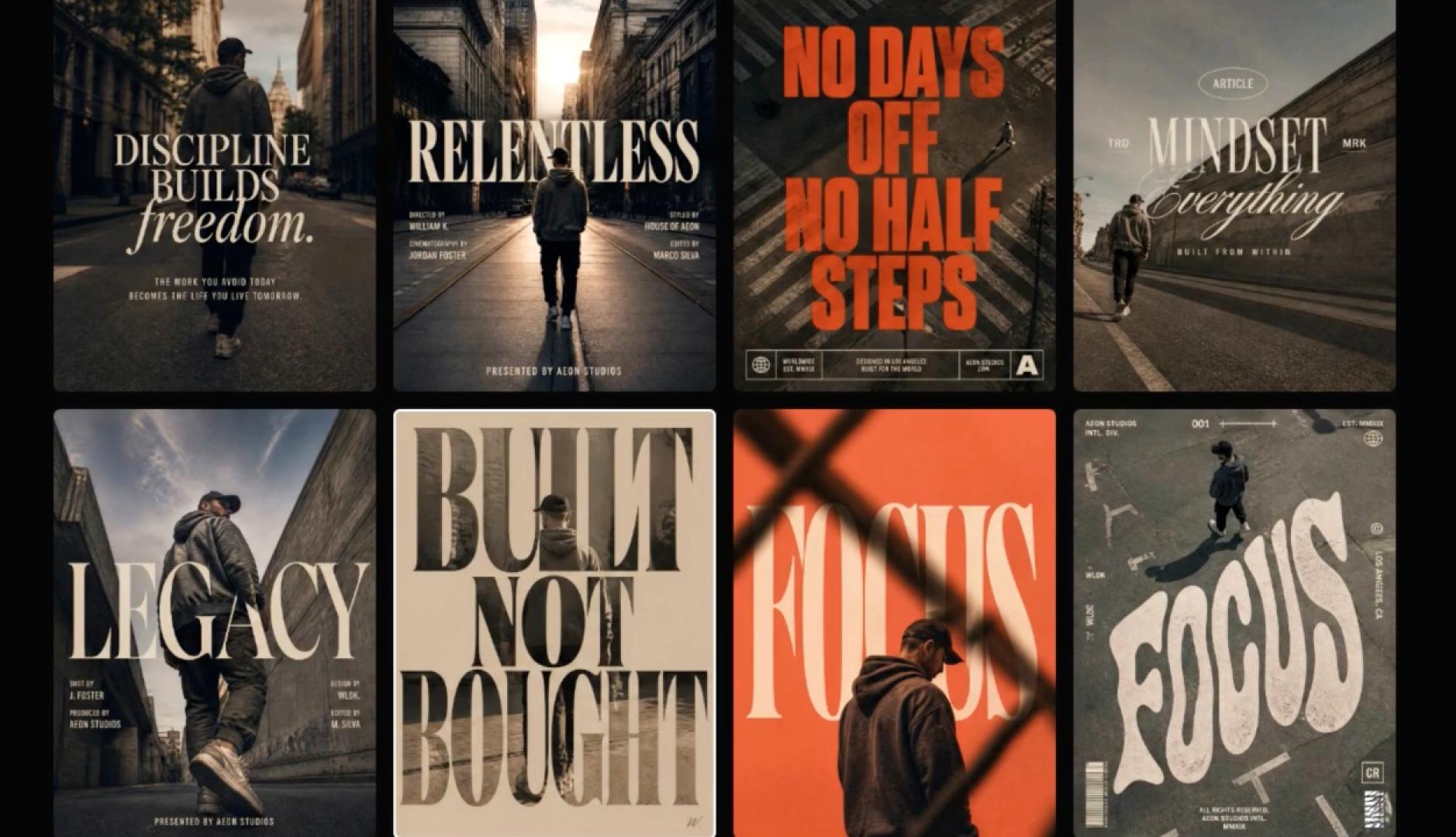
Artificially intelligent imagers have rapidly advanced in quality, resolution, and the ability to interpret instructions. But a good part of the creative responsibility still falls on whoever writes the prompt and the more precise the description of the composition, lighting, photographic objective or visual treatment, the more control there is over the result. Magnific wants to change that by incorporating a layer of art direction before the image is even generated.
The system interprets a short instruction and expands it by making visual decisions
The Spanish company, previously known as Freepik, has presented Magnific One, a new image generation proposal that introduces what it calls art direction built in. The system developed by its own creatives interprets a brief instruction and expands it by making visual decisions similar to those an art director would make.
Magnific One is neither a new image model trained from scratch nor an existing model that the company has made a subsequent adjustment to. Magnific explains that it has not trained, post-trained or fine-tuned a model. Its development is found in the layer that acts around generative technology: it interprets the briefing, develops the prompt, incorporates references and styles and establishes an artistic direction before sending those instructions to the model in charge of creating the image.
Each request first goes through that creative layer. Based on the idea introduced by the user, the system decides issues related to composition, style, light, optics and visual treatment. It also takes into account up to five reference images and the selected styles. Only after that process is the image generated.
“Bring an idea and come back with directions you would never have found on your own. That’s the goal.”explains Joaquín Cuenca, CEO of Magnific. The company says that its own marketing team has been using Magnific One for two months to produce its campaign materials.
The proposal also represents a change in the role that Magnific wants to play within creative tools with AI. Until now, the company explains, much of its value was in bringing together models and building tools and workflows around them. With Magnific One it also seeks to intervene in the aesthetic decision that precedes the result.
Users will be able to keep their prompts, styles, references and brand rules even if technology evolves
The system has also been proposed as a “living” model. The underlying generation technology may change as more advanced models appear, while Magnific maintains its own layer of creative direction on top. In this way, users will be able to preserve their prompts, styles, references and brand rules even if the technology responsible for generating the images evolves.
Brand identity also enters the generation
This idea is extended with the Brand Kit, another novelty that initially arrives exclusively for Magnific One.
A company can provide its website, a PDF identity manual, reference images or a written description. An agent analyzes that material and extracts elements such as the logo, color palette, typography, image style and visual tone to build a first version of your brand kit.
Once reviewed by the team, those rules become part of the instructions used during generation. Thus, identity conditions the creation of the image from the beginning and each result generated in Final mode is also checked against the Brand Kit, to detect possible deviations in identity, colors, fonts or use of the logo. The system also reviews aspects such as framing, possible visual artifacts or the readability of the texts and indicates which rule has been broken when it finds a problem.
For agencies, Magnific proposes an independent Brand Kit for each client. Changing from one account to another would thus mean selecting another kit, avoiding having to re-enter the same brand instructions in each generation.
“Many image models are very good at making the image you’ve described. Magnific One makes the image you would have arrived at with a good art director in the room”says Martin LeBlanc, Chief Experience Officer at Magnific.
Magnific One is organized in two modalities. Draft is designed for the exploration phase: from a single prompt it returns a grid of 8 or 16 proposals with different compositions, environments and approaches, for the cost in credits of a single image. Once an interesting direction is found, Final generates the finished result in 2K or 4K resolutions. Both modes allow for the incorporation of reference styles and images, and Magnific notes that combining two or three references can be used to develop a new visual language rather than reproducing one of them.
For further adjustments, the Auto Layers function separates images into editable layers. This allows you to precisely modify fonts, colors or texts in Designer, Magnific’s editor, or continue working in Figma and Photoshop using their plugins, without having to regenerate the entire image.
Magnific One also works within Spaces, the platform’s visual workspace, and through Magnific MCP, allowing it to be used from AI assistants such as ChatGPT, Claude, Cursor or Codex.
Magnific One is available from October 8 on all Magnific paid plans, both on the web and in its desktop and mobile applications. The generation starts at 180 credits for a High image in 2K and reaches 1,000 credits for Max in 4K. As part of the launch, select plans will have unlimited generations in the desktop app until October 15.