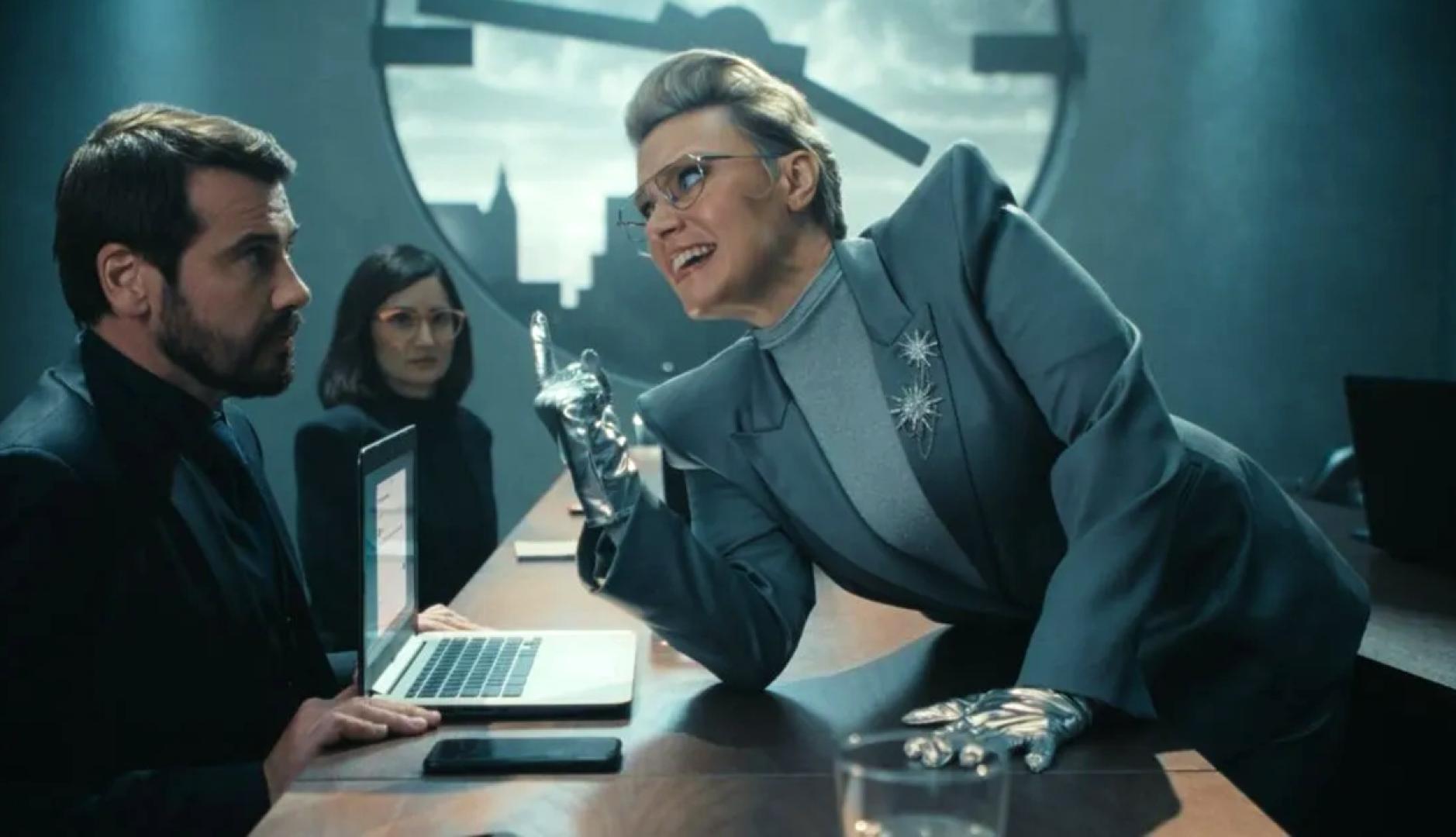
Zoom continues the corporate revolution that began at the end of last year. If then he put employees up against a tyrannical boss who forced them to use inefficient technology, now he has placed Kate McKinnon at the head of the fictitious company, who plays an extravagant CEO willing to destroy Zoom at any price.
This is the approach of “Zoom Got It Done”, the new installment of the global “Zoom Ahead” campaign, with which the company seeks to modify a perception still closely linked to video calls and show the breadth of a platform that currently includes artificial intelligence agents, automatic note taking, customer service solutions and productivity tools, among other functions.
It seeks to modify a perception still closely linked to video calls
The ad has been produced again together with No Notes Productions, Colin Jost’s company, and narratively continues “I Use Zoom!”, the campaign launched in December 2025 and starring Bowen Yang. Both performers, like McKinnon, have been part of “Saturday Night Live.”
“The first ad showed that people prefer Zoom. This one shows why: Zoom really helps users get work done”explains Kimberly Storin, Director of Marketing at Zoom. “Only Colin Jost and Kate McKinnon could make that a joke instead of a product demonstration.”
Dressed in a silver suit and visibly enraged, McKinnon slams her desk and demands her employees find a way to put an end to Zoom for good. The problem for the board is that each new plan ends up providing the platform with another opportunity to show what it can do.
The succession of proposals allows the introduction of functions that go beyond virtual meetings, including AI agents or automated note taking. The paradox underlying the ad is that Zoom is useful even when the work at hand is planning its own destruction.
“As someone who aspires to one day be an evil CEO, it has been wonderful to fulfill my dream through Kate McKinnon in this Zoom campaign”Jost pointed out.
The company thus once again resorts to comedy to explain an increasingly extensive product catalog without constructing the advertisement as a conventional succession of functionalities. It is a strategy that was already articulated in the first installment of “Zoom Ahead”, which was inspired by the rebellion of Apple’s “1984” and “Dead Poets Society” to represent a workers’ revolt against complex corporate tools.
That campaign culminated with employees getting up on their desks and openly claiming “I used Zoom.” The new piece captures that universe and changes the focus: it no longer seeks only to express a preference for the tool, but rather to explain what it allows you to do with it.
According to Storin, the first delivery even caused a customer to write to him directly: “Consider me up on my desk.” For the board, this reaction demonstrated that the campaign had managed to generate the identification and defense of the brand they were looking for.
Zoom wants to leave behind its almost exclusive identification with video calls
And behind the humor there is a positioning objective that Zoom has been working on since the launch of “Zoom Ahead”: leaving behind its almost exclusive identification with video calls and presenting itself as a business platform based on artificial intelligence.
Zoom hosts millions of conversations daily through tools such as Meetings, Chat or Contact Center. Its proposal is to use AI to take advantage of the context generated in these interactions and transfer it to subsequent tasks: automate follow-up emails, create summaries of meetings and documents, prepare reports or take that information to third-party platforms.
“Zoom Got It Done” will premiere during the first week of the NFL regular season on “Monday Night Football” and will continue throughout the season on linear and connected television, outdoor advertising, digital and social networks.
The global “Zoom Ahead” campaign will also continue to develop through collaborations with creators, new branded content and Zoom’s sponsorship of MLB baseball. With this second installment, the company maintains the same creative strategy to explain a broader product transformation: use entertainment to change what users understand when they hear the word Zoom.