“Don’t lie”they repeated us as little ones. A standard, simple, clear, without nuances or asterisks. But it was also more than a rule: it had a warning character. If you lie, you will confuse the world. But above all, you will disconnect from yourself and others. It will go wrong.
Today, while we build brands in a context of informative saturation, we generate synthetic realities with artificial intelligence daily, viral misinformation and unbridled storytelling abound, That simple and resounding teaching returns more validity than ever.
“It does not lie” it is no longer just a principle of good education. It is a strategic key. A competitive advantage and an ethical commitment. These words are not a naive apology for sincerity or a moralistic manifesto. They are a reflection based on my experience working for brands that understand that the truth well told, as McCann said, is not only powerful, but has become urgent and differential. Lying, even gently, “with good intention,” is counterproductive in the medium term. Hannah Arendt said: “Where everyone lies all the time, the result is not that people create lies, but that they no longer believe in anything.”
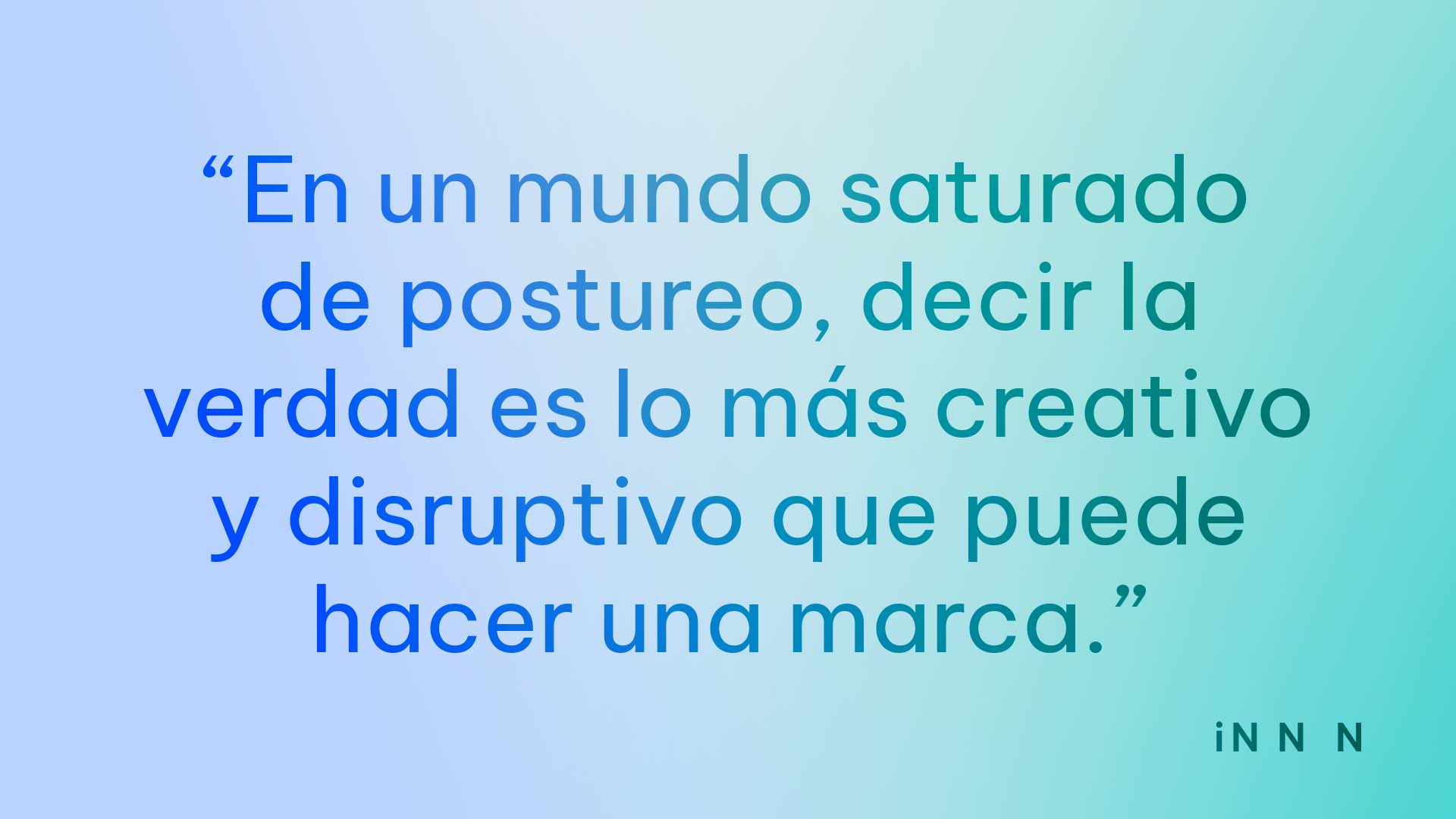
In brand communication, this warning is not philosophy, it is Brief. If we exaggerate, manipulate, hide or impose not only destroy the credibility of our brand but the very possibility of building a significant relationship with our community. Like people, brands do not exist only for what they do, but because of the bond of trust they generate. And that link is not supported from posture. Today more than ever, building brands is to build culture. And in that hyperconnected culture, the lie has lost efficacy. Postiness is no longer disruptive. It is noise. In that noise, the truth is again the most creative, radical and memorable act possible.
Each year, Edelman Trust Barometer measures the global state of trust. The last report shows a worrying reality: Only 51% of respondents trust companies as institutions. The figure is lower in sectors such as fashion, politics or entertainment. Beyond the cold data, the symptom is clear: there is a general fatigue against the promises of the brands. In front of the purpose without substance. Faced with the stories that sound good, but that are not supported.
Trust is today a scarce resource. And therefore, highly strategic. Those who manage to generate and sustain it have an impossible advantage to imitate. Trust and authority are not bought. They are built. They are demonstrated. They win. And they lose extraordinarily fast. The truth is not a way of understanding content: it is a position before the daily management of brand communication. It is not simply not lying in a copy, in a packaging or in a reel. I mean Build the entire brand system, its internal culture, its processes, its products, its communication, from an ethical, narrative and emotional coherence. This is something that they are perfectly understanding companies, sometimes smaller or less experience, which are expressed naturally, sincerity and closeness with their communities. This does not always imply being the most scalp or bizarre of class but to evolve our language and our way of expressing ourselves as marks of a corporate vision raised to one of you to you honest.
In this sense, there is an important nuance. It is not just “telling the truth.” It is also not hiding the essential. Do not decorate what should be shown with humility. Do not promise what you cannot meet. Do not make the reality so much to the point that it is indistinguishable from the lie or truth of any other. And above all, not pretend values that you do not practice. This has strategic consequences: A brand that speaks with truth generates less commercial friction, greater loyalty, greater organic recommendation and less rotation. And it has deep implications in the creative plane: the truth is a powerful narrative material. A well told story, which is also true, retains in memory. And defends itself.
I want to stop in a nuance that is sometimes lost when we talk about this type of issues that start from an ethical root. Brands do not have to save the world, but take care of yours. Not all brands are born to change the system. Nor does the system always need to be changed. But all, without exception, are related to human communities. And that demands respect, care and coherence. A brand that does not respect intelligence or time or emotions of your audience, does not deserve your attention. When we talk about “telling the truth” we do not talk about activism or total transparency. It is something more basic: do not betray the relationship. Do not confuse who believes you. Do not take advantage of trust. It is not a moral obligation, it is a competitive advantage.
In this sense, Authenticity is not a fashion or positioning. It is the only solid base to build a community around a brand. And that is achieved when speech, tone and actions are aligned. As Bauman wrote, trust is fragile because it is based on unusual expectations. But he also said that trust is the invisible cement of every society. Today, that also applies to the world of brands.
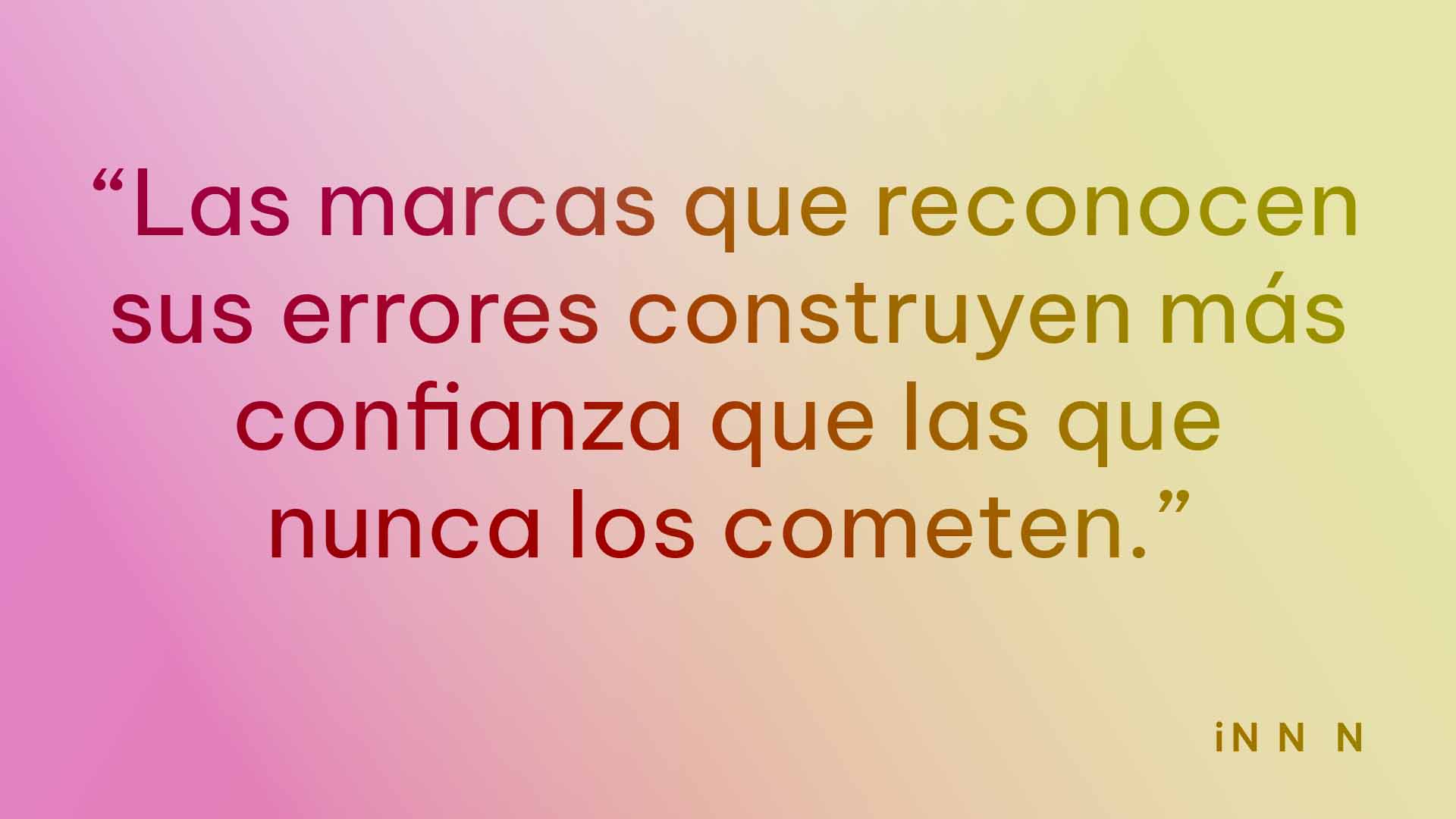
But beyond what works better or worse, I want, now, break a spear for the credibility of our sector. Not everything is worth. Either in marketing. Lying in the packaging. Omit information in the small print. Use false testimonies generated by AI. Promise unreal discounts. Simulate ecological impact without evidence. All these practices, common, systemic, normalized, not only damage the consumer. They damage the entire sector. A sector that is full of committed, sensitive, intelligent people who, as if it were a kind of Trojan horse, from the system’s own economic gears we put our talent at the service of messages and ideas that generate a positive impact. The change of chip is as follows: there is nothing subversive in truth, beauty or honesty. They are the basis of the system itself. The brands that recognize their mistakes, in addition, build more confidence than those who never commit them.
If everyone shouts, nobody listens. When everyone exaggerates, credibility collapses. As Nietzsche wrote: “The most common lie is that with which one deceives himself.” The brands that practice these subtle forms of manipulation are not only missing the truth: they are compromising their future. Distrust generates costs: acquisition, attention, loyalty. Lying is expensive and is no longer effective.
In this context, as mentioned above, the McCann motto, “Truth Well Told”charge extraordinary relevance. It has always seemed to me that this phrase, so simple, resounding, and inspiring could be the flag of the entire advertising industry.
Because it contains in three words the essential:
- That the truth is the core of all lasting communication
- That it is not enough to have it: you have to know how to tell it
- And that the way the accounts matter as much as what you tell
Truth + emotion. Truth + form. Truth + Language. That is what makes a message a relationship. And when done well, the result is not just persuasion: it is connection.
Finally, there is another reason, deeper, not to lie in our brand communication: Lies are indelible. Studies such as “The Debunking Handbook” (Cook & Lewandowsky, 2020) show that a lie, even later denied, tends to persist in the memory of the receiver. Because? Because our brain prioritizes cognitive fluidity. What sounds clear, what is repeated, which fits with our prejudices is recorded. Even if it is false. And the worst: what we neglect badly, reinforces the error. It was also explained by Daniel Kahneman in Thinking, Fast and Slow: the truth needs more cognitive effort than the lie.
That is why brands have an additional responsibility: Do not feed false beliefs, not even by omission. Do not use emotionality to manipulate. Do not stole deception. Because what we say leaves a mark. In this media ecosystem where misinformation is profitable, the truth is not a luxury. It is a form of resistance.
Some brave examples show it:
- Domino’s Pizza publicly recognized that his pizza “knew badly” and showed the real process of improvement. Result: +14% sales.
- Patagonia asked “not to buy this jacket” in an ad and generated a wave of fidelity and identification with its values.
- Heura responds criticism with data, transparency and humor, and puts his activism ahead of marketing. It’s not about telling everything, but what matters, honestly.
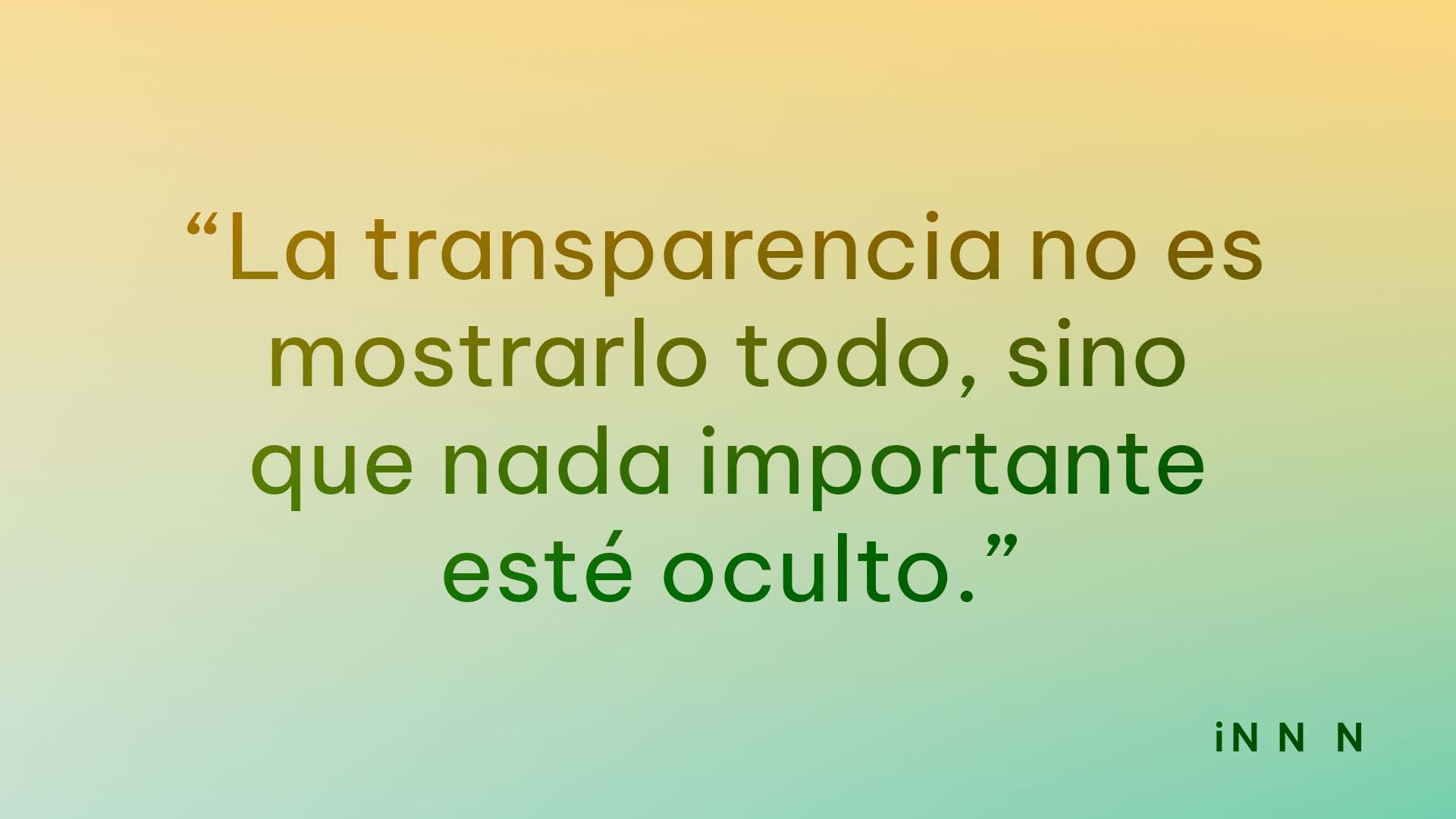
- Buffer shares his metrics, his internal culture, his salaries, his mistakes. Transparency is not to show everything, but nothing important is hidden.
- Zalando launched campaigns showing real returns and customer motivations. No ornaments.
These brands are not limited to “not lying.” They go further: They turn the truth into an argument, a story, experience. In business.
To conclude, I would like to share some questions and reminders, that as resources, we consciously use so that this authenticity of the Cale brand in the day -to -day life of the brands with which we work and not be lost in the “mission / vision / values” foundational or in a branding strategy:
- AUDIT YOUR COMMUNICATION: Is there anything you can’t demonstrate tomorrow?
- Check your values: Are they alive in daily decisions?
- Define your truths: What uncomfortable aspects could differentiate yourself?
- Choose a human tone: Speak as if you were a person, not a brand
- Do not exaggerate: The true is already interesting enough
- Recognize your mistakes: And show what you do to learn
- Design trust: From the web to the call center
- Listen actively: And adapt your decisions to real feedback
- Do not use ethics as aesthetics: That your actions speak more than your campaigns
- Count your truth well: It is the most creative that you can do today
“It doesn’t lie.” Three words that might seem like a naive echo of another time but today are more necessary than ever. In a posture world, the truth is the most creative and disruptive that a brand can make. It is not a limit, it is a business asset.