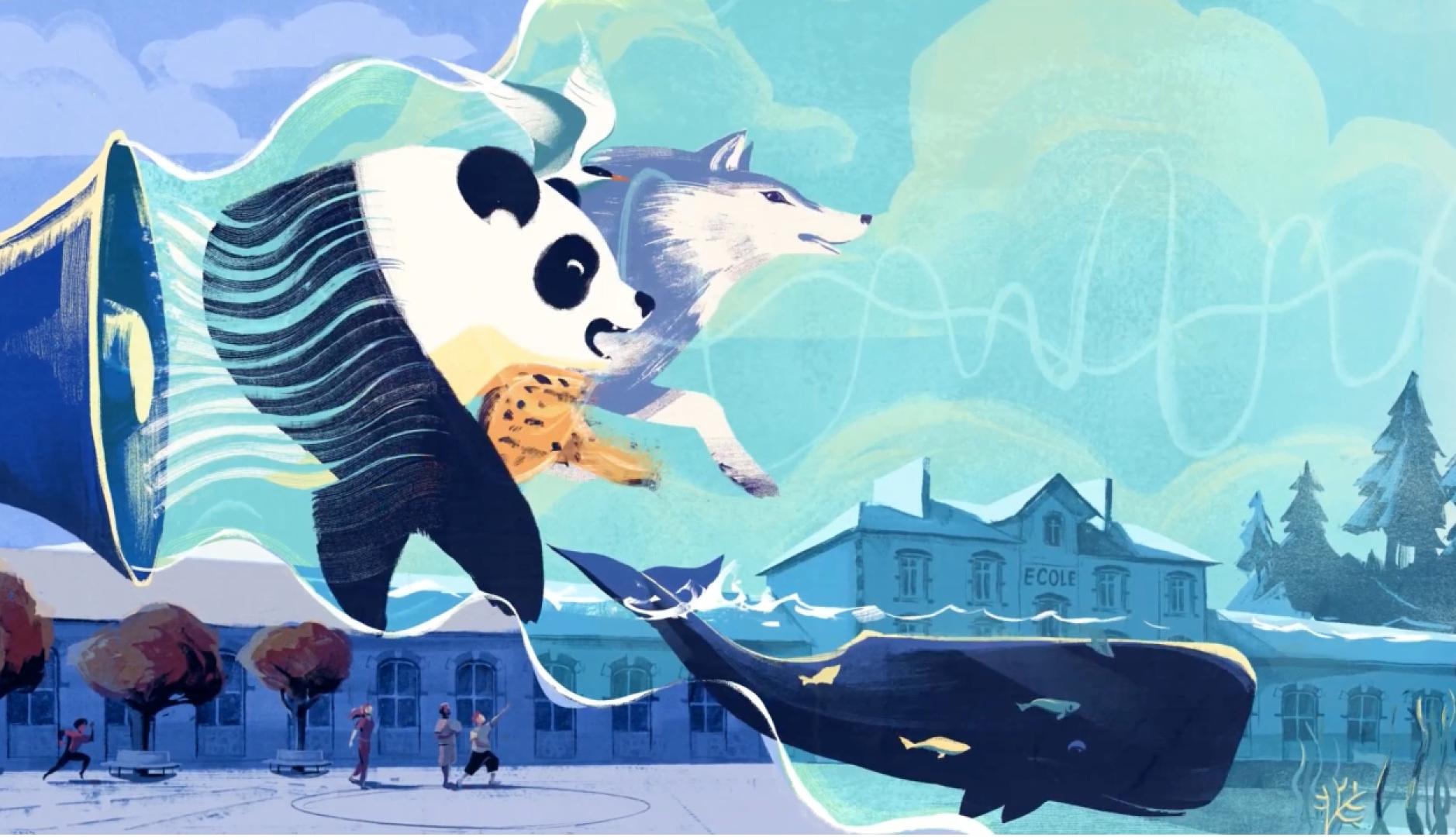
The sound of a boreal lynx, a wolf or a sperm whale will replace the traditional school bell in thousands of French schools this week. That is the proposal of “The Call of Nature”, a campaign promoted by WWF and the agency Saatchi & Saatchi France that seeks to rebuild the link between childhood and nature using one of the most recognizable codes in the educational environment: the bell that marks the beginning and end of classes.
The northern lynx will open the week and the white-faced vent will sound on Tuesday
The initiative will be deployed between May 18 and 22 in more than 6,300 educational centers spread across more than 4,000 French cities, including Paris, Marseille and Lyon. In total, nearly 650,000 boys and girls will hear real sounds of wild animals instead of the usual bell: the northern lynx will open the week, the white-faced vent will ring on Tuesday, the wolf will star in another day and the sperm whale will close the experience.
The action is based on a specific concern supported by academic research. According to a study by the Institute for Social Research at the University of Michigan, children spend half as much time outdoors today as they did twenty years ago. The research indicates that the daily average of unstructured outdoor play among children aged 6 to 17 barely reaches seven minutes a day in the United States.
Researchers link this transformation to multiple factors: increased screen time, greater academic pressure, more saturated children’s schedules, and parents’ growing reluctance to allow children to play alone in outdoor spaces.
WWF believes that the less contact children have with nature, the less likely they are to develop environmental awareness and a willingness to protect it in the future. In fact, studies from Cornell University cited in the campaign conclude that people who had frequent contact with natural environments before the age of eleven later show greater pro-environmental attitudes and behaviors in their adult lives.
An educational campaign that transcends the classroom
The replacement of doorbells is only the starting point of a broader experience designed to activate curiosity and observation of the natural environment. Throughout the week, primary school students will work with pedagogical kits distributed to teachers that include quizzes, stories, games, immersive content and activities related to each of the species featured in the campaign.
Saatchi & Saatchi France and WWF have presented the initiative as a sound invitation to go outside, explore and pay attention to the biodiversity that surrounds minors in their daily lives. Thus, the experience will also continue outside of school. The campaign will have a playlist available on streaming platforms so that families can discover animal sounds and immersive stories together from home. In addition, WWF will distribute collectible cards dedicated to the participating species, among which will be hidden three special cards from the organization’s panda that will allow you to win an experience aboard the “Blue Panda”, the WWF ship dedicated to marine exploration and conservation.
“We wanted to rebuild that essential link between children and nature by appropriating a universal symbol that already invites them to go outside every day”Saatchi & Saatchi France explain in a statement.
The campaign will also continue in coming years and is part of a broader strategy aimed at bringing environmental education closer to new generations from cultural and everyday codes. In this case, using sound as an emotional trigger and giving new meaning to an element as automatic as the school bell.