As Independence Day approaches, the story of the White House is on everyone’s lips. Between its inauguration in 1800 and its official baptism in 1901, a century and a war passed. A look back at the history of a name that has become a universal symbol.
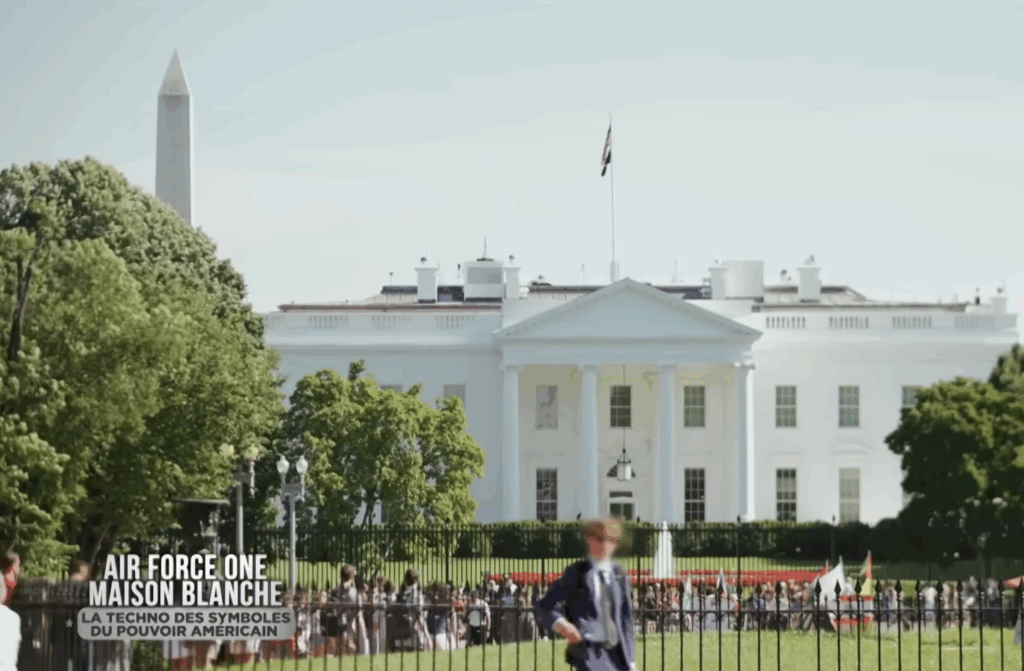
It is the most famous address in the world. THE 1600 Pennsylvania Avenue in Washington DC has been home to more than two centuries the official residence and office of the President of the United States. There White House was not always called that. Behind this name hide an architectural competition, a devastating fire, white lime-based paint and a president who is very attentive to his stationery.
A building born from a competition won by an Irishman
It all starts in 1792. Construction of the White House begins under the presidency of George Washington. The Irish architect James Hoban is inspired by Rastignac castlea French neoclassical residence located in the Dordogne, as well as Leinster House from Dublin. Nine architects are participating in the competition. One of the projects is submitted anonymously by none other than Thomas Jefferson himself. It is however Hoban who wins the bet. George Washington was not entirely satisfied with Hoban’s original design, believing that the building was too small and would not be fit for a head of state. On his recommendations, the house was enlarged by nearly 30% and a large reception hall is added: the current East Room.
Most of the work was done by African Americans, some free, some enslaved. The construction site lasts eight years and in 1800the building is ready. The first president to live in the residence, originally strikingly painted yellow, was John Adams. At this time, no one still calls it the White House. The official texts speak of “presidential palace”of “executive mansion” or “president’s house”.
The fire of 1814, the event that changed everything
This is where the story changes, during the war of 1812THE August 24, 1814British troops invade Washington DC They burn several official buildings, including the presidential residence. After this rampage, the structure was severely damaged. The reconstruction extends until 1817under the presidency of James Monroee. To hide the traces of the fire and protect the sandstone from bad weather, the building was covered with a thick layer of white lime-based paint.
Also read: Why is the far right seducing Latin America?
This is where the legend is born, according to the popular version, the name of White House would come directly from this paint applied to the charred walls to camouflage the scars of the fire. The reality is slightly different. The building, constructed of porous Aquia sandstone, had already been painted white at the end of its construction with a mixture of lime, glue, casein and lead. The white color is therefore not a consequence of the fire. She was there from the start. The fire only strengthened the association between the building and its characteristic hue.
We find the first official proof of the denomination White House in 1811or before the fire. The legend, as beautiful as it is, is therefore partially inaccurate. During the entire 19th centurythe nickname circulates in the press and in everyday language. But official documents continue to use “executive mansion”. You have to wait 1901 for things to change permanently. The president Theodore Roosevelt formalizes the name by registering “The White House” on presidential stationery and administrative documents. A simple but decisive gesture. The president Franklin Roosevelt will subsequently modify the header to “The White House” with the inscription “Washington” centered below.
The White House monument with dizzying figures
Today, the White House spans six floors and understands 132 rooms, 35 bathrooms, 412 doors, 147 windows And 28 chimneys. It also has a tennis court, a bowling alley, a cinema, a jogging track, a swimming pool and a small golf course. 2,160 gallons of paint are necessary to maintain the color of the building. Suffice to say that the color white remains a full-time commitment.
The White House is the only government palace in the world regularly open to public tours. Designed to be the home of all Americans, it remains, more than two centuries after its construction. It became the most recognizable symbol of American democracy. All thanks to white paint, a British fire and a president who loved his stationery.