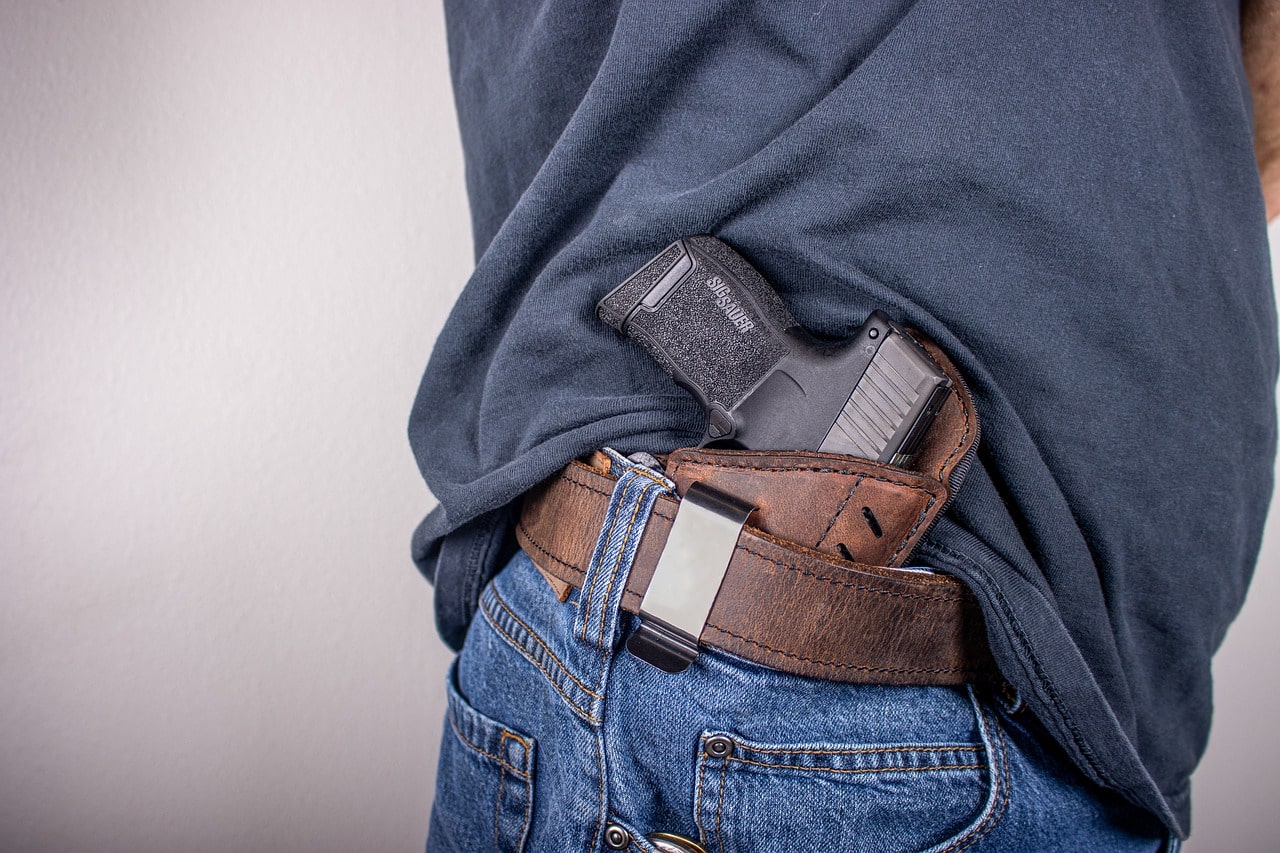
The question of “carrying a weapon” comes up with every mass killing in the United States. But why did this country allow it?
Carrying a gun is a complex and often debated subject in the United States. If this practice arouses controversy, it also finds its bases in the history, culture and legislation of the country. In this article, we will explore why the carrying of weapons is authorized in the United States by analyzing its historical roots, its cultural dimension, its legal arguments, as well as its social and security issues.
The historical roots of gun ownership in the United States
Colonial heritage and the Conquest of the West
Since colonization, European settlers brought the tradition of carrying weapons to defend themselves against external threats and rivalries between indigenous tribes. Over time, gun ownership became a necessity for pioneers during the conquest of the West, where the law was often weak. Old American legislation, notably the Second Amendment, finds its origins in this need for self-defense and protection.
The Constitution and the Second Amendment
Adopted in 1791, the United States Constitution guarantees the right to keep and bear arms with the Second Amendment. This text, written in a context of insecurity and distrust of the federal government, was considered as protection against any form of oppression. It establishes that “the right of the people to keep and bear Arms shall not be infringed,” providing a strong legal basis for bearing arms.
The cultural and social dimension of carrying a weapon
The culture of the shotgun and the self-made man
In the United States, owning a gun is often seen as a mark of freedom and independence. The culture of “self-reliance” values autonomy, including the protection of oneself and one’s property. Carrying a weapon thus becomes a symbol of this individual autonomy, reinforced by cultural representations in literature, cinema or music.
The social and symbolic role
For some Americans, the firearm also represents a symbol of tradition, vigilance or resistance to a government sometimes perceived as oppressive. In certain regions, particularly rural or conservative ones, carrying a weapon is an integral part of local identity and daily life.
Legal arguments in favor of carrying a weapon
Federal and State Legislation
The Second Amendment provides a solid legal basis for carrying guns. Furthermore, the Supreme Court has regularly ruled in favor of a broad interpretation of the right to bear arms, notably in District of Columbia v. Heller (2008), who asserts that the Constitution protects the individual right to bear arms.
Self-defense
Defenders of carrying weapons often invoke the right of self-defense. They argue that every citizen must be able to protect themselves, their family or their property against acts of violence or aggression, especially in a country where crime is a major issue.
Also read: National Guard, marines, police: who commands whom in the United States? | VL Media National Guard, marines and police: who commands whom in the United States?
The social and security issues of carrying a weapon
Public safety and prevention
Opponents point out that easy access to guns can increase violence and accidents. According to some studies, states with more widespread gun carrying experience higher rates of gun-related homicides, suicides, or accidents.
The fight against violence and organized crime
Proponents of carrying weapons argue that their possession helps to deter crime or control local crime (burglars, muggers, etc.). However, this logic is often challenged by public safety experts, who point out that the proliferation of weapons can worsen rather than reduce violence.
Conclusion
Gun ownership in the United States is deeply rooted in the country’s history, culture and law. While this practice is supported by a set of arguments related to individual freedom, personal protection and tradition, it also raises significant public safety challenges. The issue of carrying weapons remains a key issue in the American debate, reflecting the tensions between respect for individual rights and the need to protect society against violence.