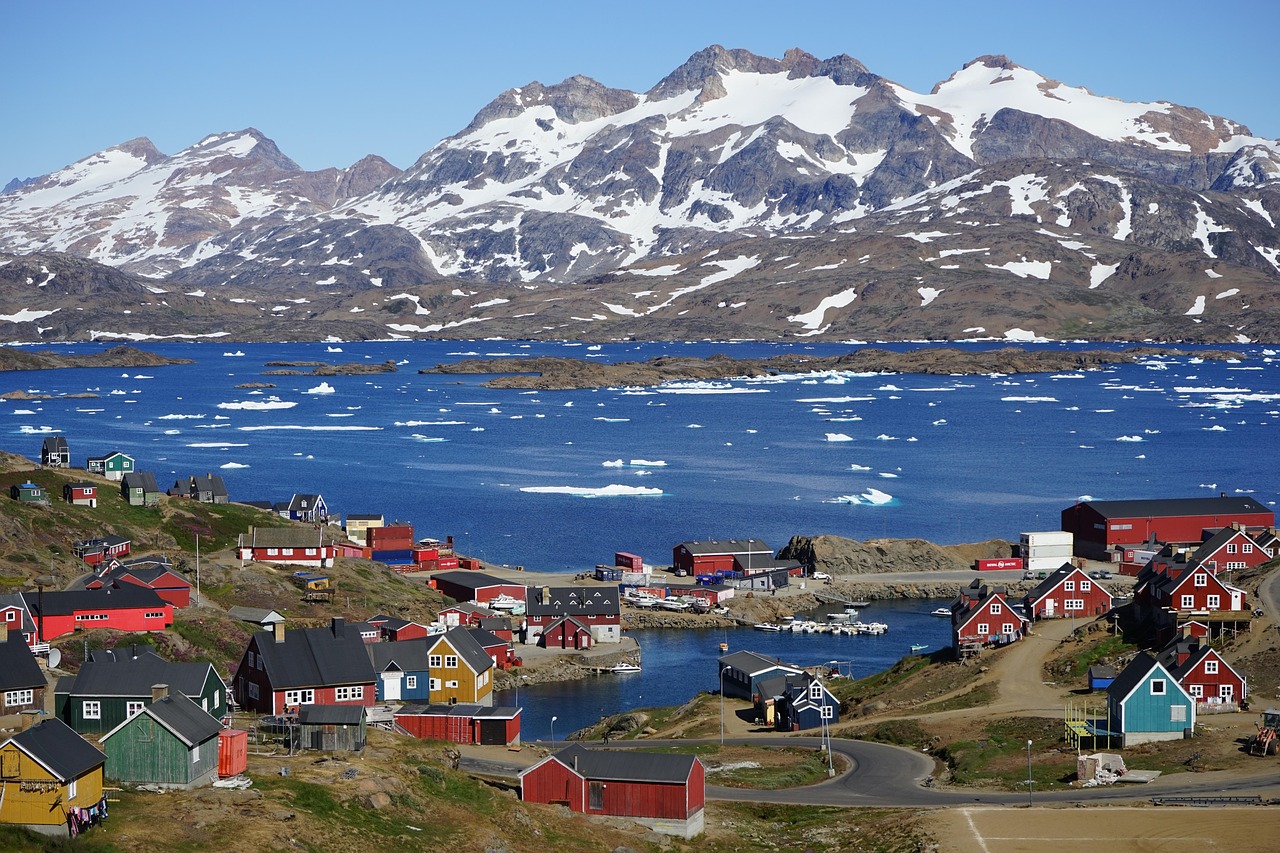
As the Davos summit continues, we continue to talk about Greenland, which Trump’s United States wants to recover.
Greenland, the world’s largest island, is often at the center of geopolitical debates regarding sovereignty rights. This territory, rich in natural resources and largely covered by ice, raises complex questions about its belonging. Who owns the rights to this vastly unexploited land?
A history marked by colonization
The history of Greenland is marked by different waves of colonization and occupation. In the early 10th century, Vikings, led by Erik the Red, settled the island, naming the land “Greenland” to attract new settlers. However, their presence did not last, and the Vikings left the island in the 15th century.
It was not until the 18th century that Greenland attracted the attention of Denmark again. In 1721, the Danish missionary Hans Egede established a settlement at Godthåb (now Nuuk), marking the beginning of a permanent Danish presence. In 1953, Greenland became a province of Denmark, but this status has changed over time.
The question of Greenland’s membership took a significant turn when, in 2009, the country adopted a self-governance law which accredited additional powers to its local government. This change allowed Greenland to manage its natural resources and internal affairs, although Denmark remained responsible for foreign affairs and defense. This autonomous status raises questions about the desire for independence of the Greenlanders, who aspire to total control over their territory.
Current geopolitics and economic interests
Today, the question of sovereignty over Greenland is complicated by its rich natural resources, including minerals, oil and rare earth reserves. These resources attract the attention of major powers, notably the United States and China.
The United States, having already attempted to purchase Greenland in 1946, continues to see the island as a strategic point, especially because of its geographical position between North America and Europe. In 2019, President Donald Trump’s proposal to buy Greenland caused shock waves and relayed the idea that the island could become a key element in the rivalry between the United States and China.
Also read: Does Trump want to annex Greenland? | VL Media
On the other hand, China has intensified its efforts to establish diplomatic and economic relations with Greenland. This dynamic avoids a potential sovereignty dispute, as China could explore the possibility of establishing bases of operations on the island, which could trigger tensions with Denmark and the United States.
The impact on the rights of indigenous populations
In addition to geopolitical issues, the question of belonging to Greenland cannot ignore the rights of the Inuit populations who live there. The Inuit represent almost 88% of the Greenlandic population, and their cultural, social and economic rights are often at the heart of the debate.
The autonomy acquired by Greenland in 2009 brought improvements in the recognition of Inuit rights. However, the exploitation of natural resources could endanger their traditional way of life. It is crucial that decisions regarding Greenland’s economic future take into account the views and concerns of local communities. Inuit seek to participate in discussions about how resources should be managed and who will benefit.
Conclusion: An uncertain future
The question of who Greenland truly belongs to remains complex and multi-faceted. Historically dominated by external forces, its future depends on the interaction between the aspirations of Greenlanders for autonomy, the geopolitical interests of the great powers and the rights of indigenous populations.
As Greenland navigates the path to empowerment, crucial questions arise about the management of its resources, Inuit involvement in decisions, and the growing influence of countries like China. The future of Greenland could well redefine geopolitical alliances and strengthen or erode the rights of the people who live there. Ultimately, responsibility for the terror belonging to Greenland depends not only on political agreements, but also on the recognition and respect of the voices of those who inhabit this unique land.