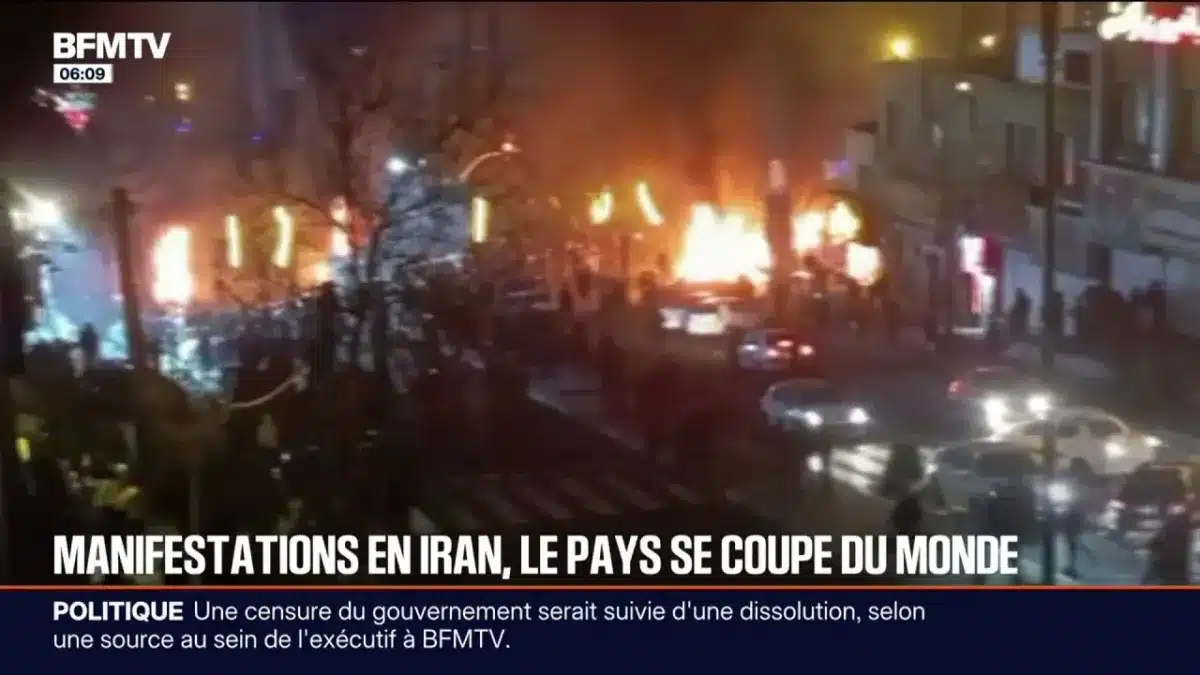
For more than two weeks, Iran has experienced demonstrations on an unprecedented scale. At least 3,500 people have been killed in the crackdown on protests. In the streets, Iranians are defying a weakened regime, while international pressure, particularly American, poses the threat of a historic shift.
A revolt on an unprecedented scale
The current protests in Iran are clearly different from previous protest movements. Since the Islamic Revolution of 1979, the regime has gone through several major crises (in 2009, in 2019 and again in 2022) without ever wavering for a long time. This time, the dispute concerns the entire territory And all levels of the population.
“This is the first time that everyone has risen at the same time”explains on Europe 1 Sara SafariFranco-Iranian activist and member of the association Azadi Woman. Persians, Kurds, Azeris, Baluchis: ethnic divisions are disappearing in favor of a common rejection of power. Mosques burned, official buildings attacked, hostile slogans to the regime chanted in the streets: the anger is no longer limited to sectoral demands.
Faced with this massive mobilization, the Iranian authorities respond with severe repressioncombining mass arrests, use of firearms and internet shutdowns to try to stifle the movement. According to the human rights NGO HRANA, more than 3,500 people have already been killeda report which illustrates the brutality of the regime’s response and the seriousness of the current crisis.
Why this anger in Iran?
If the dramatic economic situation served as a detonator, the movement in Iran goes far beyond the sole question of purchasing power. Iran is undergoing a chronic inflation, a strongly devalued currency, massive unemploymentparticularly among young people, and recurring shortages of essential goods. Added to this are the effects of international sanctions, which further weaken the daily lives of households.
In the street, some speak of a “ bread revolution » or a “revolution of the belly”, as economic survival has become a central concern. But the protest is rooted above all in a general fed up with the Islamic regime and its corruption.
Anger goes far beyond material issues and reflects a deep rejection of the Islamic regimein power for more than forty years. The demonstrators denounce a system deemed authoritarian, inefficient and corruptincapable of meeting the aspirations of a young, educated population connected to the rest of the world. The word “Fasād” (“corruption”) resonates in the demonstrations, a term already chanted in 1979 against the last Shah.
A still fragile political alternative
If the current dispute weakens the regimeIran’s political future remains uncertain. The crown prince Reza Pahlavison of the last Shah, tries to establish himself as a figure capable of embodying an alternative to the Islamic Republic. He calls for support for the uprising and says he is ready to support a transition. But this option deeply divides Iranian society. The American President Donald Trump himself expressed doubts about the ability of Reza Pahlavi to gather sufficient support within the country.
In the absence of unanimously recognized leadership and as long as the security apparatus remains loyal to power, the fall of the regime does not guarantee the immediate emergence of a clear political project for the post-Islamic Republic.