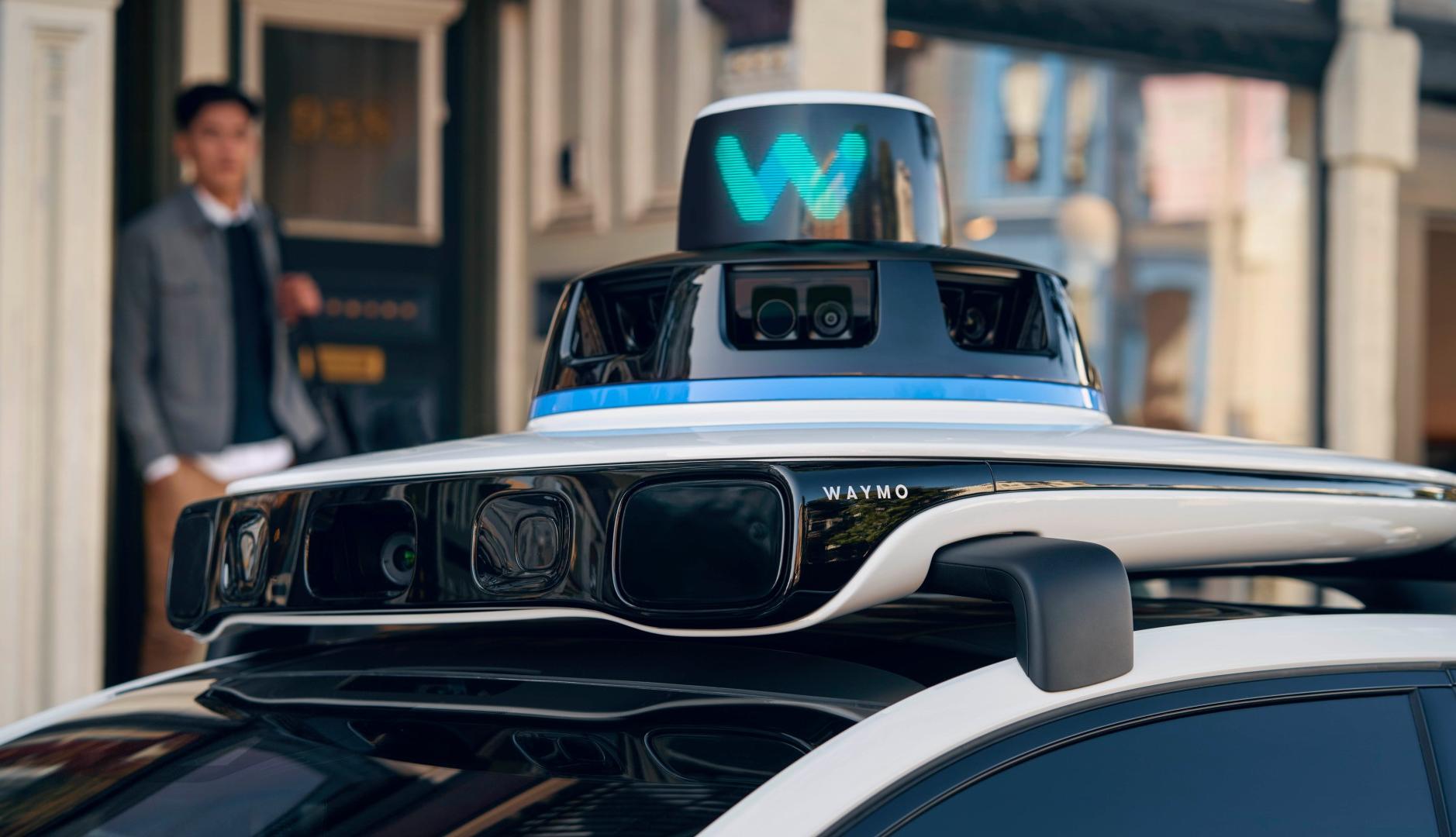
Waymo, Google’s autonomous car business, has announced its expansion to the Community of Madrid, where it plans to offer its passenger transport service in fully autonomous vehicles starting in 2027. In the coming weeks, a trial period will begin on the streets of the capital, Alcobendas or Getafe under the framework established by the General Directorate of Traffic (VEH Instruction 2025/07) in order to carry out mapping and collect the necessary data to begin its operations.
In the coming days, citizens of the region will begin to see Waymo’s Jaguar I-Pace electric cars in the testing phase. As explained by the company in a statement, a deployment will be carried out in phases with safety prioritizing. In this sense, the process will start with manual driving and will continue with technical validation with local autonomous vehicle specialists trained behind the wheel.
He assures that this validation period will guarantee that Waymo Driver, the autonomous driving system on which the service is based, adapts to the traffic patterns and specific road conditions of the Community, with which he assures he shares a vision of innovation. “We are proud to bring Waymo to Spain, starting with the Community of Madrid” said Tekedra Mawakana, Co-CEO of Waymo, in a statement.We share the region’s commitment to safer, more accessible and zero-emission mobility, and we look forward to working as collaborative partners to achieve those goals.“.
Madrid is the sixth city outside the United States in which Waymo establishes its services. It is also its first region of activity in Spain and the second in the European Union. Previously, the company had expanded to London, Munich, Singapore, Toronto and Tokyo. In this sense, its robotaxis will be backed by the more than 20 million paid trips provided and the 500,000 it makes each week in cities such as San Francisco or Los Angeles.
The company has taken the opportunity to point out that its technology is designed with safety as a priority, and this is supported by data collected after more than 400 million kilometers traveled in the different markets in which it operates: it maintains that Waymo Driver has recorded 95% fewer accidents with serious or fatal injuries than human drivers, which would be equivalent to an accident rate 20 times lower.
The arrival of Waymo in Madrid begins to draw a scenario of competition in the field of autonomous driving. And Google’s business will face that of Uber, WeRide and Avomo, which in June announced their arrival in the Community of Madrid with a commercial robotaxis pilot. The service, which is scheduled to launch before the end of 2026, can be booked through the Uber application and, like Waymo, has begun with safety operators at the wheel, before progressively moving towards completely autonomous journeys in urban areas.