Standing under a towering dinosaur skeleton in a museum can feel almost magical. These ancient creatures, extinct for millions of years, seem to come back to life thanks to carefully assembled bones that arouse the curiosity of all generations. What visitors rarely see is the long, complex journey that transforms buried fossil fragments into scientifically accurate displays.
Preparing dinosaur skeletons for study or display is meticulous work that combines geology, biology, chemistry and engineering. When original fossils are too fragile or incomplete, institutions often resort to replicas, sometimes from a dinosaur skeleton for sale, to support research and education. Understanding this process provides valuable insight into both the science of paleontology and the care required to preserve prehistoric history.
From discovery to excavation
Discovering fossils in the field
The journey of a dinosaur skeleton begins long before it enters a laboratory or museum. Paleontologists look for fossils in sedimentary rock formations where ancient rivers, floodplains, or deserts once existed. These environments are ideal for preserving bones under layers of sediment for millions of years. Fossil discovery often begins with small clues, like exposed bone fragments or subtle variations in rock texture caused by erosion.
Once a potential site is identified, researchers carefully document the surrounding geology. This step is essential because the location and position of each bone provides valuable information about the dinosaur’s age, its environment, and the possible circumstances of its death. Before excavation even begins, detailed notes, photographs and measurements are recorded to preserve scientific context.
Careful excavation and protection
Excavating dinosaur fossils requires patience and precision. Heavy machinery is avoided near fossil-bearing layers, as even slight vibrations can damage fragile bones. Instead, paleontologists use hand tools such as paintbrushes, small chisels, and dental instruments to gradually remove the surrounding rock. The goal is not speed, but accuracy and preservation.
Once exposed, the fossils are stabilized and wrapped in protective plaster shells reinforced with fabric. These shells hold the bones and surrounding matrix together, allowing secure transport to the laboratory. This stage marks the transition between discovery in the field and controlled scientific preparation.
Laboratory preparation and storage
Cleaning and removing the matrix
In the laboratory, the preparation of fossils becomes even more detailed. Technicians carefully remove the surrounding rock, called matrix, using fine tools and under magnification. This process can last weeks or even years, depending on the size and condition of the fossil. Each gesture is calculated to avoid damaging delicate surfaces that may retain muscle attachment marks or growth patterns.
Mechanical tools powered by compressed air are often used for harder rocks, while softer sediments are removed by hand. Throughout this process, the fossils are regularly examined to assess their stability and identify areas requiring strengthening.
Stabilization and repair
Most dinosaur bones are not fully mineralized and can fall apart if not supported. To prevent deterioration, conservators apply stabilizing solutions that penetrate the cracks and strengthen the fossil from the inside. These materials are carefully chosen so that they can be reversible or replaced as scientific techniques evolve.
Broken or fragmented bones are reassembled using conservation adhesives. The missing parts are sometimes reconstructed from reference specimens or scientific models. These reconstructions are always documented so that future researchers can distinguish the original material from the restored areas.
Creation of replicas and scientific casting
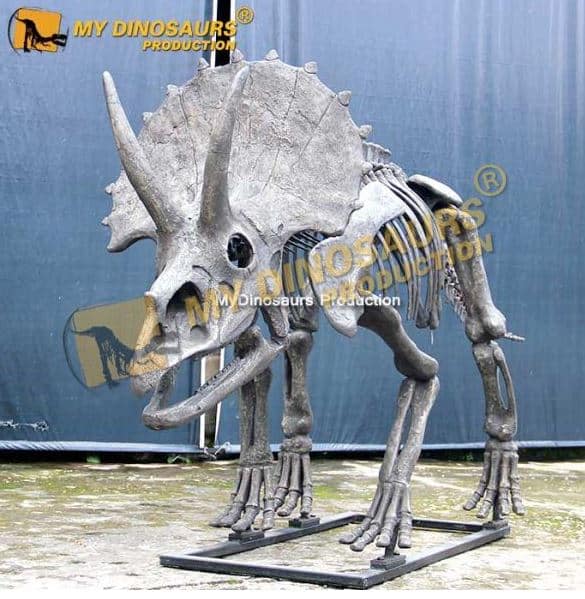
Not all dinosaur skeletons on display or studied are composed of original fossils. In reality, many institutions rely on replicas in order to protect rare specimens while presenting faithful representations. Casting involves creating impressions from the original bones and producing lightweight replicas using durable materials.
Replica skeletons play a vital role in education and research. They allow several institutions to study the same anatomy without risking damaging irreplaceable fossils. For this reason, a replica dinosaur skeleton for sale can be used in classrooms, traveling exhibitions or research contexts where accessibility and durability are priorities.
Structural assembly and assembly
Assembly planning
Before the bones are assembled, extensive planning is carried out. Scientists, engineers and exhibit designers collaborate to determine the posture and orientation of the skeleton. Decisions are based on current scientific knowledge regarding the dinosaur’s movements and behavior, as well as the spatial constraints of the exhibition area.
The montages can depict the dinosaurs standing, walking or in dynamic poses. Each choice reflects both scientific interpretation and educational goals, ensuring that the final exhibit conveys accurate information while remaining visually appealing.
Support structures and assembly
Dinosaur skeletons are supported by internal structures designed to support weight without distracting from the bones themselves. These support systems are designed to distribute stress evenly and prevent long-term damage. Original fossils often require more complex supports due to their weight and fragility, while replica skeletons are lighter and easier to assemble.
During assembly, each bone is carefully positioned and fixed. Joints are aligned according to anatomical studies, and missing bones are replaced with casts when necessary. This step transforms isolated bones into a coherent skeleton faithfully reflecting the anatomy of the dinosaur.
Exhibition Design and Display Considerations
Environmental controls and lighting
Once assembled, the skeleton must be protected from environmental factors that could cause deterioration. Temperature and humidity are closely controlled, especially for exhibits including original fossils. The lighting is designed to highlight anatomical features without producing excessive heat or ultraviolet exposure.
These precautions ensure the skeletons remain stable for decades, allowing future generations to learn from them. Even replicas benefit from controlled environments to preserve their appearance and structural integrity.
Visitor experience and accessibility
The exhibitions are designed with both educational and safety in mind. Barriers prevent accidental contact, while explanatory signs provide information about the species, age and discovery of the dinosaur. Interactive elements such as diagrams or digital media often accompany the skeletons to explain their preparation and the resulting scientific knowledge.
In many cases, institutions use a replica dinosaur skeleton for sale to create immersive experiences without putting rare fossils at risk. This approach allows a wider audience around the world to encounter life-size dinosaurs.
Authenticity versus practicality
| Appearance | Original fossils | Replica skeletons |
| Search value | Provide direct scientific evidence but require strict protection. | Faithfully represent anatomy for study without risking the originals. |
| Sustainability | Fragile and sensitive to handling and the environment. | More durable and suitable for frequent exposure. |
| Public access | Often limited in order to protect rare materials. | Allow broader educational and museum use. |
| Transparency | Must be carefully documented and retained. | Clearly labeled to ensure accuracy and confidence. |
Long-term care and maintenance
Long-term care and maintenance helps ensure the stability and preservation of dinosaur skeletons for future studies and exhibitions.
- Regular inspections help identify structural stresses, dust accumulation and environmental variations.
- Maintenance methods are minimally invasive to protect both the fossils and the replicas.
- Temperature and humidity are monitored to reduce the risk of deterioration.
- Continuous documentation allows future conservation updates to be made without loss of scientific information.
Conclusion
Preparing dinosaur skeletons for study or display is a remarkable blend of science, skill and patience. From the discovery of fossils in the field to their final installation in museums or research centers, each step is guided by a commitment to accuracy and preservation. Whether composed of original bones or carefully crafted replicas, such as a dinosaur skeleton for sale, these sets represent years of collaborative effort.
Understanding this process builds appreciation for the skeletons that inspire curiosity and wonder across the world. Behind each monumental structure lies a story of discovery, dedication, and the lifelong quest to understand life on Earth long before humanity appeared.