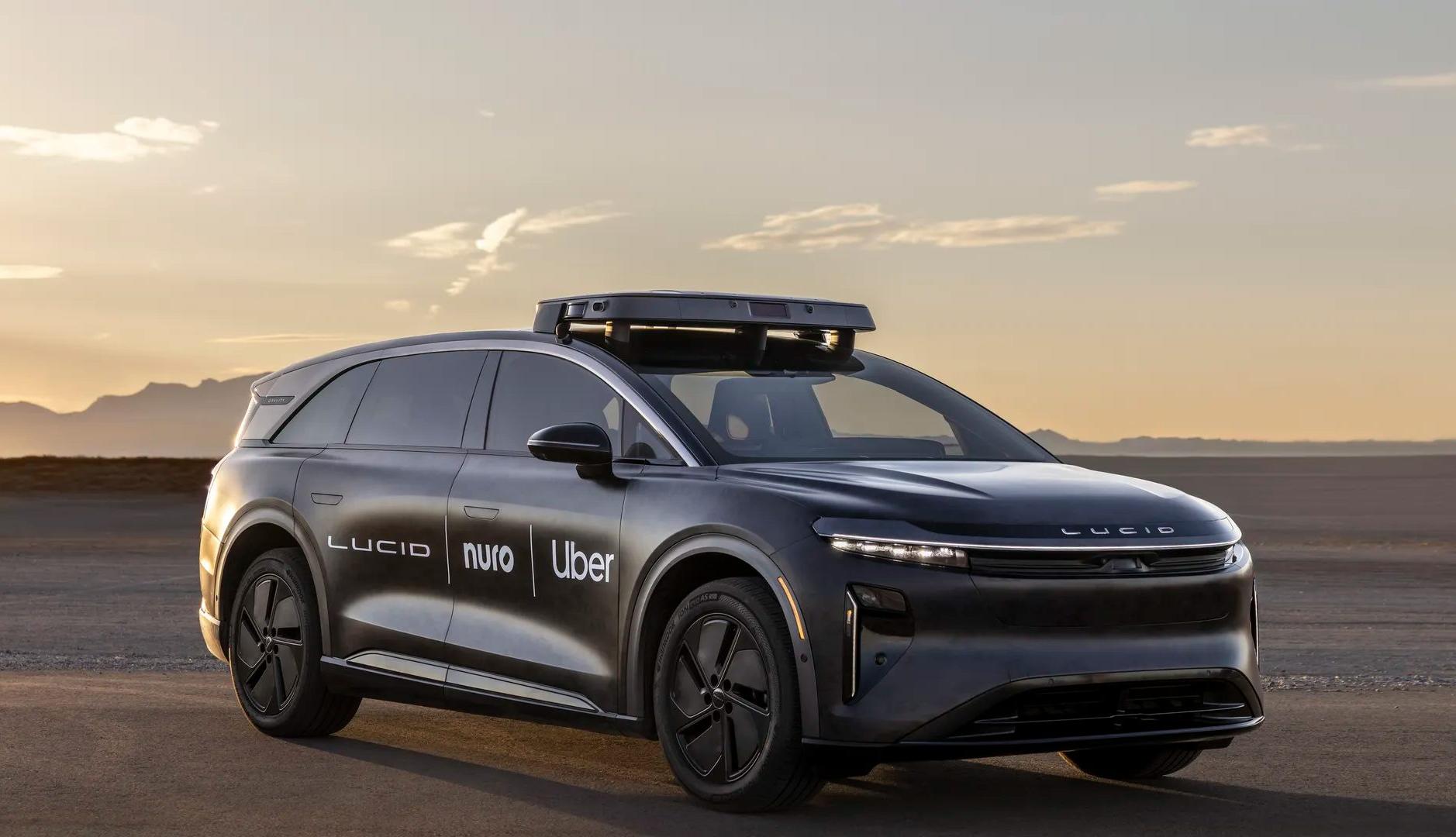
The mobility platform Uber wants to offer its robotaxis service in Madrid. This was announced by the company in its annual results presentation, announcing that it is already working to ensure that this type of autonomous vehicles circulate on the streets of the Spanish capital, with the intention of becoming the largest facilitator of trips in autonomous cars in 2029.
Madrid is one of the eight new destinations in which the company hopes to be present in the coming years, which also include cities such as London (United Kingdom), Hong Kong (China), Los Angeles (United States), Zurich (Switzerland) or Munich (Germany). The announcement would mark the company’s first foray into the European and Asian markets.
All of them would be added to the territories where it already operates, mainly the United States (Phoenix, Austin or Dallas) and the United Arab Emirates (Abu Dhabi or Dubai). Specifically, autonomous vehicle operations in Austin and Atlanta are among Uber’s fastest-growing areas in the United States.
The company aims to offer its services in more than 10 markets by the end of 2026
The company aims to offer its services in more than 10 markets worldwide by the end of 2026. However, the company has not given specific details about the exact date of the launch of the services in the aforementioned cities or which technology providers it will partner with, although it is expected that it will be with the partners it already works with.
And Uber has a wide list of partners and suppliers. In the hardware field, it collaborates with Stellantis, Mercedes-Benz, Volkswagen or Lucid; while with regard to self-driving technology, it maintains agreements with companies such as Waymo (Google), Nvidia, or Waabi. And for fleet management it has Avomo, Otto or New Horizon.
To reach new destinations, Uber has agreements with the Chinese company Baidu, which has a license to carry out small-scale autonomous driving tests in Hong Kong; or with WeRide, which has an autonomous driving license in some areas of Switzerland.
The deployment of this type of services usually occurs gradually. In the early phases, vehicles still require the presence of a driver to supervise that the car is driving correctly and take control in case of emergency. However, in cities like San Francisco, robotaxis are already regularly operated on the roads.
The announcement is part of the company’s strategy, which contemplates the expansion of autonomous vehicles as one of the pillars of its international growth. To achieve this, Uber is investing hundreds of millions of dollars in alliances with autonomous driving companies and in the purchase of fleets of robotaxis.
In our country, the General Directorate of Traffic already applies the Framework Program for the Evaluation of Safety and Technology of Automated Vehicles, and since the summer of 2025 it allows the testing of autonomous cars on real roads.
This has allowed Tesla to offer tests on this type of vehicle in Madrid, Barcelona, Valencia, Seville and Malaga from the end of January until April.
Specifically in Madrid, the Community of Madrid is working on a Mobility Law, with which it plans to “promote the deployment of autonomous vehicles.” For its part, the City Council is opening the doors to autonomous vehicles, for example, with the autonomous bus pilot project launched in September 2025. On the other hand, it has also presented the White Paper on Urban Air Mobility, a tool that seeks to position the Spanish capital as a European benchmark in the integration of urban air transport.