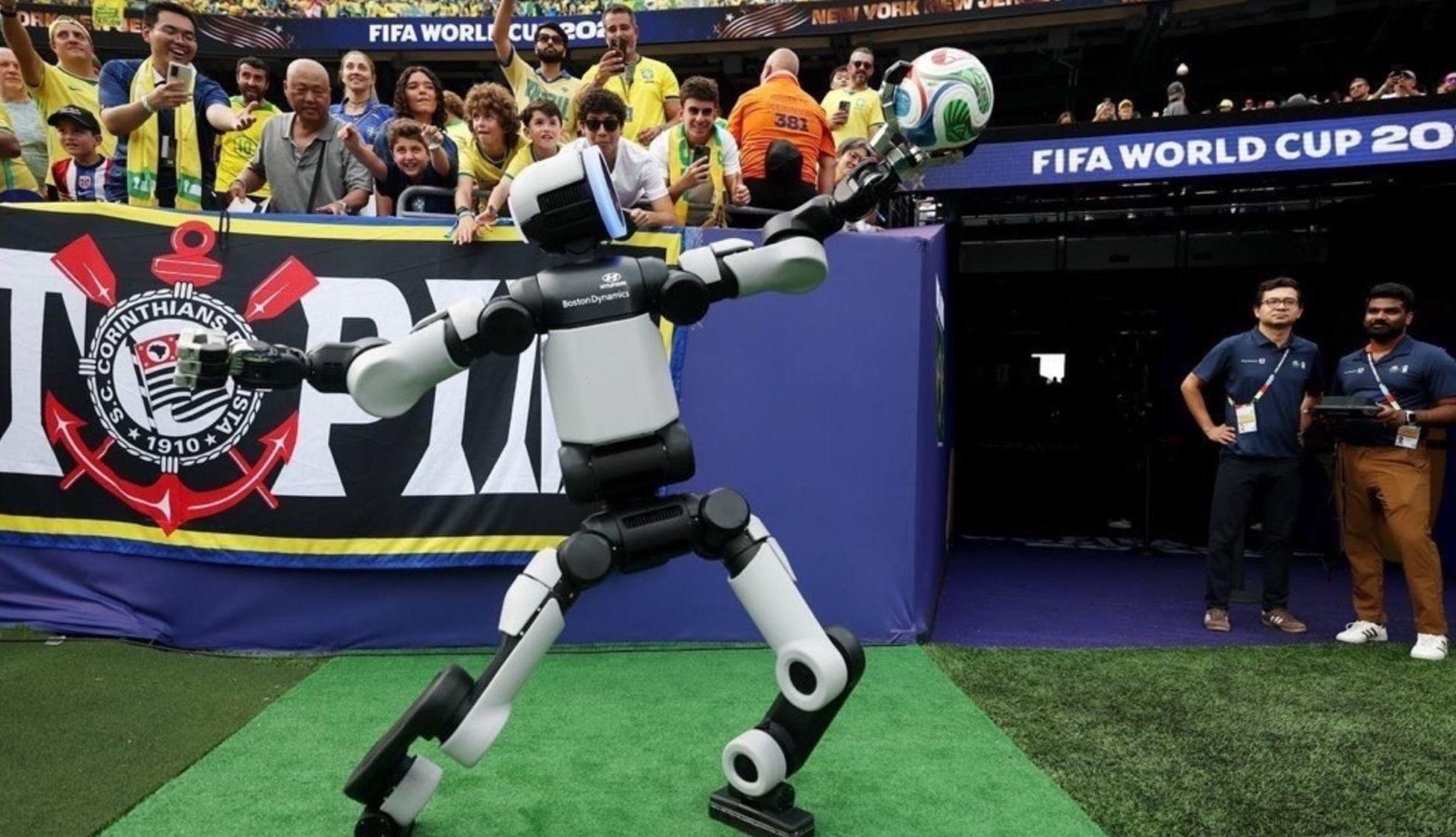
Iconic goal celebration recreations inspired by some of the world’s most celebrated footballers, including Harry Kane, Erling Haaland, Matheus Cunha and Son Heung-min; and the delivery of the ball to the referee to start the second half of the match. That was the performance of Atlas, an advanced humanoid robot developed by Boston Dynamics, during which it was the first robotic activation during a break in a World Cup match.
It took place on Sunday, July 5, in the round of 16 match between Brazil and Norway at the New York/New Jersey Stadium and was powered by Hyundai Motor, which acquired Boston Dynamics in June 2021. The brand, which serves as the tournament’s official robotics partner, defines the Atlas display during the event as “a historic display”.
“Hyundai Motor performed first-ever half-time robotic activation on football’s biggest stage, bringing advanced robotic technology to a live global audience“; the company explained in a statement. “This moment underscores Hyundai’s growing leadership in robotics and its commitment to advancing human-centered innovation through experiences that connect technology to people in meaningful ways.”.
Robots and football: Hyundai’s sponsorship of the World Cup
Atlas is a robot designed for the industrial ecosystem, but Hyundai has trained it in soccer as part of its sponsorship of the 2026 World Cup and its agreement with FIFA. What’s more, the robot has been the protagonist of the global campaign “Next Starts Now”, with which the automobile company has sought to connect consumers through football and inspire the next generation of players, fans and innovators. In addition to showcasing advances in robotics, the campaign has also highlighted Hyundai’s latest vehicle models.
Specifically, at the end of May, Hyundai launched “School of Football,” a campaign that presented Atlas as if he were a soccer player. The company has relied on the codes of sport as a universal language to explore the future of robotics through expression, emotion and passion for football.
Unlike traditional product demonstrations, Hyundai chose to present the robot with a narrative approach. Thus, the campaign was made up of a series of pieces that built a story in continuity: from the observation of human passion and creativity in football to learning the sport.
The company assures that all the movements that appear in the campaign were carried out by Atlas without the use of computer generated images, with which Hyundai has tried to convey its commitment to engineering and precision and reinforce both its authenticity and its credibility.
In this sense, the live activation during the match is part of an entire brand storytelling in which Hyundai has combined innovation, engineering, football and emotion. Its integration into the tournament represents the evolution of traditional conceptual demonstrations in controlled environments to real experience in a dynamic setting and in a context of maximum notoriety.
“We wanted Atlas’ performance on the world’s biggest stage to demonstrate that the future is not something we imagine, but begins now.“; commented Sungwon Jee, Executive Vice President and Global Chief Marketing Officer of Hyundai Motor Company, in a statement. “We are committed to developing human-centered innovations that integrate seamlessly into everyday life, demonstrating that robotics can be a trusted partner in the progress of humanity through diverse and creative brand experiences”.
As Hyundai explains, Atlas’s performance at half-time was possible thanks to the combination of several robotic capabilities. On the one hand, reorientation technology, which allows the robot to translate and adapt human movements; on the other, reinforcement learning, which uses thousands of simulations to train and perfect movements; and finally, full body control, which facilitates fluid, balanced and dynamic movement.
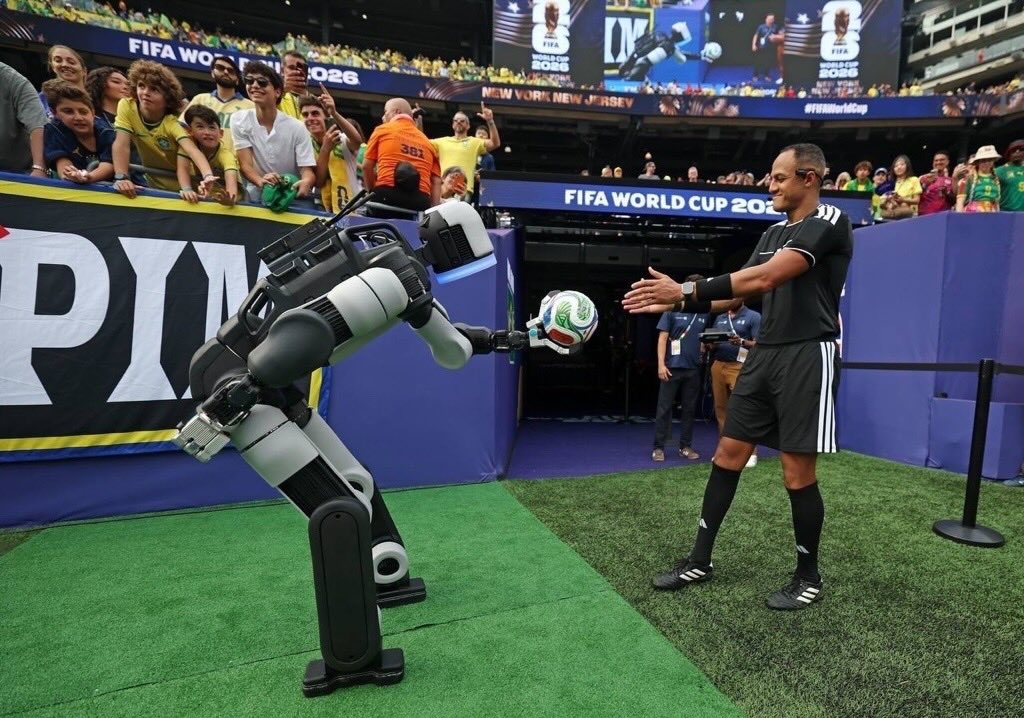
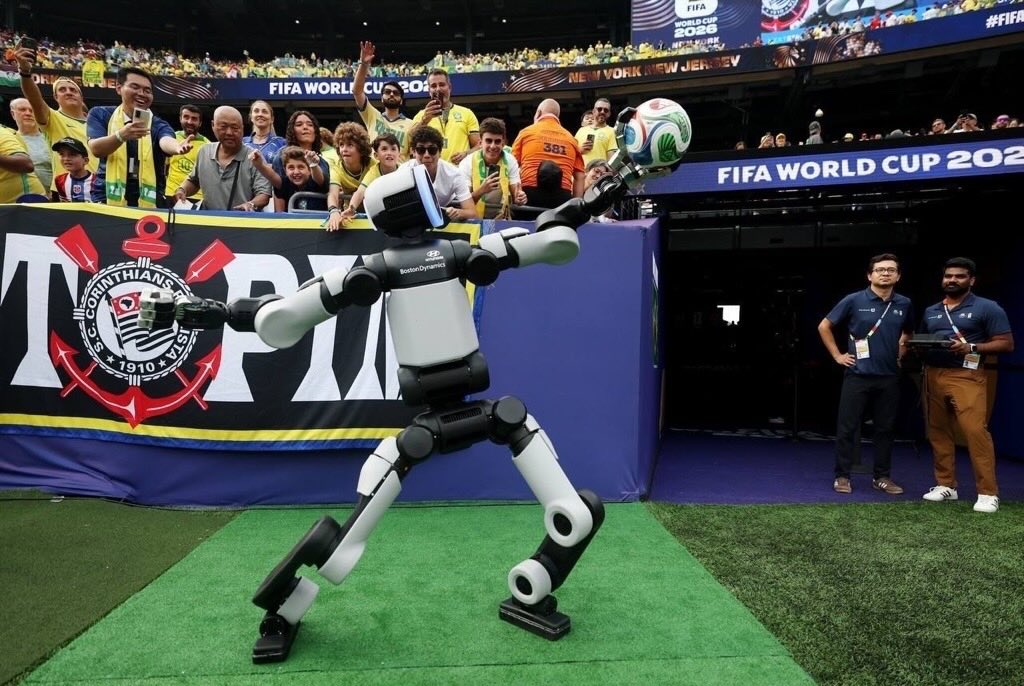
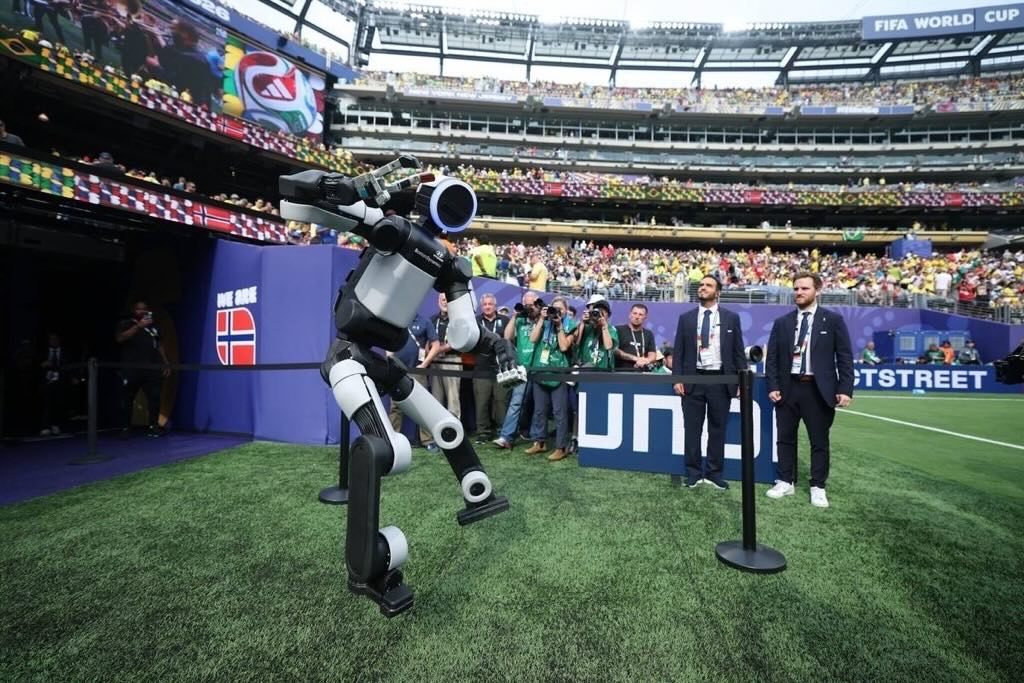
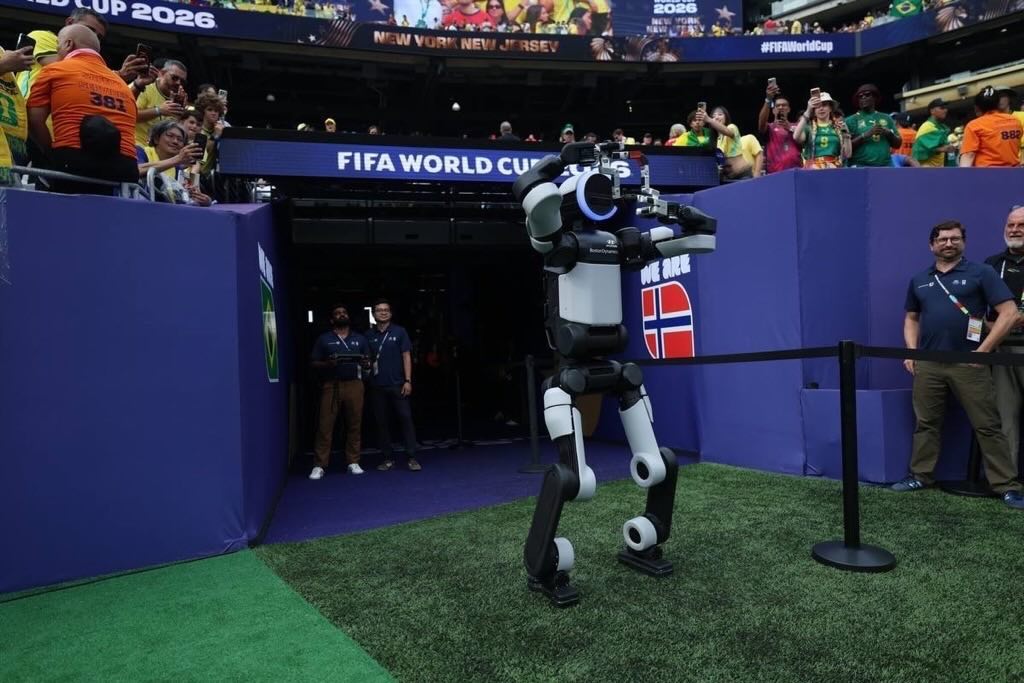
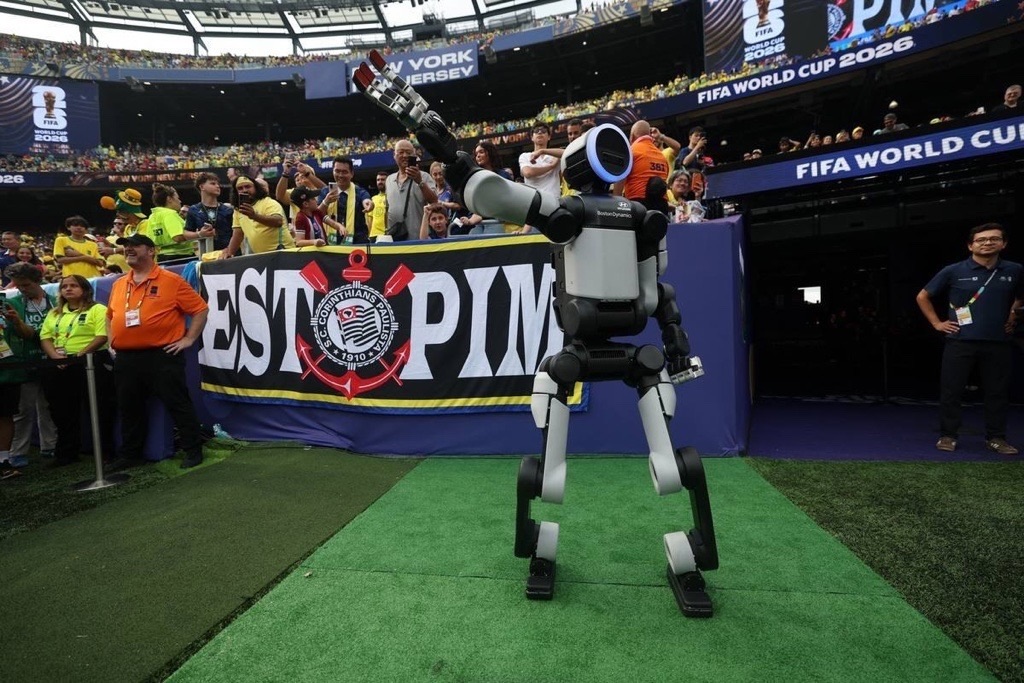
Hyundai assures that the activation represents a milestone for robotics as it is, on the one hand, the first integration of a humanoid robot in a live match at the Soccer World Cup; and on the other, the first public demonstration of the real-world movement capabilities of the production version of Atlas. “By bringing robotics into a live sports environment, Hyundai Motor advances its vision of “Progress for Humanity” and demonstrates how robotic innovation can create meaningful experiences for people around the world.“; points out the automobile company.
The entire process of training and preparing the robot for its performance at the World Cup has been captured in a documentary-style advertising short film, produced by BBC StoryWorks Commercial Productions.
What is Atlas like?
Atlas was officially presented at the CES 2026 conference, held from January 6 to 9 in Las Vegas. Hyundai and Boston Dynamics say it is a general-purpose humanoid robot that is designed for industrial applications. Thus, it is designed to integrate with the facilities and evolve according to business needs, all prioritizing security and reliability.
It is equipped with rotational joints, advanced sensors, or human-scale hands with touch sensors, allowing it to navigate complex environments, perform repetitive tasks, and leverage AI-based learning to quickly adapt to new functions. It has a mechanical design that offers dynamic movement, the ability to operate independently and to learn tasks in less than a day. Among other things, Atlas can lift up to 50kg and perform high-precision tasks; It is waterproof and can operate at full capacity even at temperatures of 40°C.
For Hyundai, Atlas marks the beginning of a new era in industrial robotics. What’s more, the company already plans to integrate it into its global network, including the Hyundai Motor Group Metaplant America (HMGMA) in Savannah (United States), which will allow it to perform real tasks on site. Starting in 2028, Atlas will be implemented in processes such as part sequencing; and by 2030, applications will extend to component assembly.