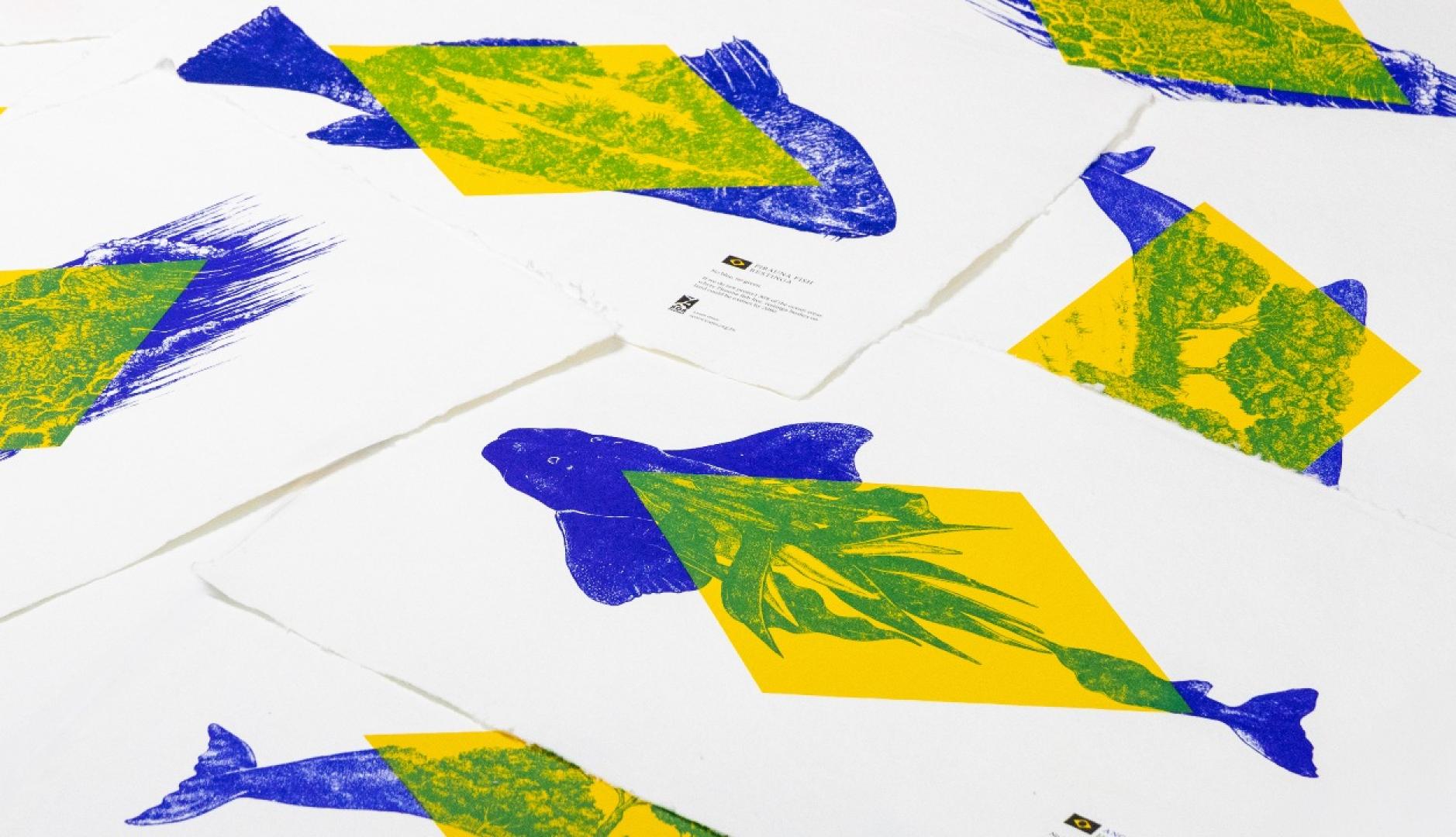
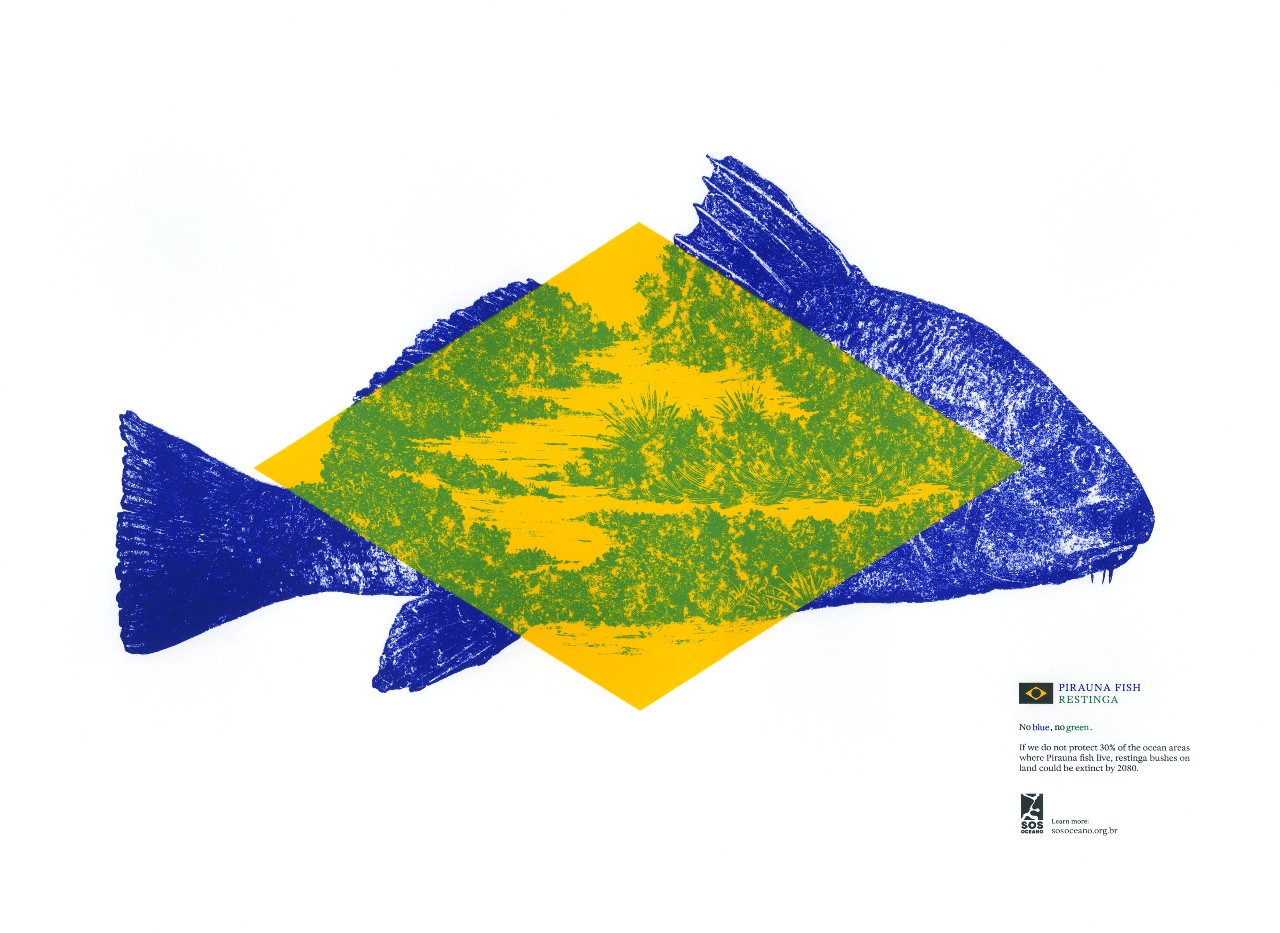
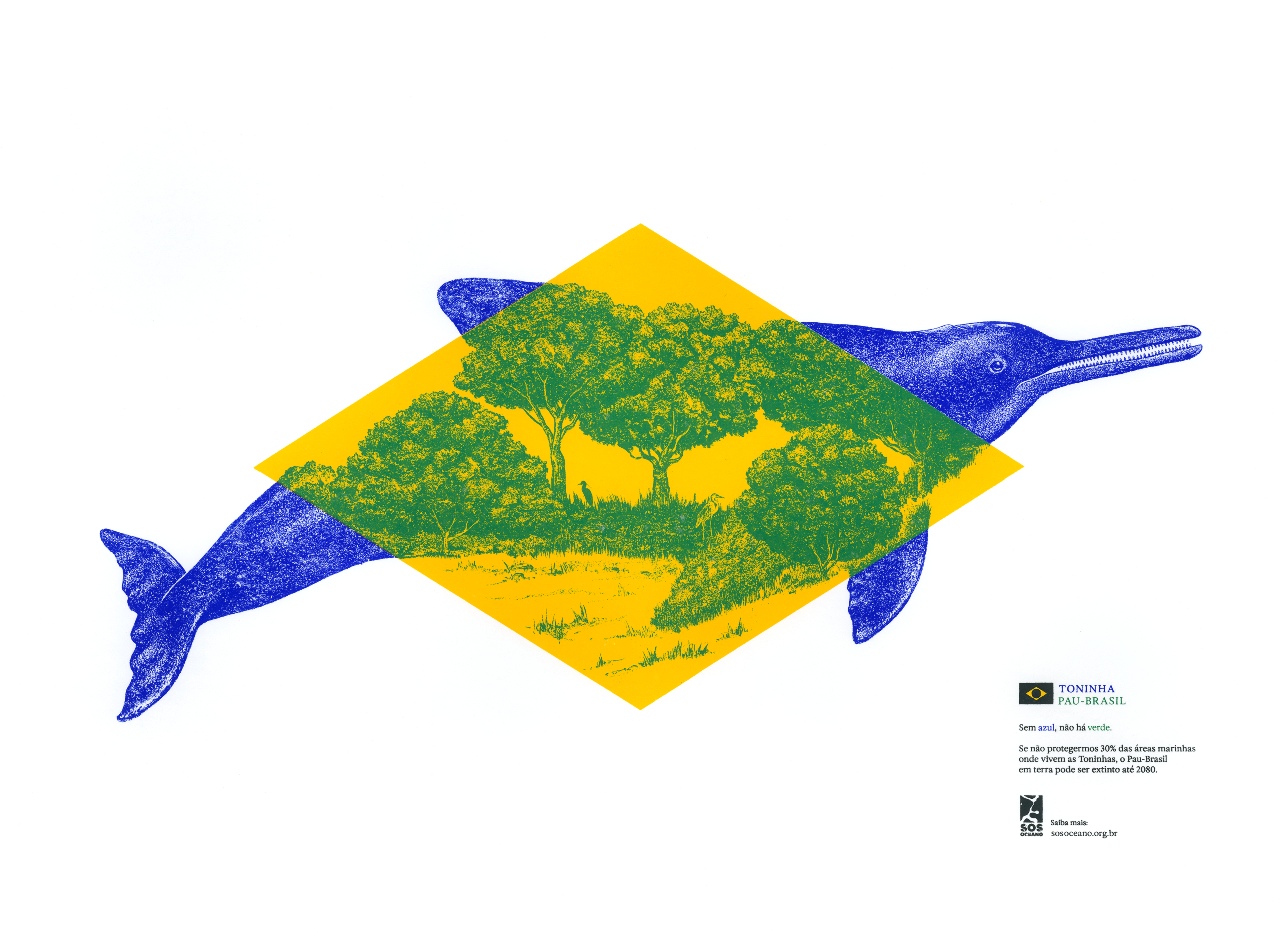
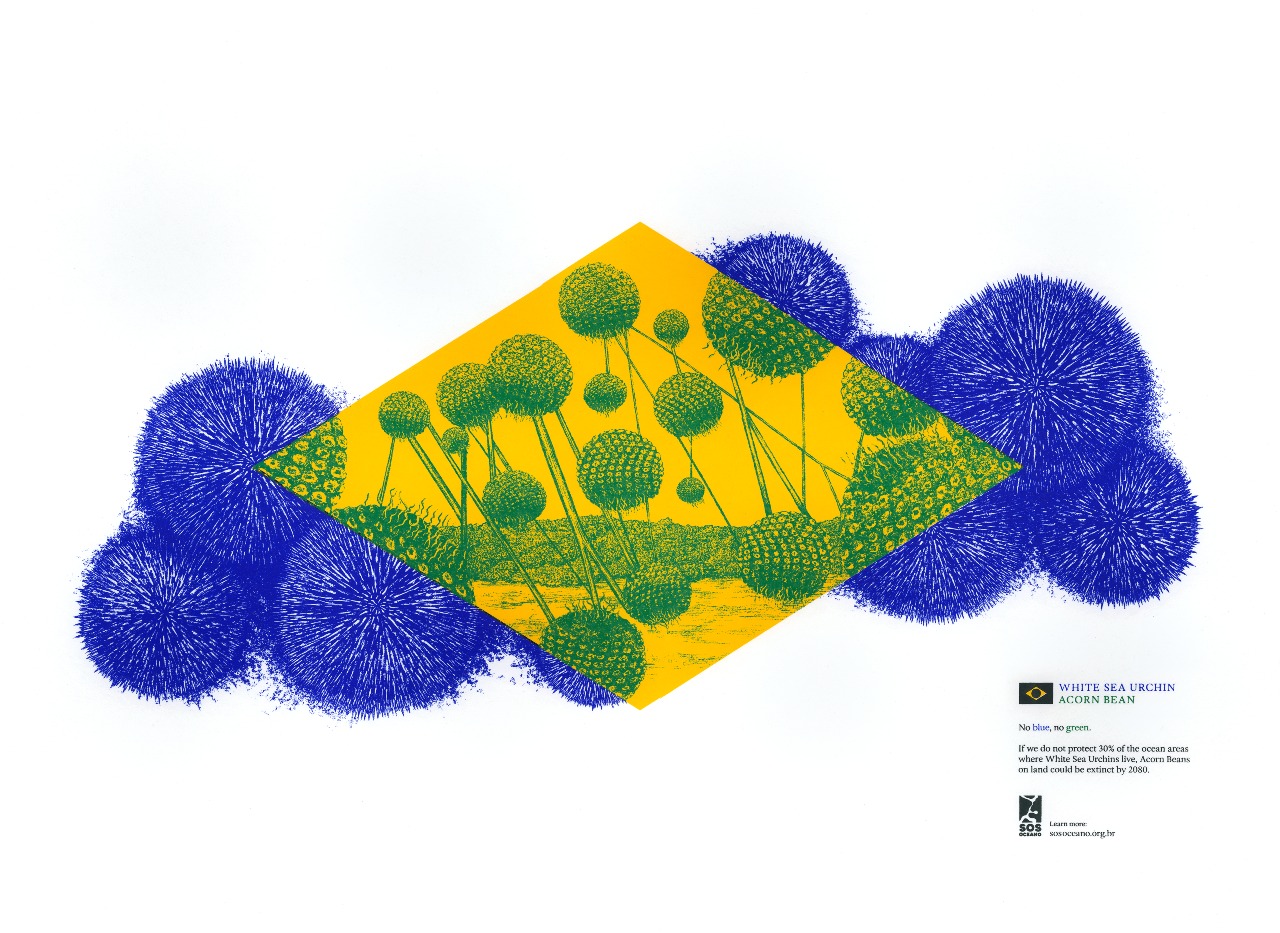
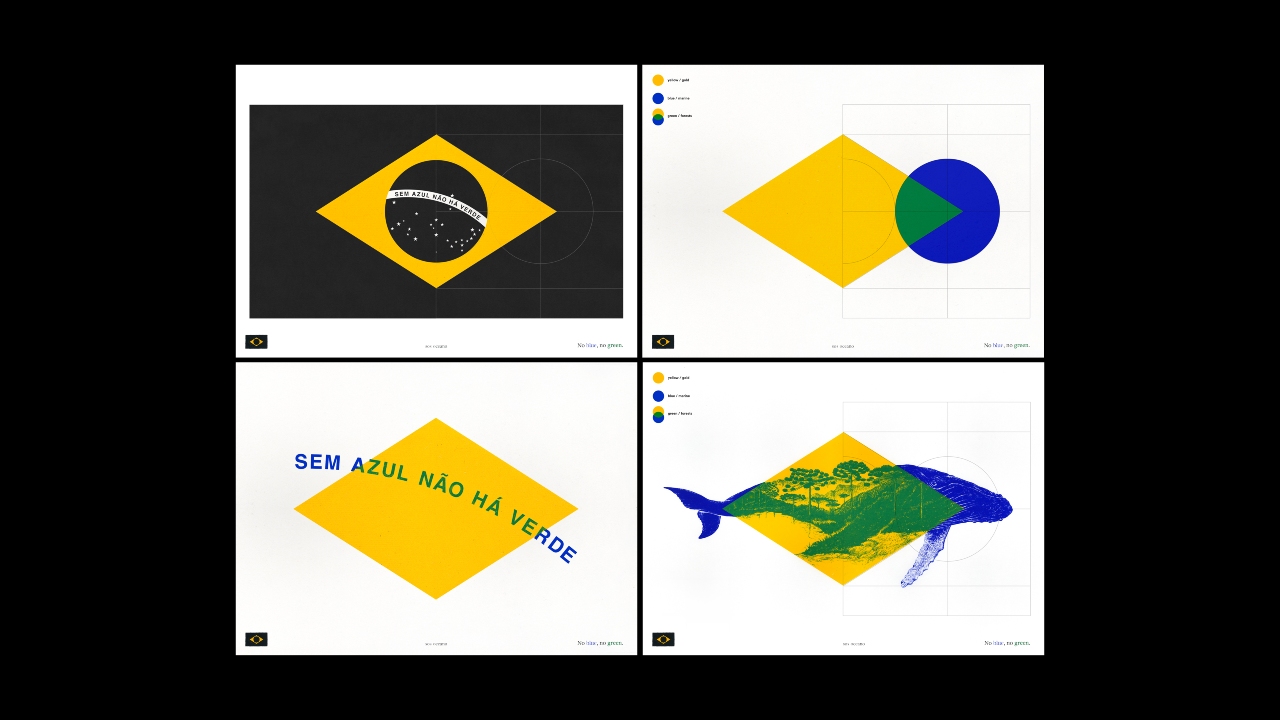
The Droga5 São Paulo agency has launched the second phase of “No Blue, No Green”, the campaign developed for SOS Oceano with the aim of raising awareness about the need to expand marine protected areas in Brazil. The initiative materializes in a limited collection of six screen-printed works that reinterpret the Brazilian flag through color theory: without the blue of the ocean, the green of the earth disappears.
The pieces combine marine species, such as the humpback whale, with flora and fauna of the Amazon within the yellow diamond of the flag, evidencing the connection between both ecosystems. For its development, the agency has collaborated with Black Madre Studio and Joules & Joules Laboratory, using natural mineral pigments and screen printing techniques that guarantee chromatic precision and coherence with the environmental message. The result is a series of works that, from artisanal aesthetics, reinforce the tangible and cultural character of the discourse.
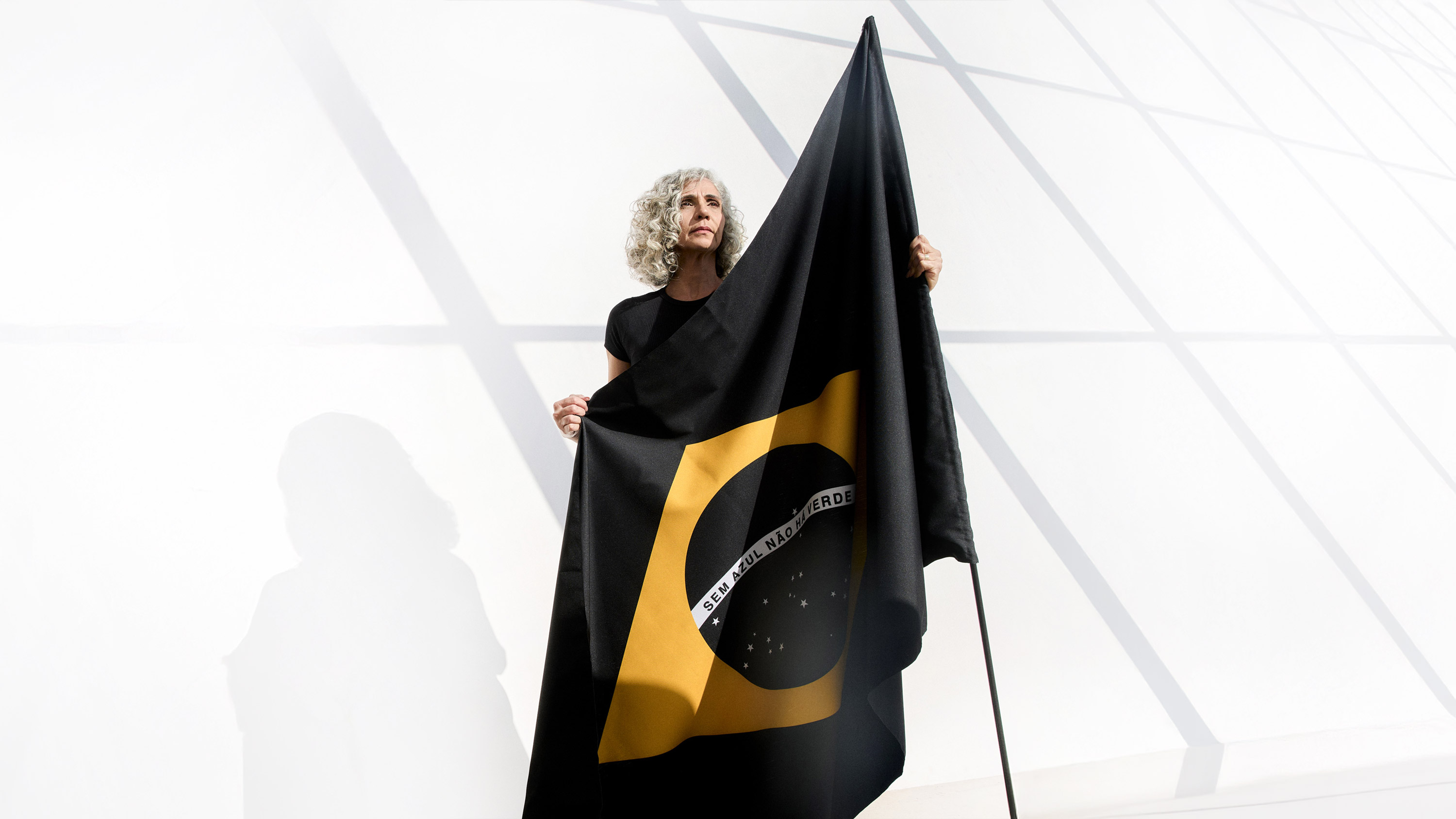
The campaign continues a first phase presented in 2025, in which the blue and green colors of the flag were eliminated to illustrate the dependency between oceans and territory.
In this new stage, the approach evolves towards a more visual and detailed narrative, integrating elements of Brazilian naturalistic iconography to build a richer representation of that relationship. As Diego Limberti, Chief Design Officer of Droga5 São Paulo, explains, the project seeks “condense a complex truth into a symbol that can be felt.”
The use of screen printing responds to both technical and conceptual criteria. It allows you to work with layers of ink and color nuances, while connecting with graphic and artisan tradition, reinforcing the cultural dimension of the initiative. The choice of natural pigments, developed specifically for the project, avoids the use of synthetic solvents and aligns the production process with the sustainability values defended by the campaign.



“No Blue, No Green” is part of a broader SOS Ocean strategy to mobilize society around the protection of marine ecosystems. The coalition, made up of various organizations, works to promote public policies, environmental education and awareness campaigns aligned with the United Nations Sustainable Development Goals.
The initiative connects with other recent proposals that have used color as a creative argument to explain invisible relationships between ecosystems. This is the case of Real Betis Balompié, which, also under the concept “without blue there is no green”, transferred the dependence between the ocean and terrestrial biodiversity to the field of football.
In both cases, color stops being an aesthetic resource and becomes a strategic language capable of translating complex problems into understandable and culturally relevant ideas.