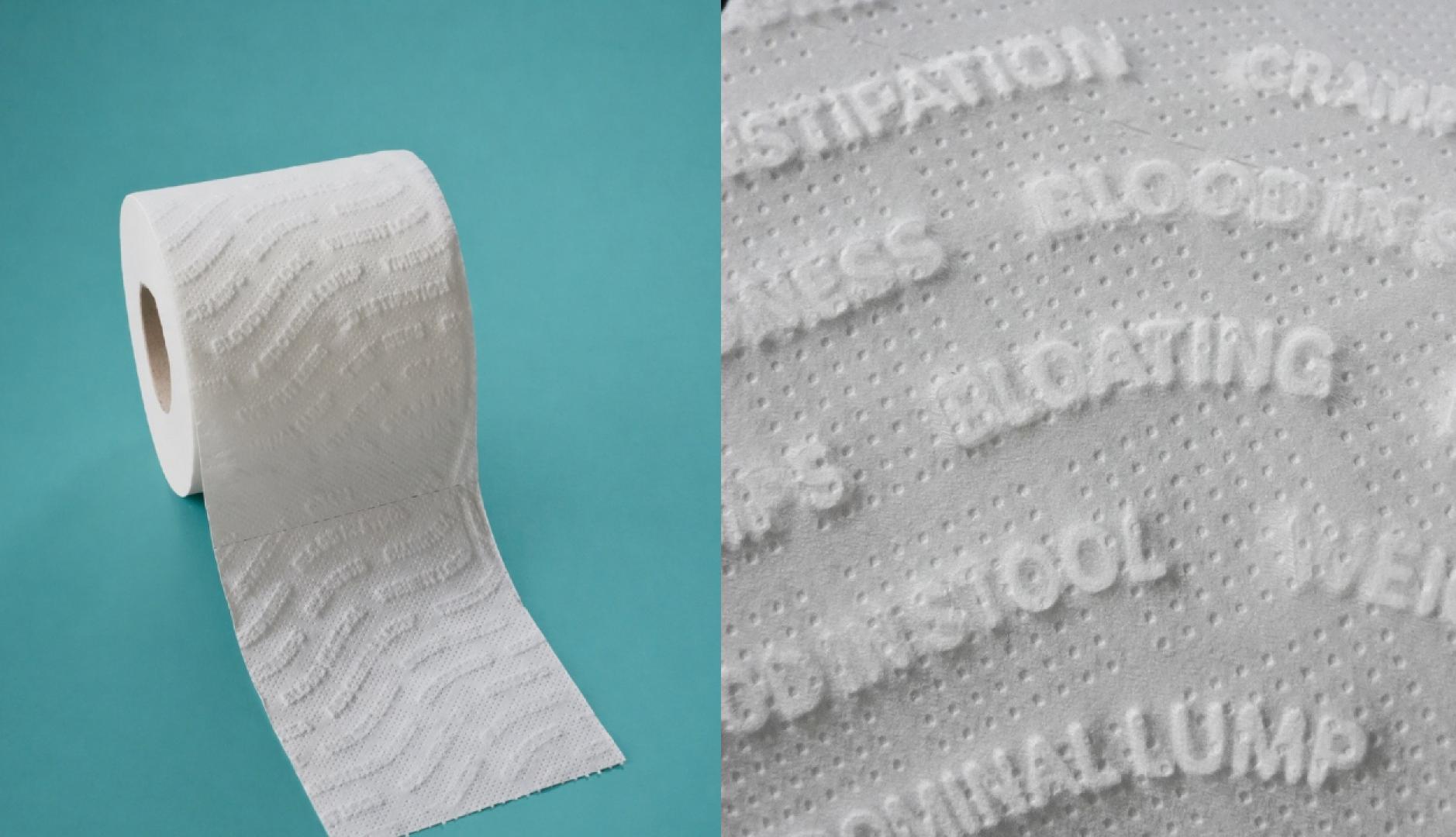
The Marie Keating Foundation has launched a colon cancer awareness campaign that is built on a counterintuitive idea: create an advertising piece that can go unnoticed. Under the concept “The Ad That’s Easily Missed”, developed together with the Boys+Girls agency, the initiative seeks to reflect how the symptoms of this disease are often ignored or confused with everyday discomforts.
The execution materializes in a toilet paper holder with embossed messages that are barely visible to the naked eye. These subtle marks show symptoms such as diarrhea, constipation, abdominal pain or fatigue, reproducing the real difficulty of detecting them on a daily basis.
The proposal is based on an observation: many people tend to downplay physical signs that could indicate a serious health problem. “What if we created an ad that went against the purpose of advertising?”says Dean Ryan, Associate Creative Director at the Boys+Girls agency.
The campaign also extends to outdoor, digital and social networks, maintaining the same visual code to reinforce the message, emphasizing that what is important is not always what is most visible.
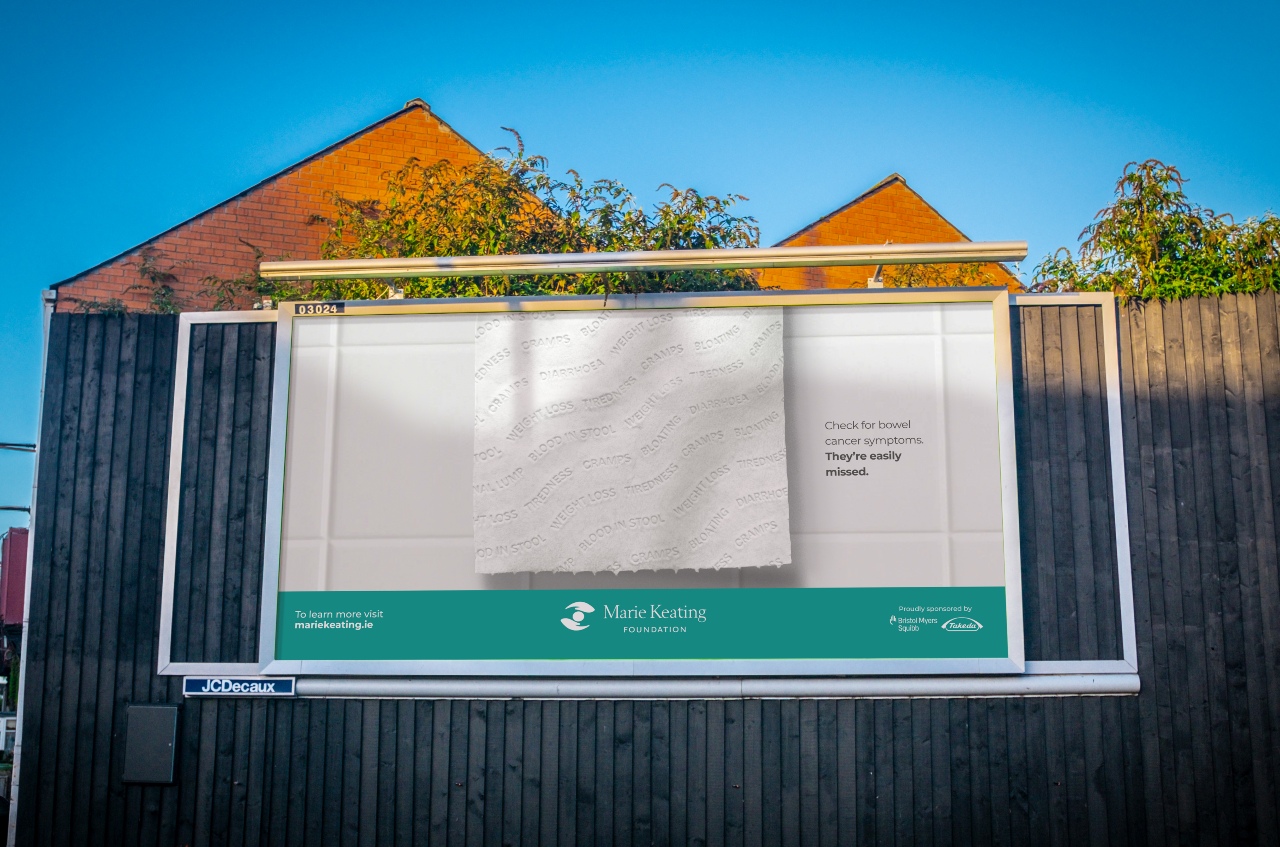
As part of the activation, the organization has developed “The Life Saving Loo Roll,” actual rolls distributed to continue amplifying the message in the home environment. The action turns toilet paper into a physical reminder of the importance of paying attention to signals that, precisely because of their familiarity, may go unnoticed.
According to data from the organization, around 2,500 people are diagnosed with colon cancer each year in Ireland, making it one of the main causes of death from cancer in the country. “Many of the symptoms can easily be attributed to stress, diet or common conditions, which delays medical consultation”explains Liz Yeates, CEO of the Marie Keating Foundation.
Early detection is decisive: five-year survival rates reach 97% in early stages, compared to 14% in advanced stages. In this context, the campaign makes visible what is normally ignored.