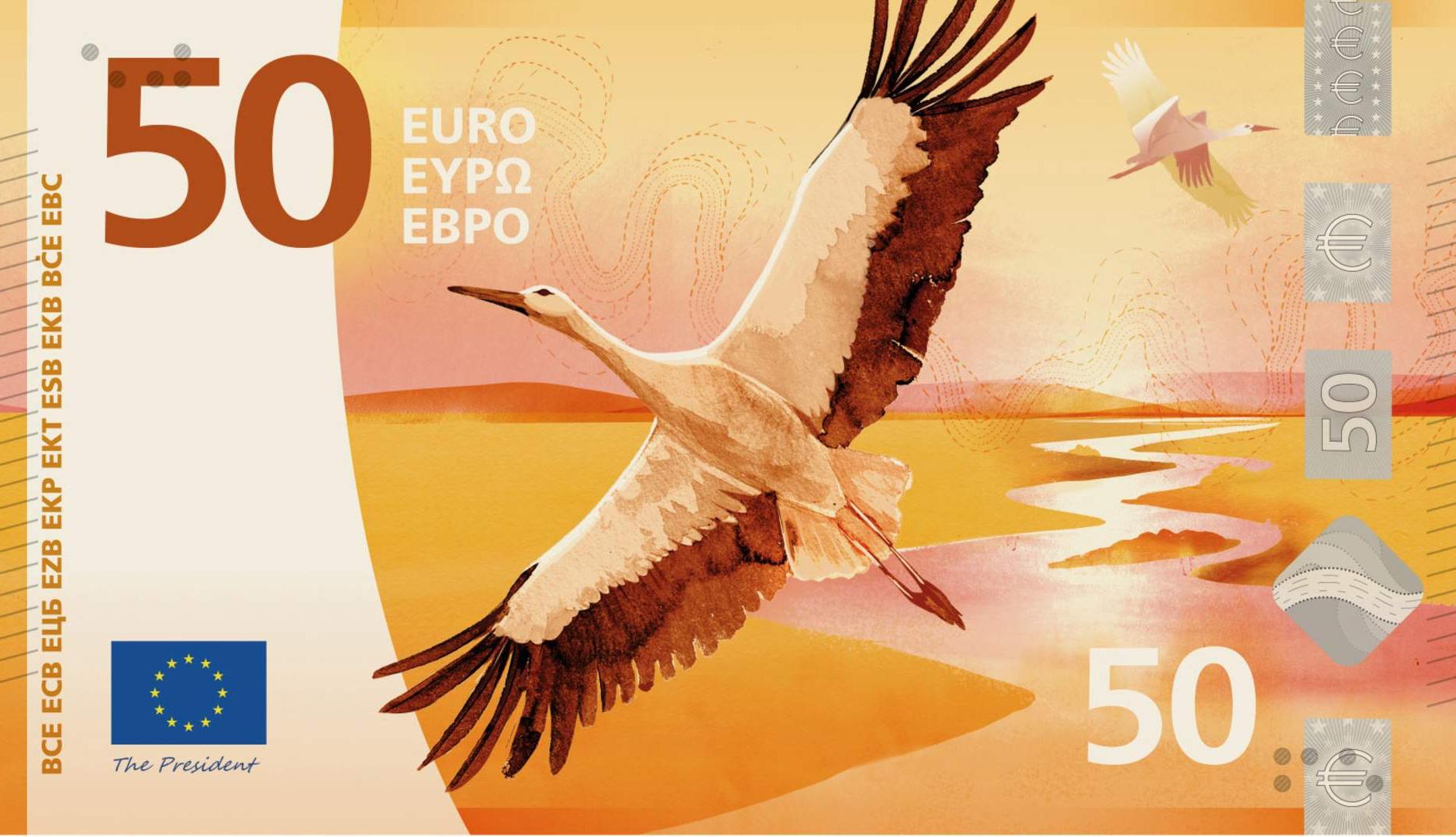
The euro is deciding its new look. And the European Central Bank (ECB) has announced the design proposals selected for the next series of euro banknotes, which represents the first complete redesign of the banknotes since their issuance in 2002.
The preselected proposals, as explained by the organization, come from the design competition called by the European Union last year at the community level and in which more than 1,200 graphic designers participated. Of these, 25 were invited to submit proposals for one or both themes.
The proposals have been selected by a jury made up of 21 experts
The ten designs now selected have been chosen by an independent jury made up of 21 experts in different fields, such as graphic design, communication, neurosciences and history. These are designers, architects, photographers, agency heads or university professors, and each of them has been appointed by a central bank in the euro area.
The proposals are now being submitted to an online public survey that will remain active until September 21. The process, the ECB explains in a statement, is a fundamental element of the Eurosystem’s inclusive approach and ensures that the views of citizens across Europe are taken into account.
Furthermore, as he explains, an independent opinion research company will carry out a parallel survey in which a representative sample of citizens of the euro area will be invited to respond to the same questions. The ECB will publish a report on the results of both surveys once the final design concept has been selected.
These are the design proposals for the euro banknotes
The designs respond to two themes: on the one hand, “European culture”, to remember the common heritage and famous European figures, such as María Callas, Miguel de Cervantes or Leonardo da Vinci; and on the other, “Rivers and Birds”, with the intention of highlighting the resilience and diversity of the natural world, complemented by European institutions.
These topics were announced in January 2025 and, as noted at the time, arise from the suggestions of two multidisciplinary advisory groups from across the euro area, as well as the preferences expressed by more than 365,000 Europeans in public surveys carried out in the summer of 2023. Focus group meetings were also held between December 2021 and March 2022.
Here you can learn more about the different designs; and below we break down the strategy behind each of them:
Design A – Studio Joost Grootens
This design focuses on the eyes of great European figures, alluding to observation, perception and reflection. It also puts the focus on the mouth to symbolize expression, dialogue and exchange. With this it seeks to highlight the human capacity for cultural creation. On the reverse, contemporary cultural spaces show people of different backgrounds and ages coming together, interacting and sharing.
Design B – PunktFormStrich
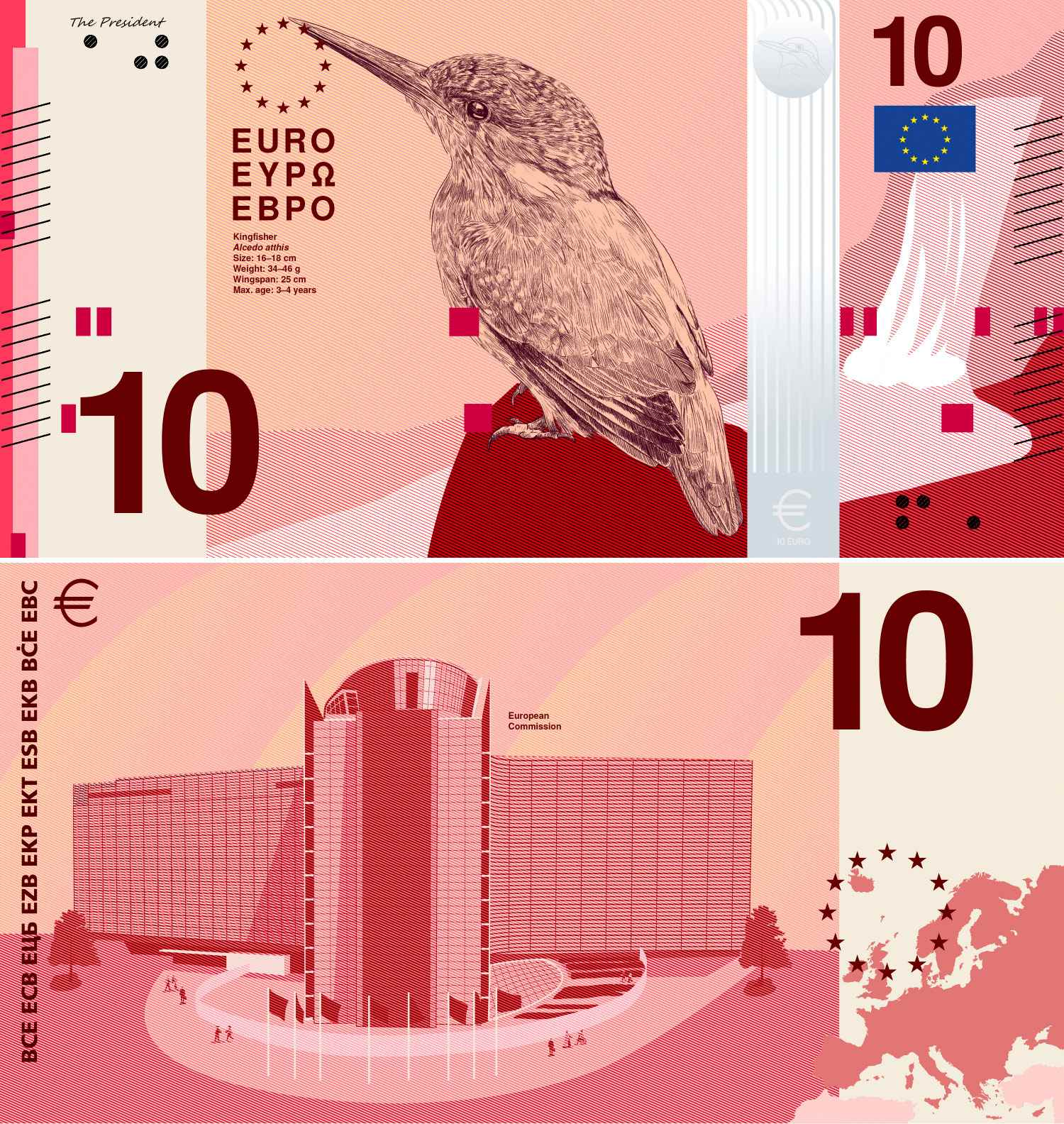
In this proposal, each bill presents a specific species of bird in relation to its habitat. It includes horizontal bars that visually represent each bird’s song, while a vertical scale indicates its flight speed; and information and data about the species represented are also included. On the reverse, institutional buildings of the European Union and the map of the continent are shown.
Design C – Neue Gestaltung GmbH
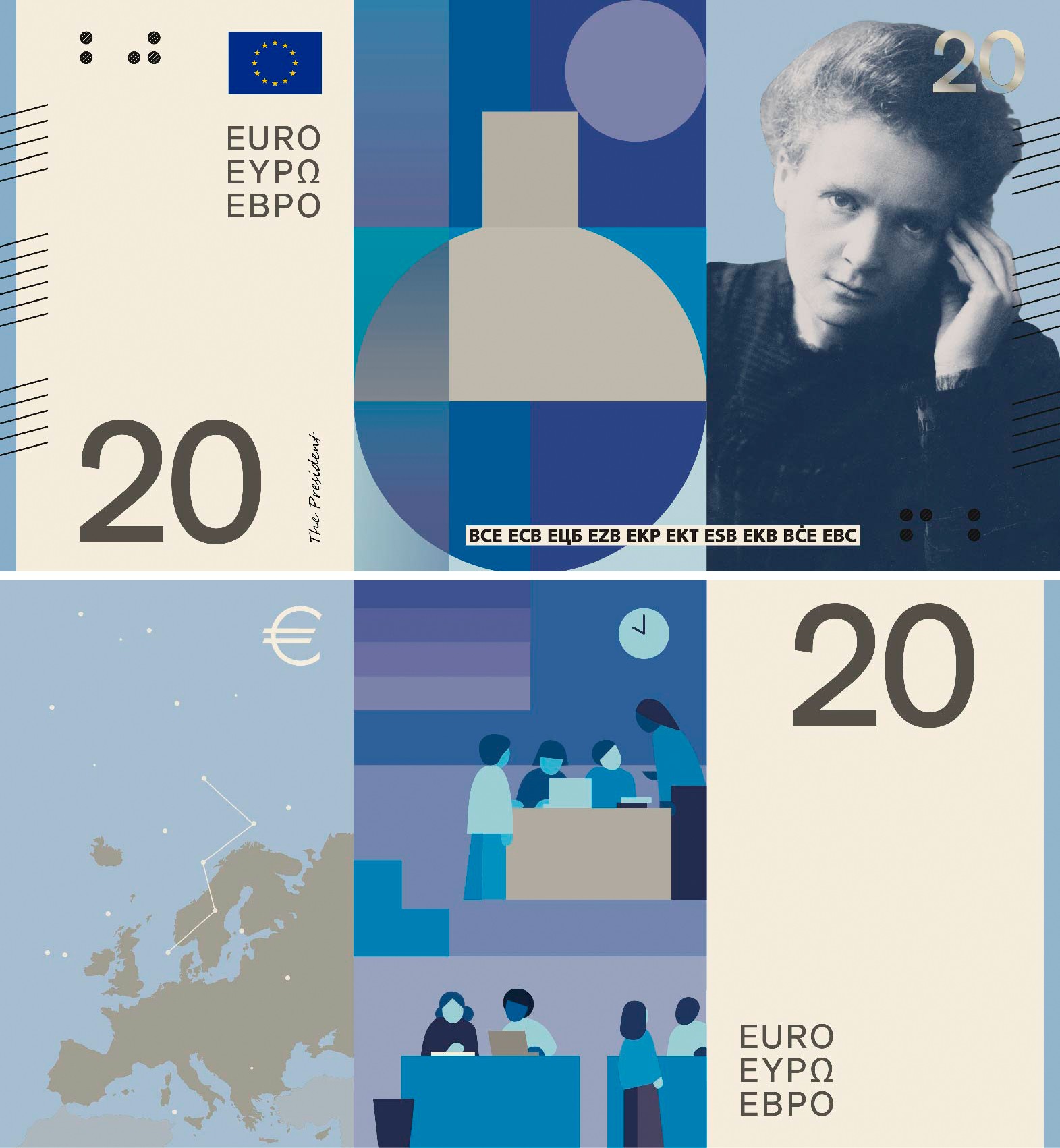
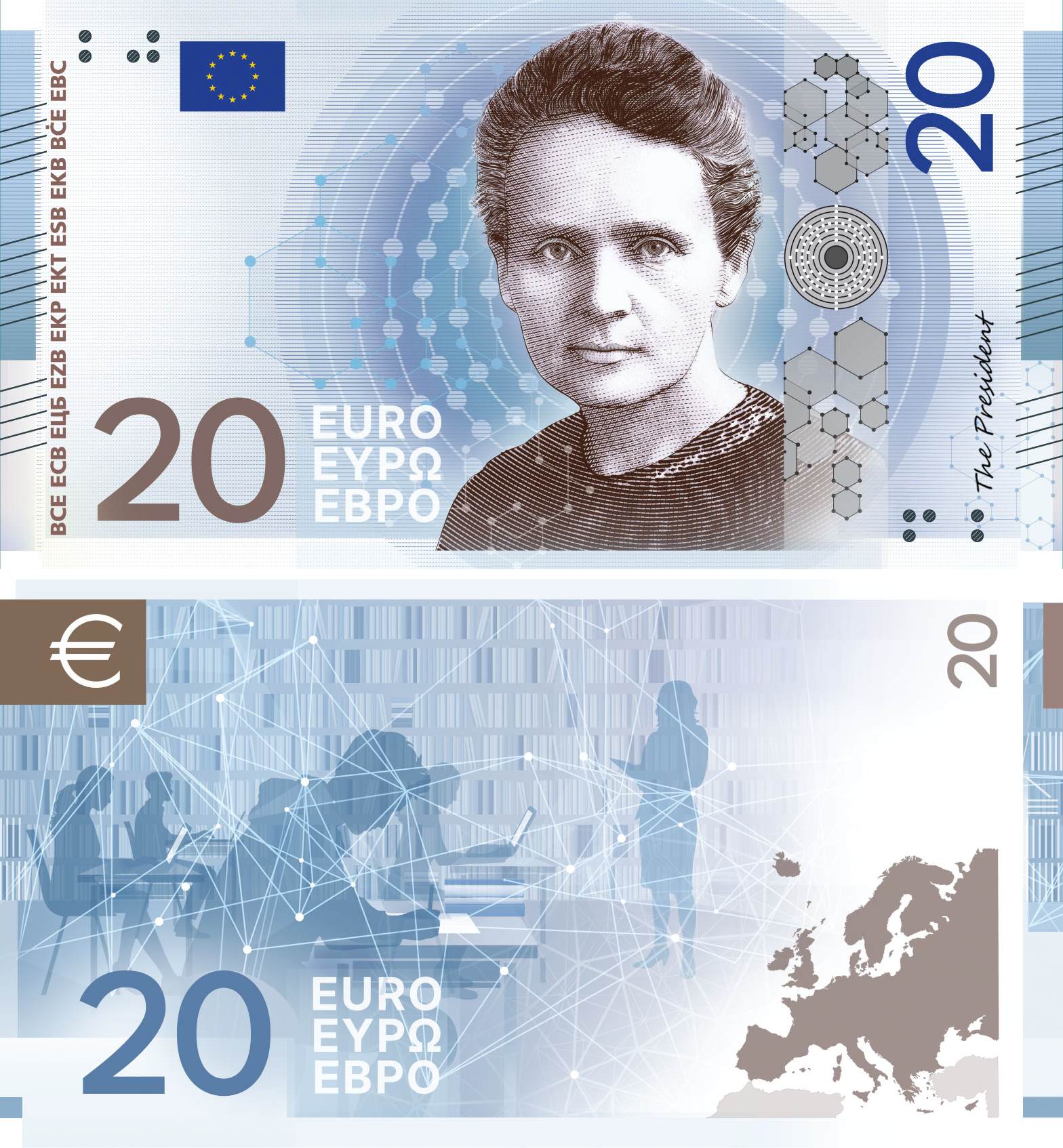
This design connects each relevant figure with recognizable aspects of his life and work, as well as a predominant color. In the case of Marie Curie, it is associated with a range of blues and shapes that make up a test tube. On the back, for its part, the map of Europe is included. On the reverse, a map of Europe with an overprint of the constellations, and combined with a contemporary scene in a cultural space, such as libraries or theaters.
Design D – Rudy Guedj and François Girard-Meunier
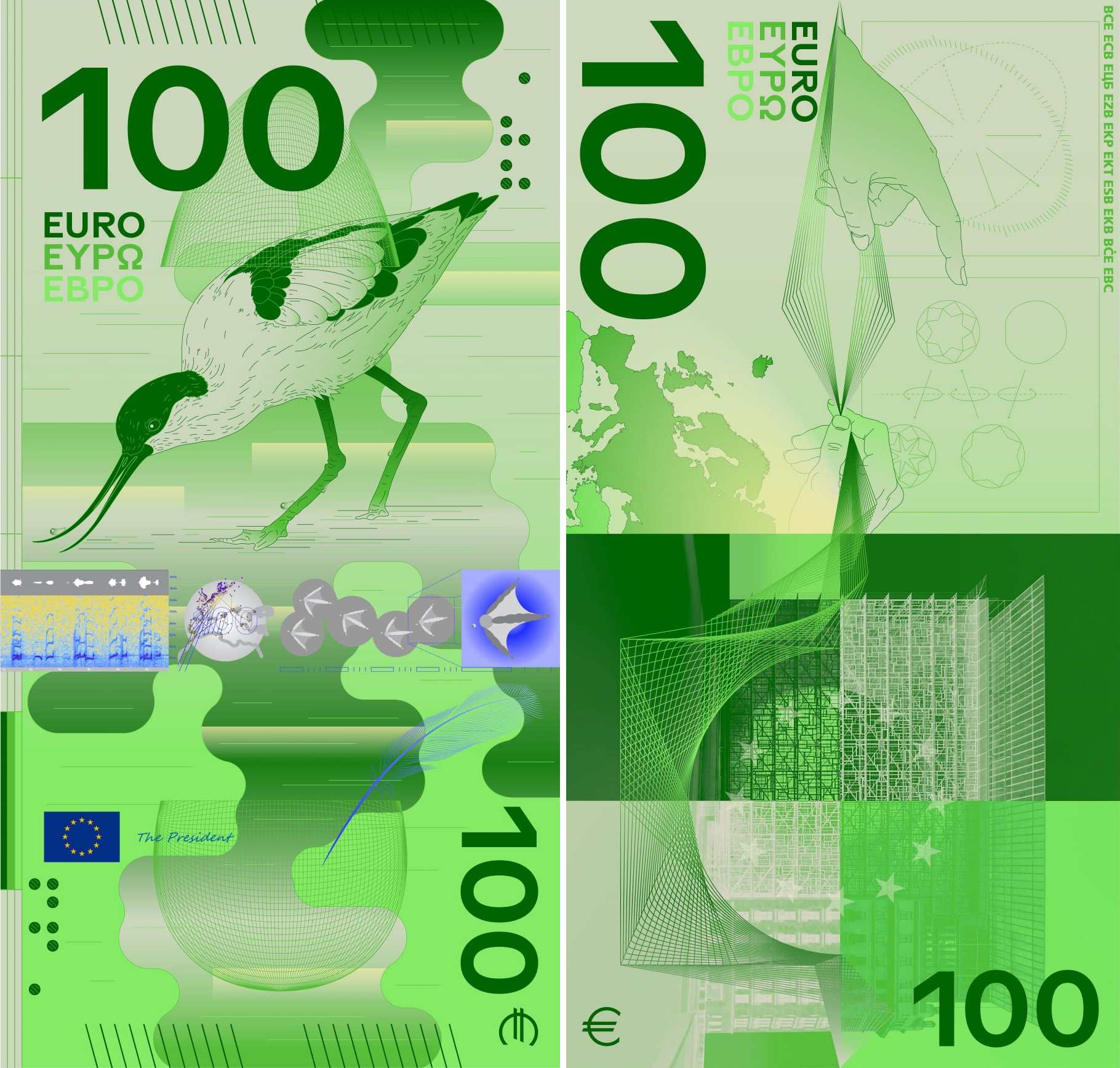
In this proposal the birds appear on abstract landscapes, but they evoke the course of a river. Presence is also given to the rays of light and the footprints of each species. On the reverse, the buildings of the European institutions are accompanied by human gestures, alluding to collaboration and cooperation, and patterns that evoke transformation.
Design E – Myrsini Vardopoulou
This option focuses especially on the universal value of the work of each European figure, on both sides of the banknote. The elements are arranged in a circle and the symbols add subtle references that invite deeper conceptual reflection on their respective legacies.
Design F – Jan Robert Dünnweller
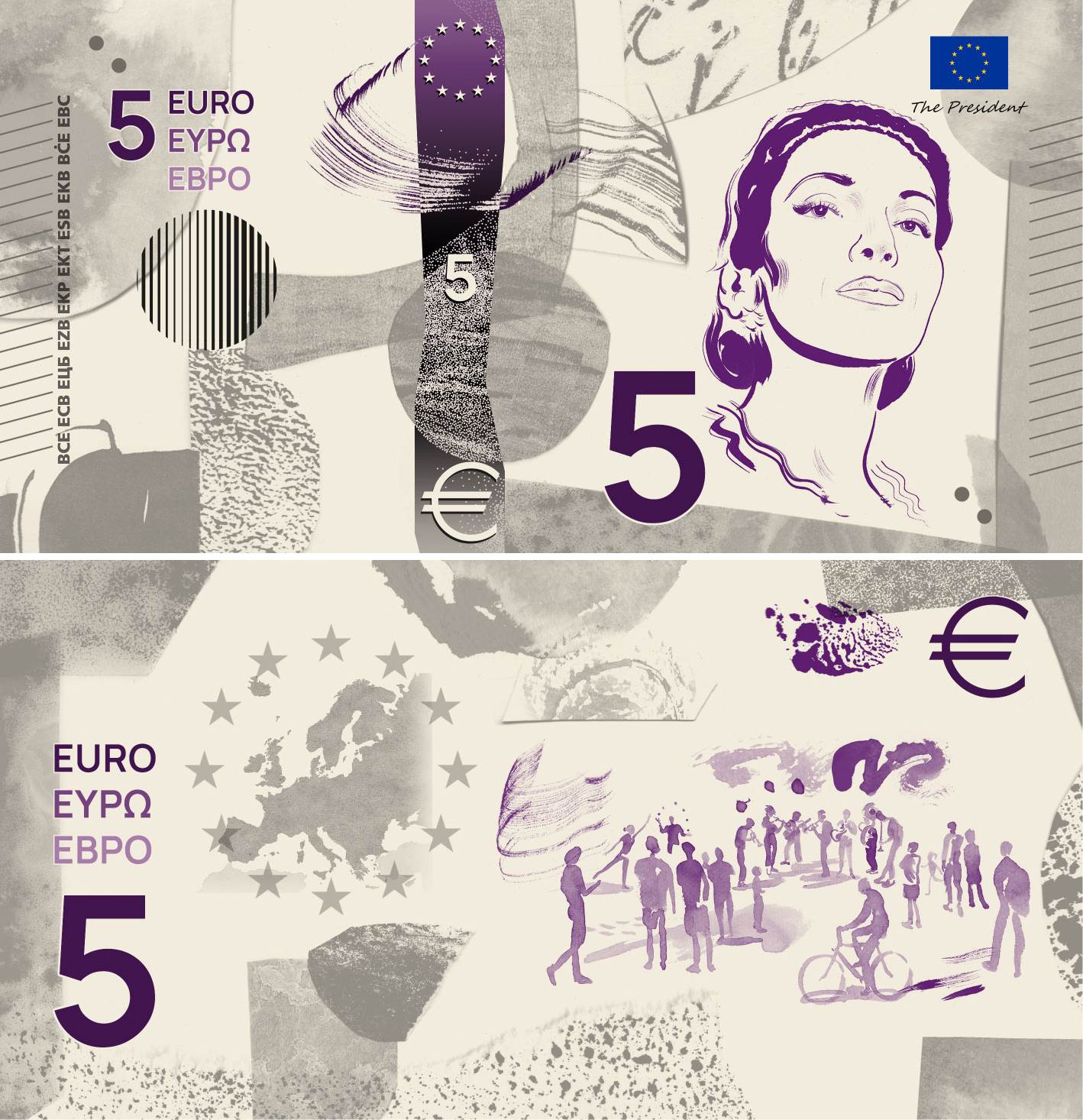
This design has sought to illustrate the official motto of the European Union, “United in diversity”. These are captured in a collage of shapes, textures and colors that accompany, on the one hand, the hand-drawn portraits of illustrious figures, and on the other, the map of Europe and representations of people in shared cultural spaces.
Design G – Rubio & del Amo y Cruz plus Cruz
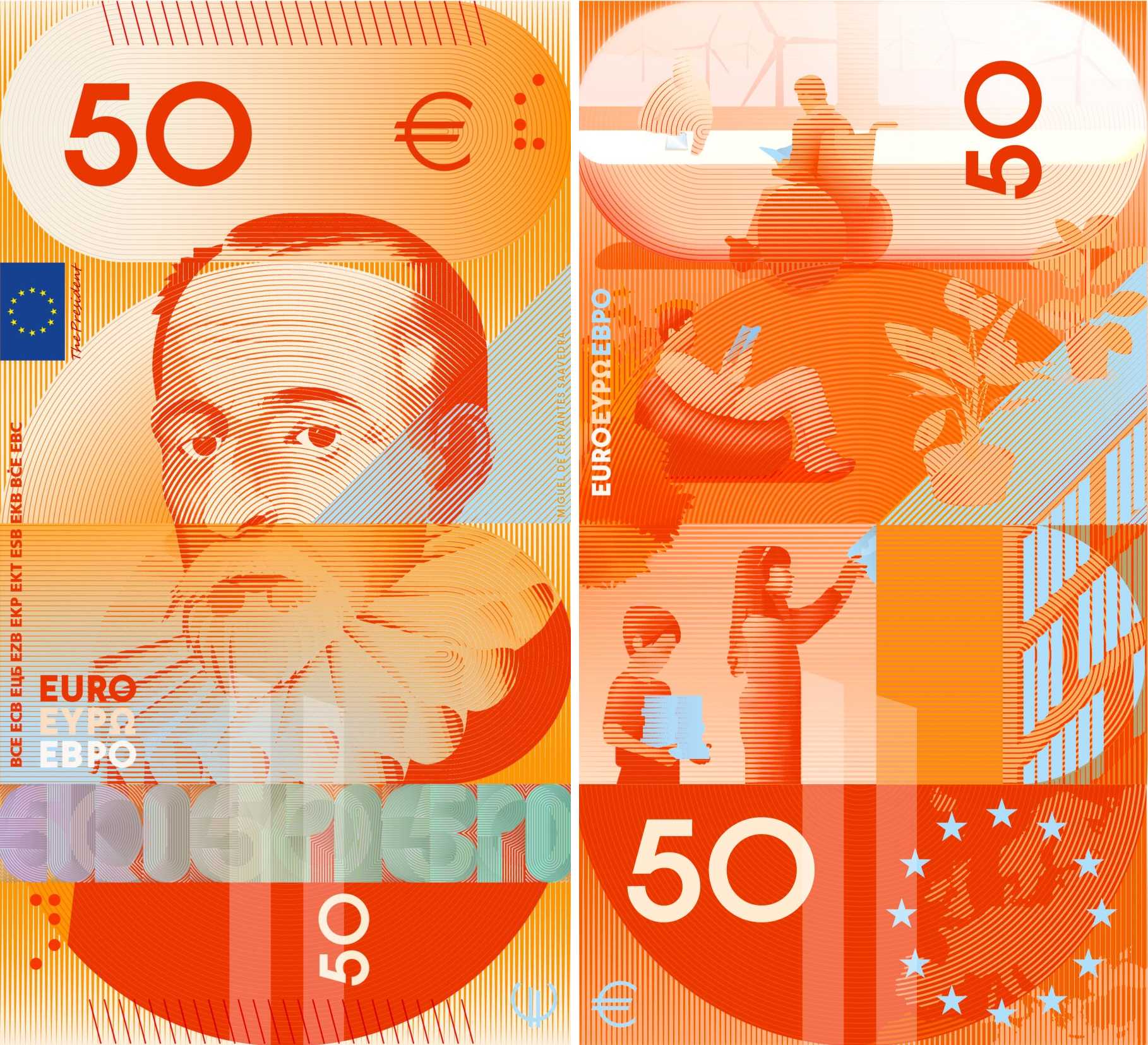
This proposal also gives prominence to the gaze and seeks to create a dialogue between those who forged the European identity and current citizens. It is characterized by linear patterns and a common texture that transversally unites the series. When you rotate the banknotes horizontally, four vertical blocks appear, each inspired by a letter of the word “Euro”.
Design H – Atelier Goppel-Toperngpong
Water plays a prominent role in this proposal, acting as a shaping force of the European environment and habitats, and accompanies the representations of the different species of birds. On the back, the different forms of water; Whether drops or currents, they support the buildings of the institutions and the map of the continent.
Design I – Isabelle Daëron
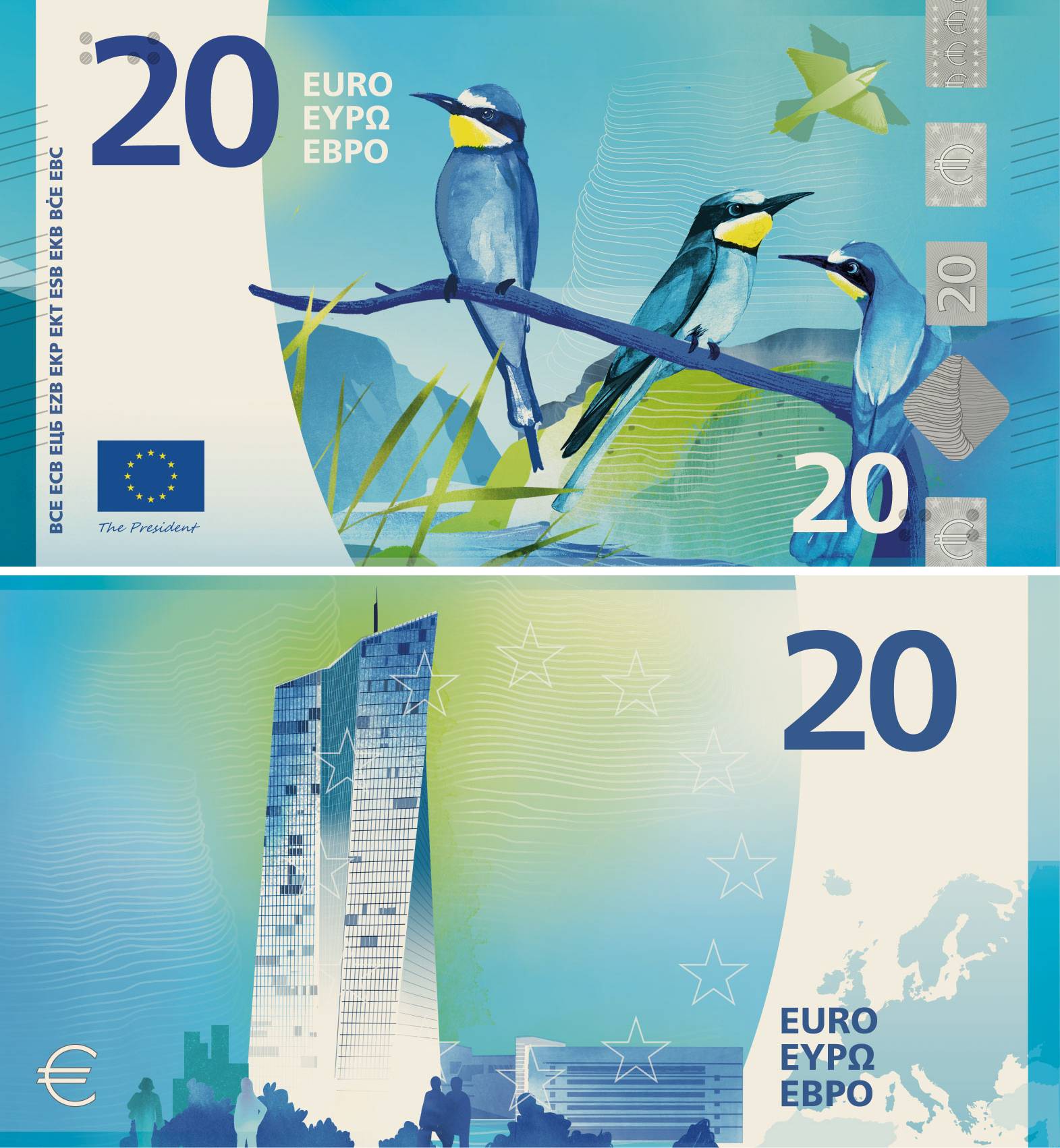
This proposal is articulated around movement and establishes birds as messengers, represented alone on the obverse and in groups on the reverse, as a symbol of dialogue and interdependence of societies and nature. Again, water appears in the course of a river, from its source to its mouth in the ocean. Two types of patterns interact here, one hand-drawn with a marker and another based on vectors.
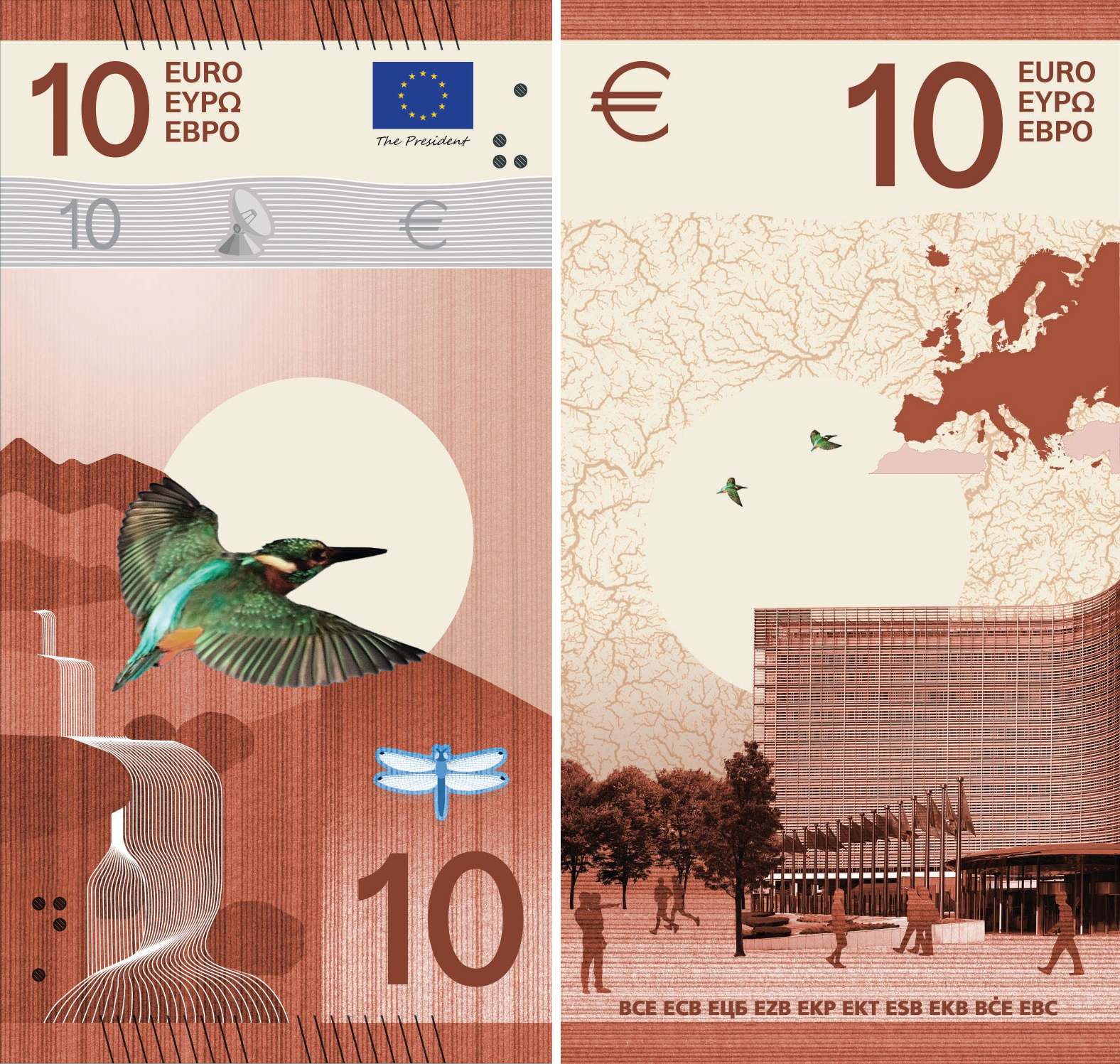
Design J – Ville Tietäväinen
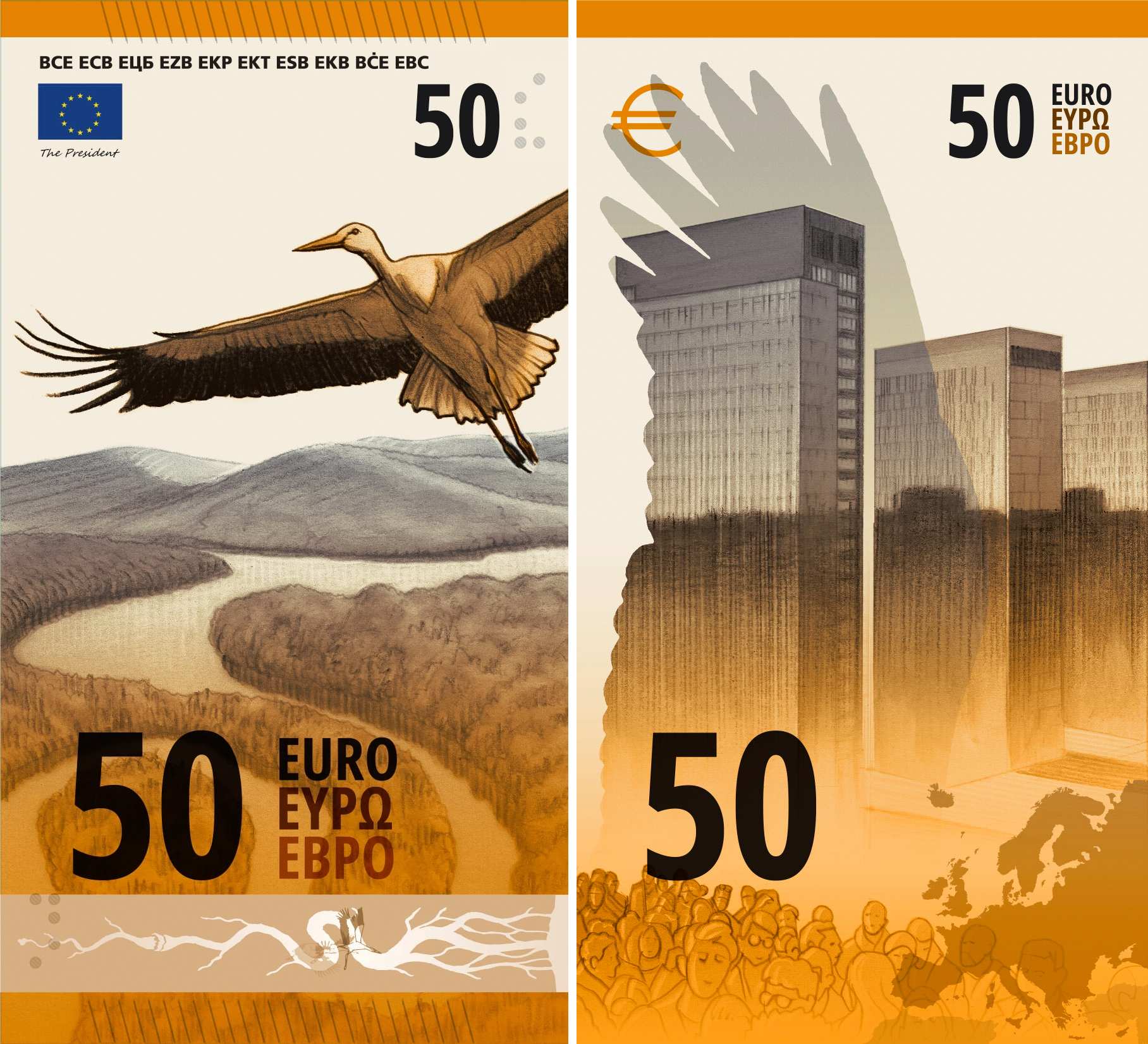
A visual history of the course of European rivers focuses the thinking of this design, and in this sense, it uses a style similar to comics. Each species of bird accompanies a stage of water. On the reverse, the buildings of the European Union merge with the wings of birds.
The future of cash
As explained by the Executive Committee of the European Central Bank, the redesign of euro banknotes is part of the Eurosystem’s long-term effort so that cash continues to be a safe, efficient and close means of payment for citizens. In this sense, they ensure that the new banknotes will incorporate new and improved security elements to prevent counterfeiting, facilitate verification of their authenticity and enhance their accessibility for people with disabilities.
The final decision on the design of the banknotes is expected to come at the end of this year. To do so, it will take as reference a set of contributions, including the conclusions of the design competition jury, a technical evaluation and the results of the two surveys.
The selected design will undergo a development and testing process, before moving to the production phase. But it will not be until the following years, as the organization expresses in the statement, when they enter circulation. The previous banknotes will remain valid and will continue to circulate along with those of the new series.