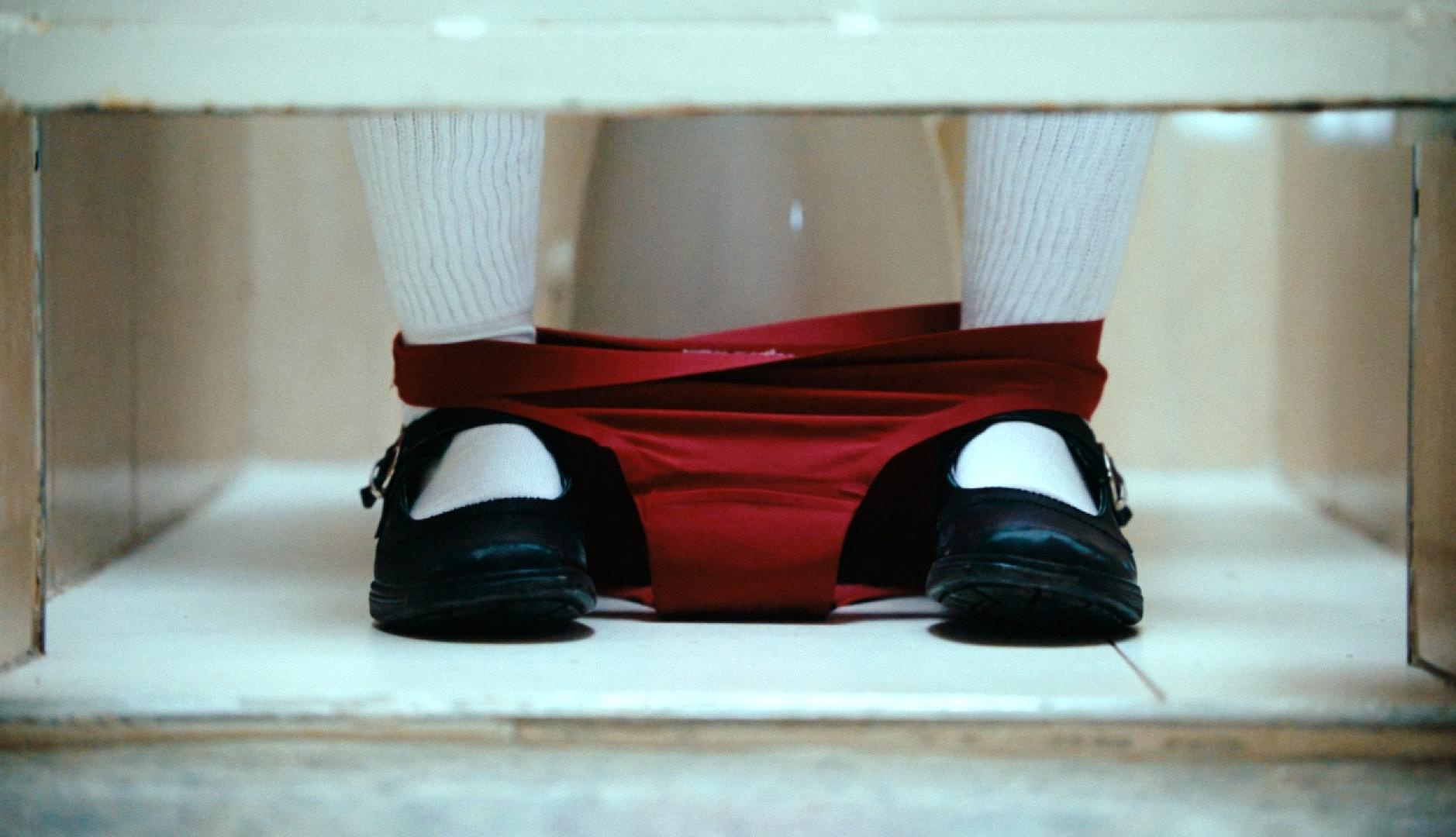
With the start of the new school year in Colombia, Somos Martina has presented the Menstrual Uniform, an initiative that proposes integrating absorbent menstrual underwear into the official school uniform. The objective is to respond to a problem that directly affects education: the lack of access to menstrual products, which causes 1 in 4 girls in Latin America to miss school during their period, according to data cited by the company itself.
The initiative seeks to eliminate dependence on temporary programs or sporadic donations
The project is based on an already existing and mandatory element in countries like Colombia, which is the school uniform, incorporating menstrual protection as part of the standard equipment. Thus, the initiative seeks to eliminate dependence on temporary programs, sporadic donations or individual decisions, and turn menstrual care into a right integrated by design.
The first school to officially adopt it was the Institución Educativa Mayor de Mosquera, in Bogotá. From there, the project seeks to begin its expansion with the support of the Vice Minister of Education of Colombia, Lucy Maritza Molina Acosta, who has defended the need to address menstrual health structurally within the educational system.
As the brand points out, menstruation continues to be a silenced topic in many homes, making it difficult for girls to ask for help or anticipate solutions. The result is a chain of absences that impacts academic performance and, in the long term, future opportunities. For this reason, the Menstrual Uniform extends the historical logic of the school uniform, which involves equality, inclusion and belonging, to the field of menstrual care.
Somos Martina will provide menstrual underwear to participating schools at a price comparable to conventional underwear, along with educational resources and information for families and centers.
Menstrual underwear offers up to 12 hours of protection, is reusable for several years and reduces both the economic and environmental impact compared to single-use products.
The project has been developed in alliance with the Serviceplan Innovation agency and is accompanied by an international awareness campaign that includes a short film directed by Claudia Barral as well as a multilingual information portal.
The strategy seeks to move the debate beyond Colombia and activate a global conversation about menstrual dignity, education and public policy design, in a context in which the problem is widely shared. According to UN Women data cited by the brand, 1 in 4 adolescents in the world have difficulty affording menstrual products. The World Bank puts the figure at 500 million girls and women without adequate access to products and facilities for menstrual hygiene management.
More info: The Period Uniform