Recommendations from influencers, compare user opinions or search for product information. Social networks are a fundamental part of the current customer journey, so much so that many brands and marketing professionals in Spain consider that the main competitive advantage is found in cultural relevance, connection through creators and the sense of belonging to a community.
This is the main conclusion drawn from the report “Cultural relevance of brands in the food and beverage industry”, prepared by the SAMY agency through surveys of more than 20 communication managers in brands such as Coca-Cola, Dia, KFC, Unilever or Nestlé. It also includes expert insight into the trends and strategies that are shaping influence and connection with consumers.
One of the notable findings is that emotional factors are gaining weight in purchasing decisions. 43% of those surveyed point out that value for money continues to be the fundamental factor driving the elections, which aligns with a context marked by the cost of living and inflation. However, 24% point out the sense of belonging and identification with groups, trends or lifestyles as the second most influential factor. Environmental commitment and aspiration are in third and fourth place, respectively.
This shows that the purchasing decision no longer begins on the shelf or in e-commerce, it begins much earlier, in the culture and values of consumers. The success of movements such as “realfooding”, based on avoiding ultra-processed products, shows that consumers look for products but above all, they defend values, habits and lifestyles that they discover and validate with other people through social networks.
This should lead brands to stop thinking about the audience as a uniform whole and start focusing on them as micro audiences with their respective particularities. In this sense, strategies must consider the most relevant codes, messages and decision drivers according to each case.
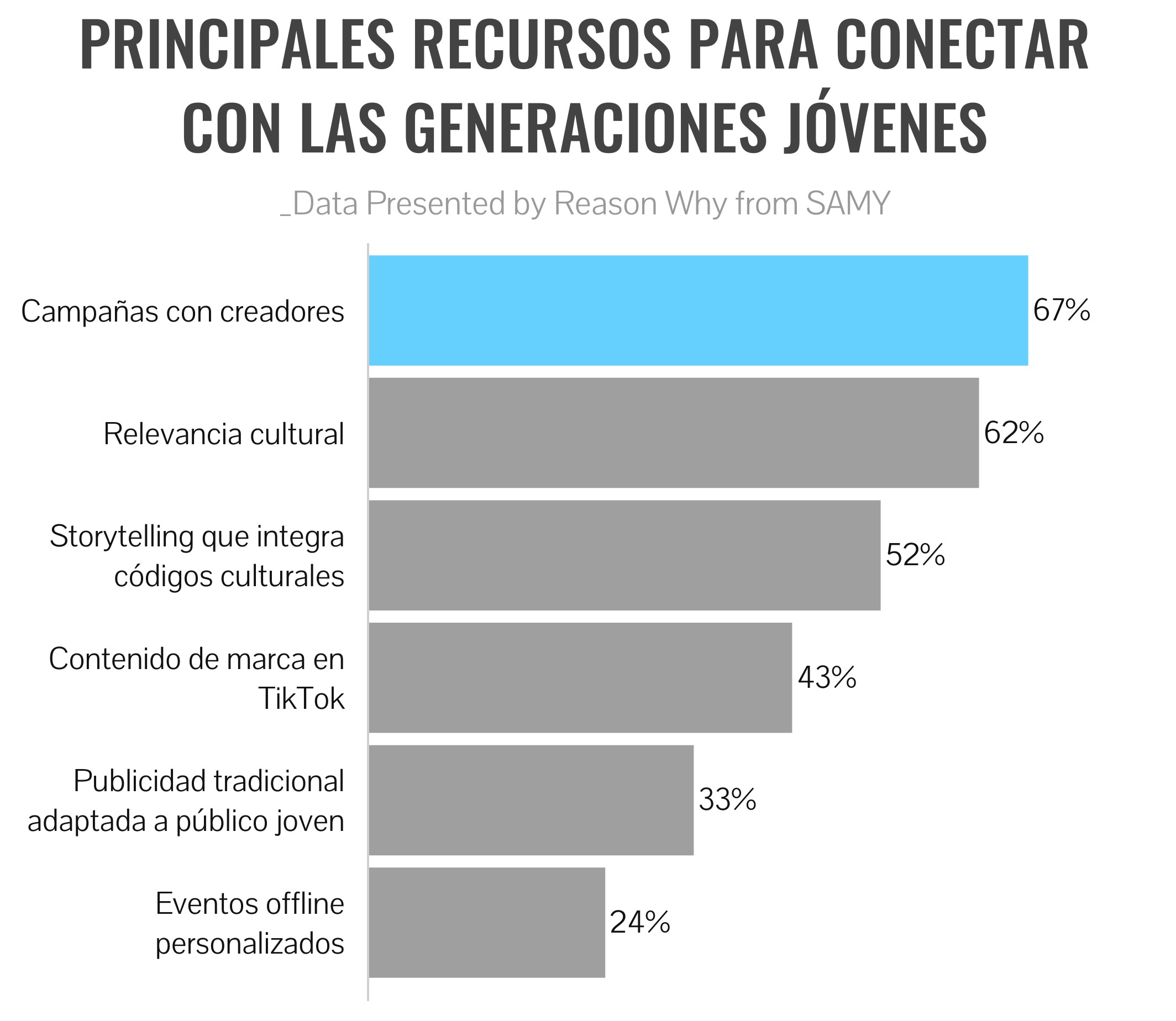
In a context in which much of the communication and relationship happens in the online ecosystem, 67% of brands consider creators as the most effective way to connect with young consumers. What’s more, influencer marketing is one of the areas to which brands are dedicating the most budget, only behind artificial intelligence. However, participation in trends and conversations and the development of storytelling are also activated levers to connect with new generations.
The association between beverage and food brands and influencers is something that has been observed in the market for several years. There are multiple firms that have collaborated with opinion leaders and experts, especially chefs and cooks, to create products, as is the case of Donuts with Dabiz Muñoz or Häagen-Dazs with Jordi Cruz. On the other hand, creators like Marina Rivers or Ibai Llanos have put their image, positioning or community at the service of brands like Black Hat or Prime. Some have even launched their own brands on the market, as is the case of María Pombo with the Yuzz drink or Peldanyos with the Sugar Papi brand of sauces.
Despite this, the SAMY agency’s analysis indicates that only 9% of the professionals surveyed involve creators from the beginning in the briefing of their initiatives. Furthermore, in many campaigns the focus remains on the product and its features, although for 57% there must be a cultural endorsement or a supporting trend.
The challenges of relevance in social media
As part of its report, the SAMY agency has analyzed what are the pain points of the sector in an environment dominated by algorithms, creators and a new way of discovering, buying and recommending products. They are the following:
Social-first mentality, but lack of creativity
The brands participating in the survey have shared that artificial intelligence, influencer marketing and social networks are the areas in which they have increased their spending the most, and this is mainly to the detriment of traditional media and creativity. Specifically, the report indicates that a
5% of the brands surveyed confess that they are beginning to invest in creativity, while 62% simply “maintain” the same line as
previous years.
Many food and beverage brands turn to AI to generate fast and eye-catching content
Many food and beverage brands are turning to AI to generate fast, engaging and adaptable content to respond to the fast-moving and volatile conversations on the internet. However, as the agency reminds us, technology must be part of a strategy consistent with the tone, values and history of the brand. Otherwise, your application could be penalized by consumers.
The conversion challenge
As the report points out, only 23% of experts consider social networks to be effective in the conversion phase. Consequently, almost 62% indicate that they do not implement social commerce in their marketing strategy, although they recognize its potential. Among those that do apply it, they mainly resort to collaborations with creators through affiliation programs.
This means that many brands don’t think of social media as a complete cycle of discovery, authority and purchase. Thus, investing in the generation of content to boost visibility and notoriety is as important as investing in actions that facilitate purchase and conversion.
In this regard, SAMY encourages brands to integrate TikTok Shop into their strategies. They point out that the TikTok store is expected to generate approximately $87 billion in GMV (Gross Merchandise Value) by 2026, which would represent an increase of 56% compared to the previous year, according to data from the platform itself and Nielsen IQ. They also share that the food category is one of the most prominent on TikTok Shop by sales volume: 6,000 users in Spain bought sausages during Christmas 2025.
Lack of anticipation of trends
According to the report, one of the challenges for professionals is to anticipate and filter emerging trends: 48% say that it is difficult to detect them in time, while 24% do not know how to distinguish between those that are only hype and those that are truly transcendent. In addition, they also encounter difficulties when integrating trends effectively into the general strategy (19%) and when transforming trends into specific campaigns or actions (9%).
In this sense, the agency recommends brands think in terms of cultural spaces before deciding whether to join a trend and, thus, choose those that are aligned with the brand’s DNA. In the face of trends, it encourages professionals to rely on social listening and combine different data sources to determine the strength of the trend and the degree of interaction of the target audience with it.