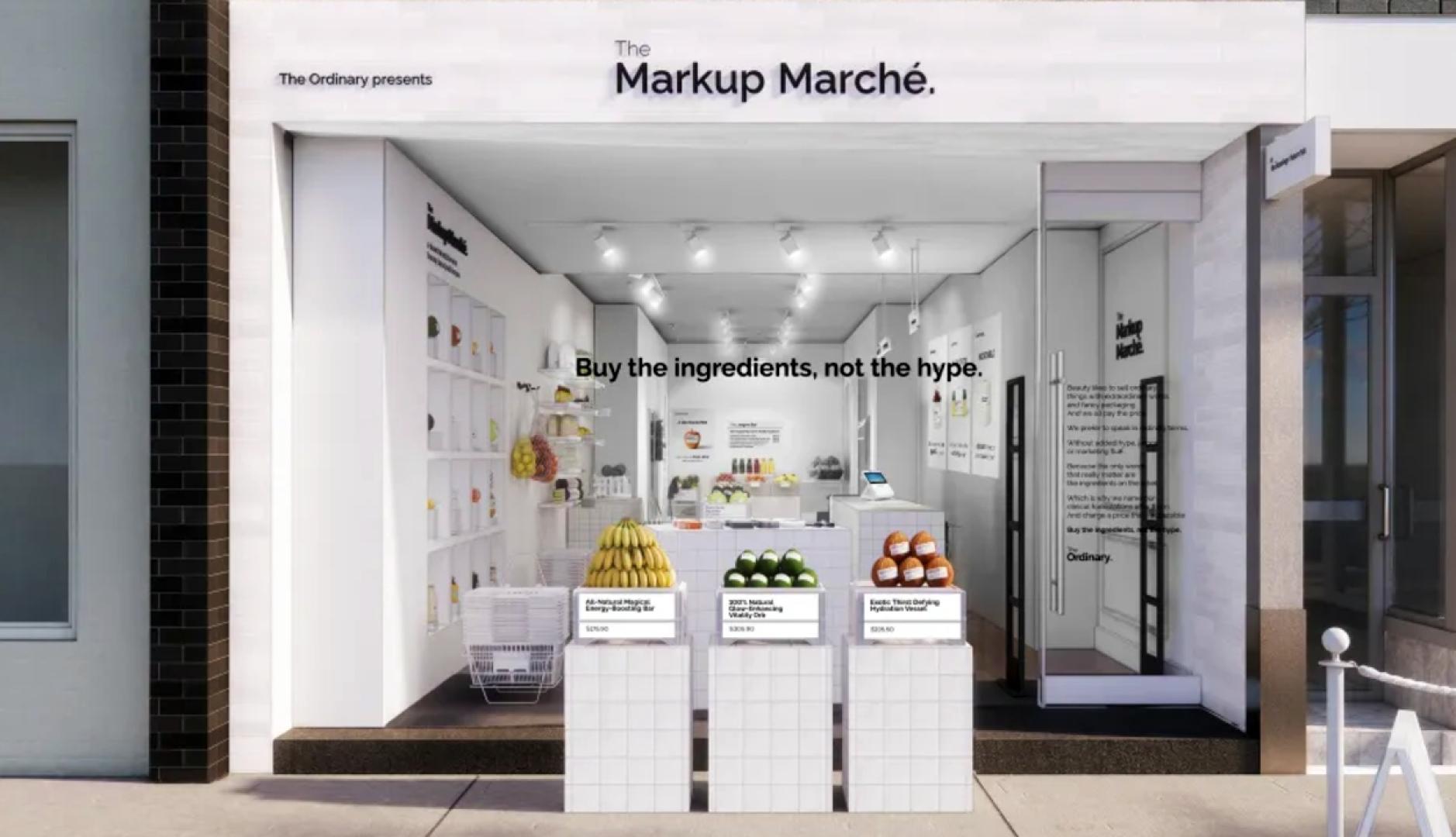
The Ordinary has activated “The Markup Marché” globally, a campaign that questions pricing practices in the beauty industry by recreating fictitious supermarkets in cities such as Toronto, London, Paris, São Paulo, Mexico City and Melbourne.
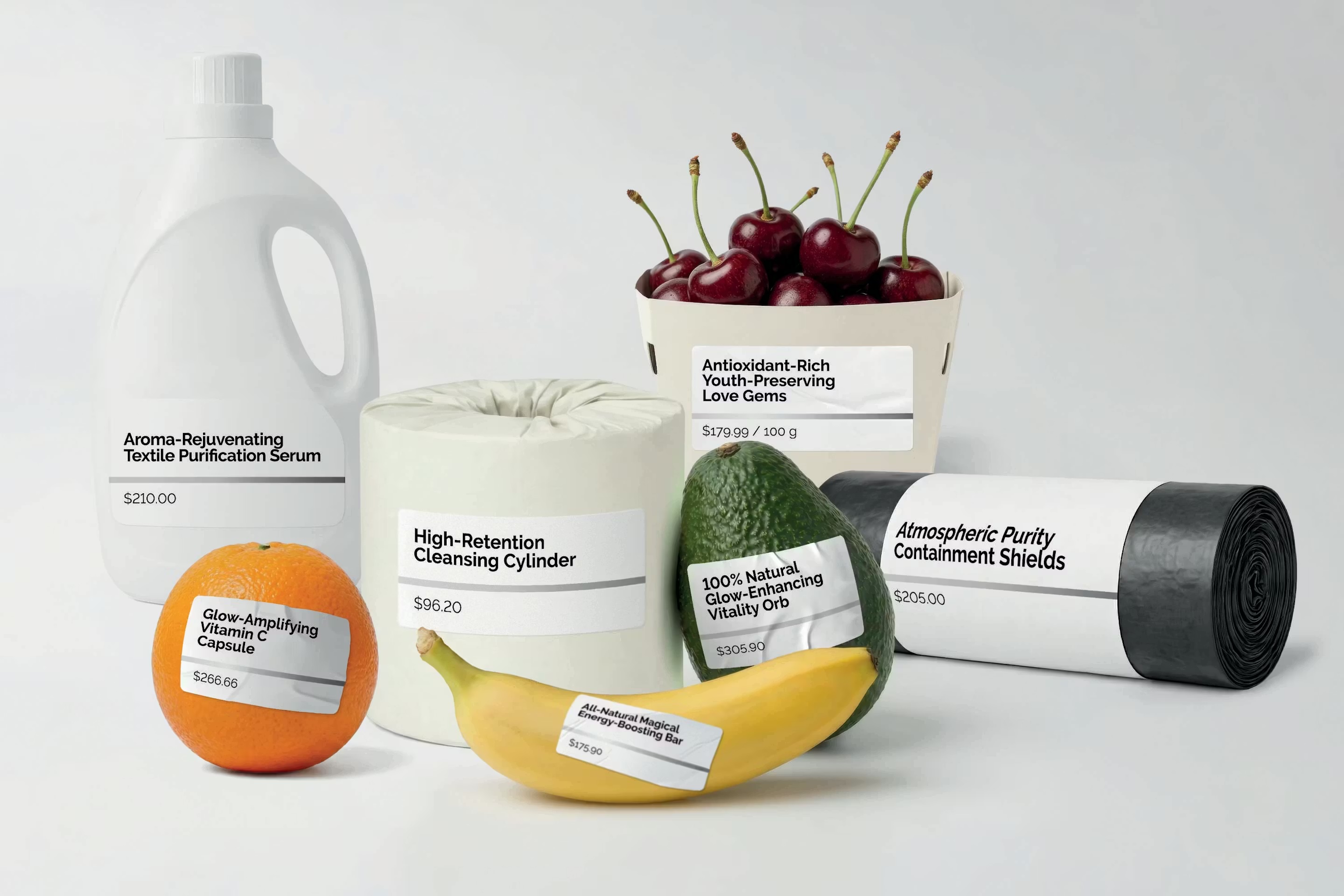
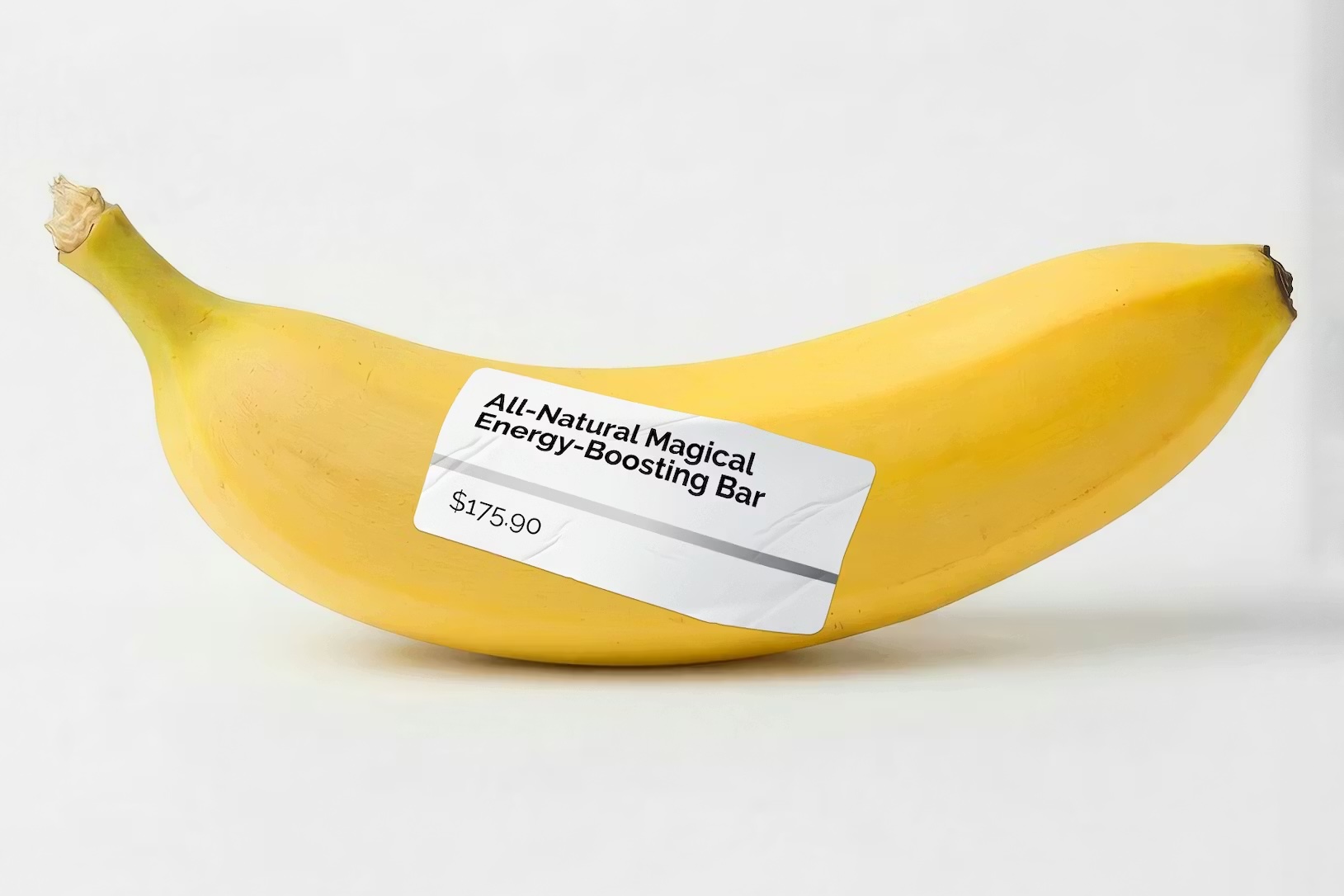
The space, designed with minimalist aesthetics and codes typical of premium retail, presents everyday products, such as bananas, avocados, coconuts or toilet paper, reformulated solely through language and packaging. Thus, a banana becomes a “all-natural energizing magic bar” with prices ranging between $175 and $385. An avocado appears as a “vitality sphere that enhances natural glow” for more than 400 dollars. And a roll of toilet paper is redefined as “high retention cylindrical cleaner” for more than 130 dollars.
The proposal aims to show how perceived value is constructed. According to data cited by the brand, 20% of British consumers would be willing to pay more for a product described as “magical”, while in the United States consumers accept significantly higher prices for identical items when presented in high-end packaging.
“The beauty industry has not always sold the truth and we continue with our mission to change this”said Amy Bi, Vice President of Brand at The Ordinary, emphasizing that the initiative seeks to transfer the same rational criteria that is applied to basic products to cosmetics consumption.
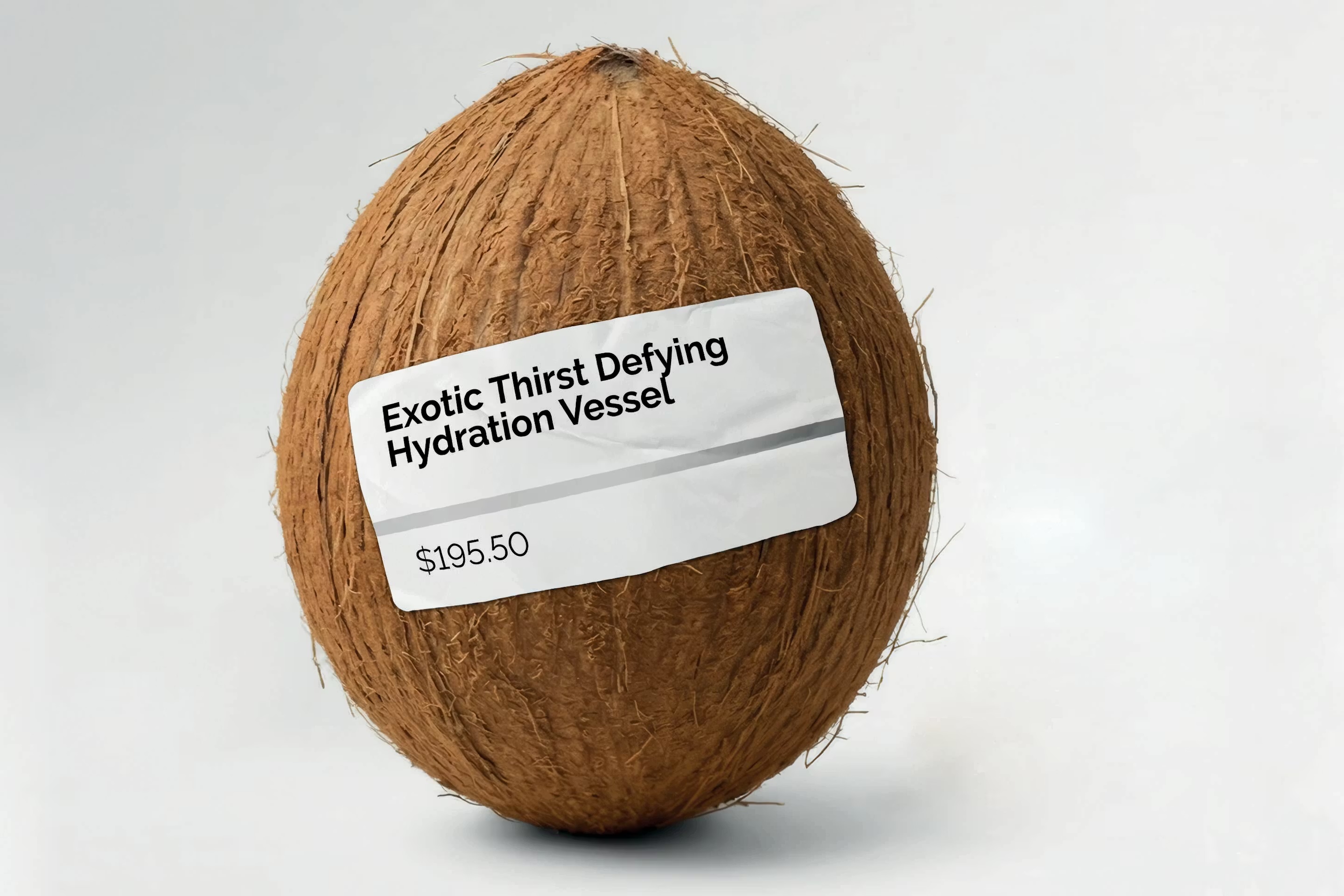
The activation also marks the first time that the brand takes its positioning to a large-scale physical retail experience.
Since its launch in 2016, The Ordinary has built its growth on a proposal based on the clarity of ingredients and affordable prices, and with “The Markup Marché” it transfers that discourse to an experiential format that directly confronts the consumer with the dynamics of the market.
The campaign is thus integrated into a broader strategy aimed at reinforcing its positioning through immersive formats, in a context where aspirational language, design and functional promises are redefining how value is perceived – and paid – in categories such as beauty and well-being.