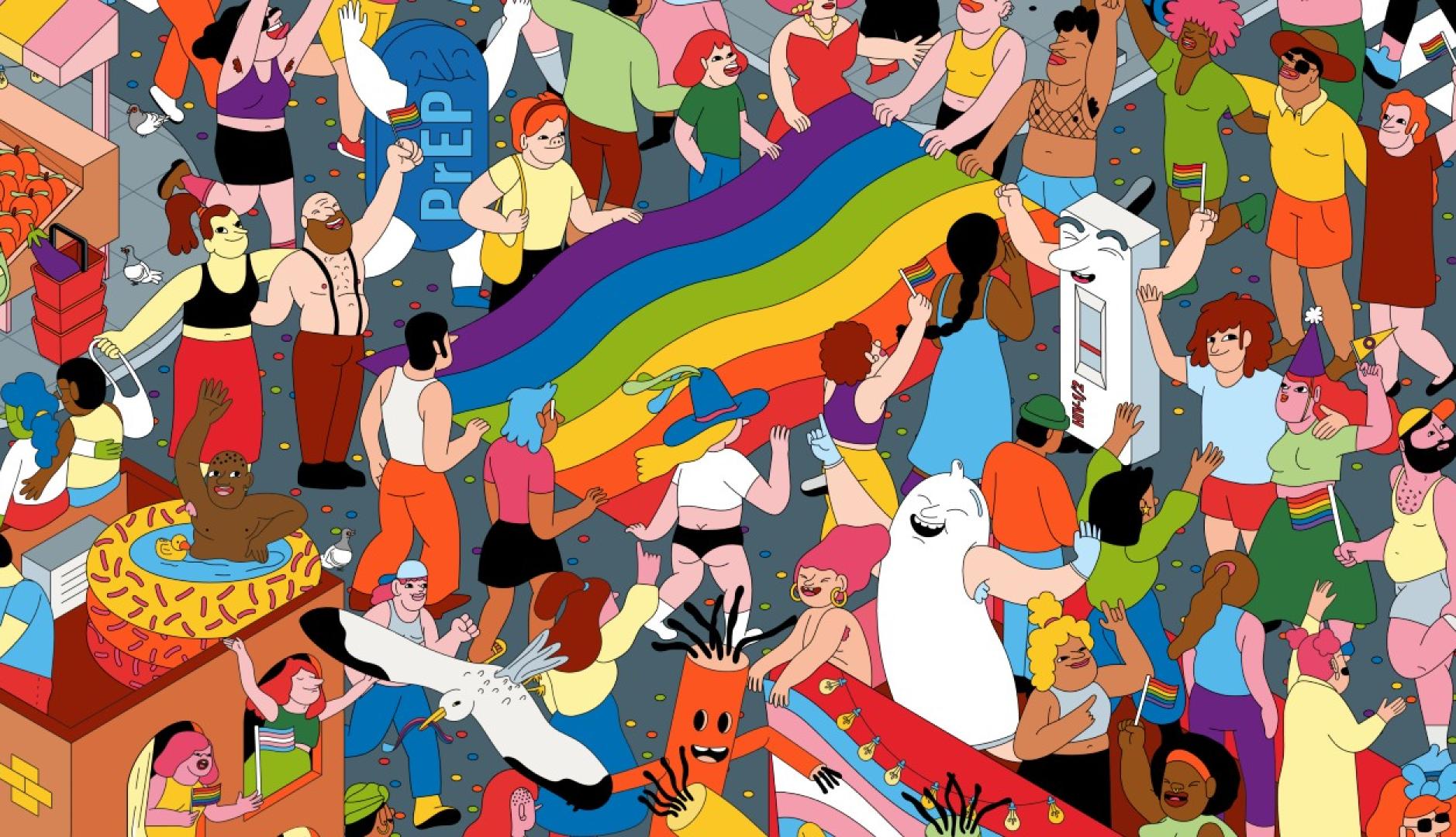
The Ministry of Health has launched “Where are the STIs?”, a national prevention campaign that uses the visual game of looking for hidden characters to warn about the growth of sexually transmitted infections and remember that they can affect anyone.
The initiative has been developed by the Muy agency, winner of the project through a public tender, and is part of a health reality that continues to advance in Spain. According to data from the National Epidemiology Center of the Carlos III Health Institute, more than 93,000 cases of sexually transmitted infections were reported in 2024, the highest number in the last decade and around 20% higher than that registered in 2021.
The campaign addresses one of the common difficulties of preventive communication: STIs do not always present visible symptoms and a part of the population continues to perceive them as a distant risk, linked to other people, certain environments or foreign practices. Faced with this perception, the proposal remembers that they can appear in any context and that their prevention requires information, protection and diagnostic tests.
To make visible what normally remains hidden, Muy takes as reference the universe of “Where’s Waldo?” Instead of locating the well-known character in a crowd, the audience must find syphilis, gonorrhea and chlamydia hidden within large illustrated scenes of everyday life.
Each infection has its own piece, its own headline – “Where is syphilis?”, “Where is gonorrhea?” and “Where is chlamydia?” – and a series of clues that help locate it. The game works as a metaphor for infections that can be present even if they are not seen and that, in many cases, go unnoticed if the corresponding tests are not performed.
The campaign thus avoids using clinical images, alarmist messages or codes based on fear. Instead, it uses a playful and recognizable format to capture attention and convey health information without blaming or pointing out those who may be affected.
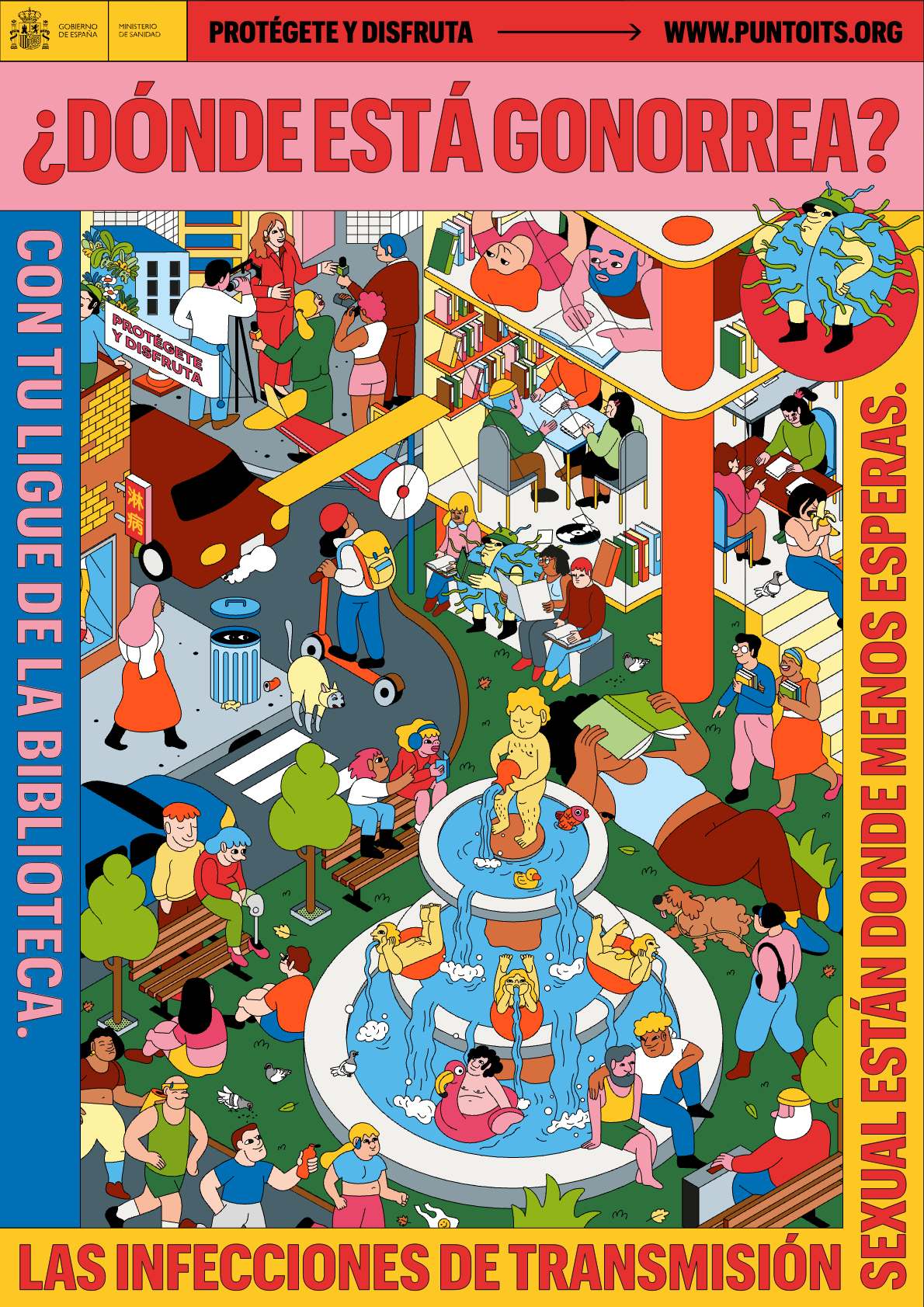
Creativity, in this way, forces the audience to stop, explore the scene and look for what remains hidden. This participation is an essential part of the message: just as infections hide in illustrations, they can also go unnoticed in real life.
The graphic universe has been developed by Janire Orduña, Ángela Alonso and Higinia Garay. His illustrations build scenes full of characters, situations and small details, with a diverse representation of bodies, identities, ages and ways of relating. This visual plurality allows the conversation about STIs to move away from specific profiles. The campaign insists that they do not belong to a single group or depend on a specific identity, but rather that they are part of a public health problem that requires widespread prevention.
The idea also allows each piece to convey information without interrupting play. Clues, characters and preventive messages are integrated into the illustrations themselves, making observation serve as a gateway to concepts such as condom use, pre-exposure prophylaxis or testing.
Starting on July 1, the campaign will have a large-format banner installed at number 67 Atocha Street, in Madrid. The piece will carry the message “There are many ways to take care of Pride. Find yours” and will propose to the public to locate different prevention tools within the illustration.
The activation connects the campaign with the Pride celebrations, one of the moments of greatest public visibility and social conversation around sexual diversity. The objective is to introduce prevention within this context without reducing Pride to a health issue or associating STIs exclusively with the LGTBIQ+ group.
The banner will be complemented with other actions during the Pride demonstration and with a presence in different spaces in Madrid.