
The clash between finance and marketing is a recurring issue in the sector. Tension is generally understood in terms of values: creativity versus rigor, or long-term brand development versus short-term profitability. However, the real friction is mainly found, according to joint research by the consulting firm Bain & Company and Google, in the approach to measurement, the quality of the data and how the results are communicated and validated.
The study, which has considered the vision of almost 1,400 senior marketing and finance executives worldwide, points out that, despite the widespread idea, both departments are more aligned than it may seem in terms of success indicators and horizons. And this is key to boosting aspects such as market share or business growth.
According to Bain & Company and Google, marketing and finance already coincide on key indicators. More than half (56%-55%) of managers surveyed say that demonstrating direct impact on revenue is the most important factor in strengthening marketing’s position vis-à-vis finance. They are followed, although with a larger gap, by a reliable measurement and attribution system (53%-48%) and the effectiveness of marketing and media use (52%-46%).
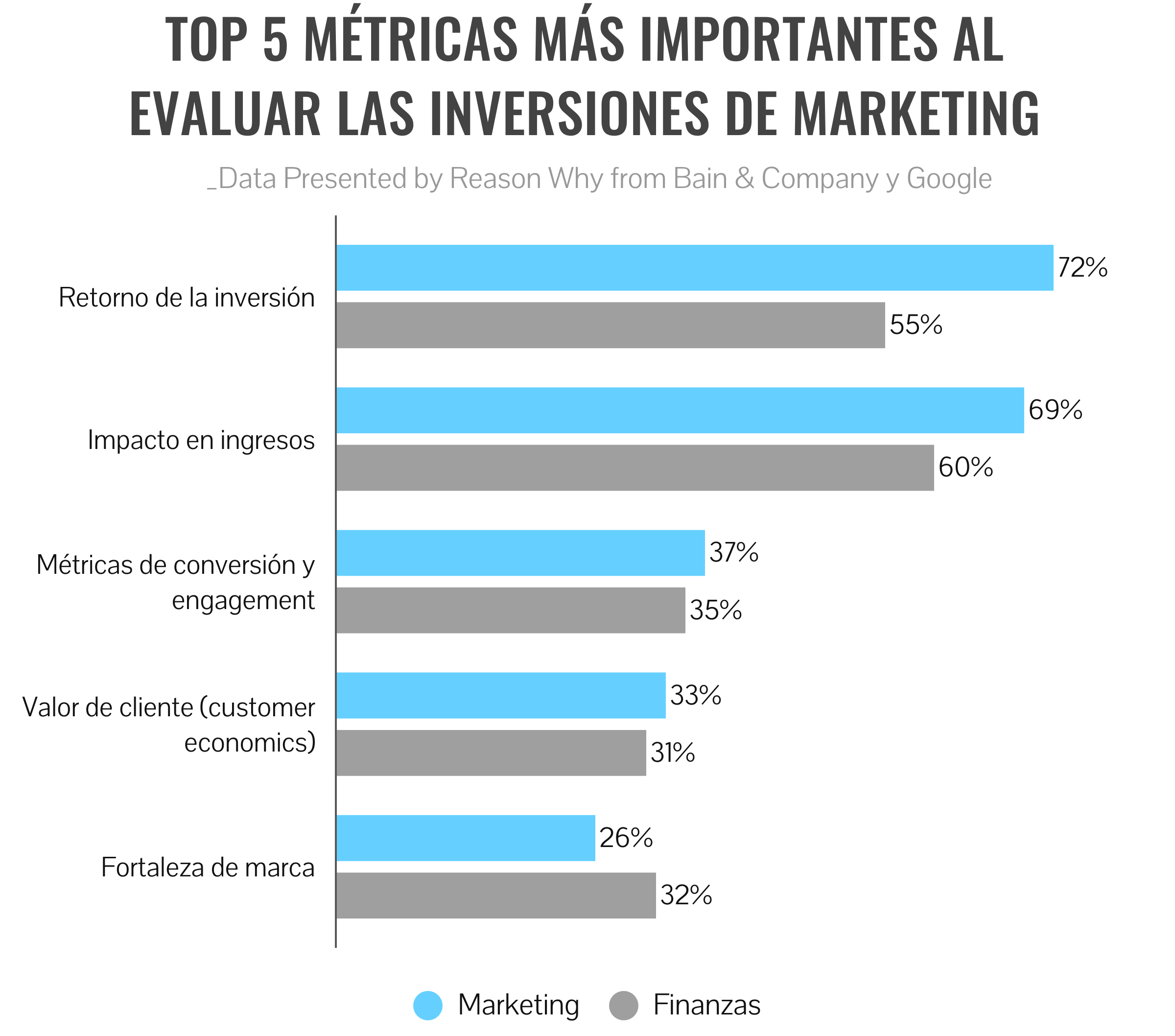
In addition, both areas are also aligned on the most important metrics when evaluating marketing investments, highlighting return and impact on revenue as the main indicators of success.
The research findings also dismantle the common idea that the finance department only values short-term performance and that marketing advocates long-term brand building. According to the data, both areas agree on measuring the performance of marketing investments in quarters (marketing 37% – finance 38%) or in months (marketing and finance 32%).
The same alignment is perceived when focusing on the periods for measuring the return for brand awareness campaigns. Marketing and finance agree on analyzing brand awareness on a quarterly basis (36% and 33%), or annually (22%, 21%).
Transparency, defined metrics and shared expectations
This alignment, as well as strong relationships in marketing management and financial management, is key to the business. As the analysis points out, companies in which this relationship is strong are almost 1.5 times more likely to be leaders in their sectors.
It should be noted that the study defines leaders as those companies with a market share growth of at least 7% during the previous year; or market share growth of at least 4% and revenue growth of at least 11%. Lagging companies are also understood to be those that register a decrease in market share or a share growth of less than 3% and no growth in revenue.
In this regard, Bain & Company and Google have identified three factors that systematically distinguish leading companies. One of them is data transparency, that is, being explicit about what is and is not easily measurable; as well as sharing the approach and results on a regular basis. According to the analysis, these give marketing managers more credibility with their finance counterparts. Companies with strong relationships between marketing and finance are 2.5 times more likely to have more reliable data and build trust by showing numbers clearly.
Another factor is having defined metrics before launching campaigns. Leading companies have a shared measurement framework prior to budget allocation, reducing potential friction over how performance is interpreted. However, there are opportunities for improvement here, as only 41% of marketers feel adequately equipped with the data, tools and measurement capabilities necessary to link their performance to business results.
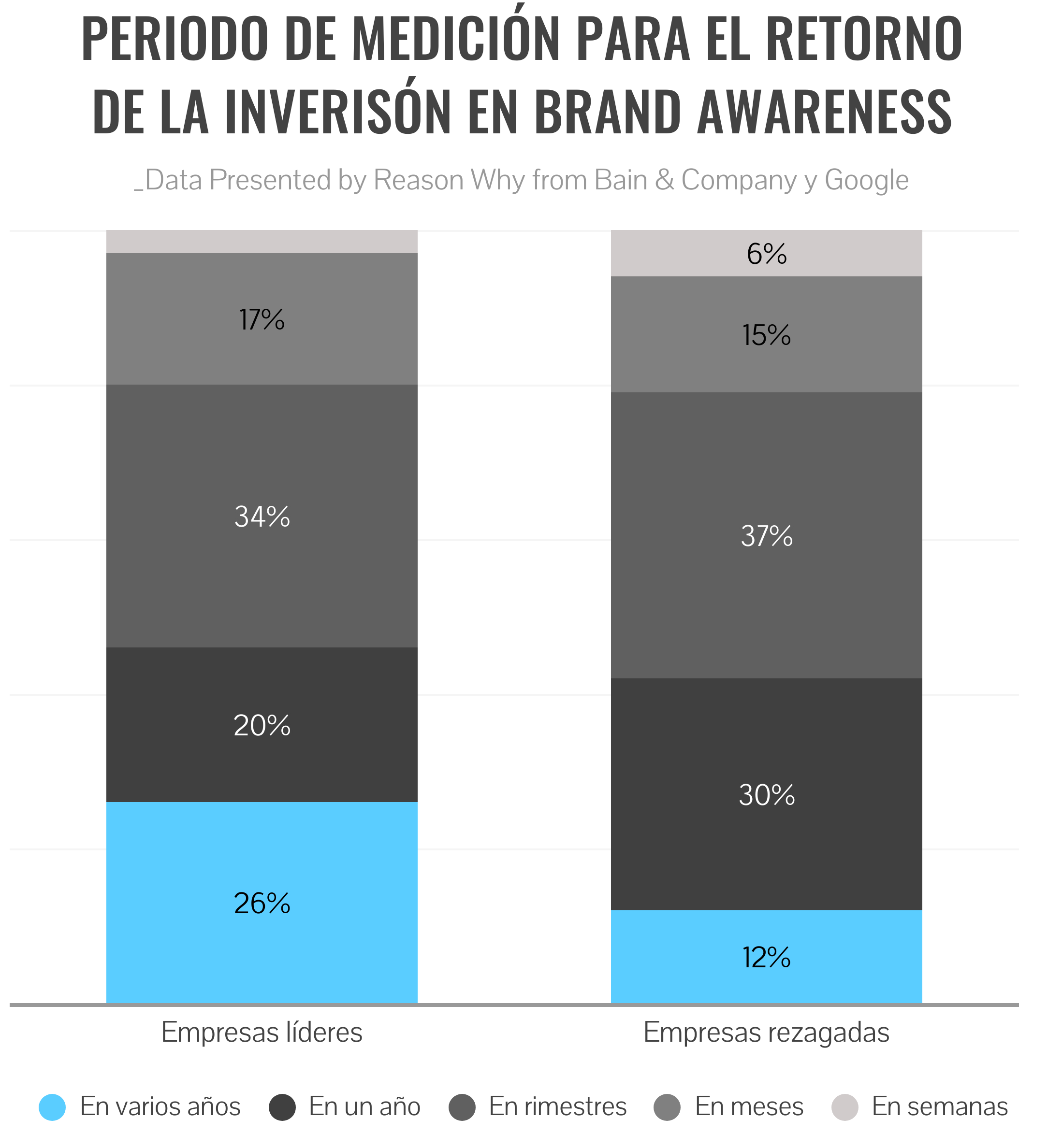
The same must apply to expectations regarding return on investment, which must be shared and realistic. This should apply especially for brand awareness campaigns, which work in the long term. What’s more, leading companies are more likely to analyze this point over multiple years (26%), compared to lagging companies (12%). The quarterly valuation is usually predominant.
Bain & Company and Google encourage organizations to turn the relationship between marketing and finance into a strategic alliance based on shared responsibility for results, rather than something tactical, ad hoc and isolated. They also point out that when marketing professionals achieve the objectives established together with the financial department, they gain more freedom and confidence to commit to long-term projects.