
In a traffic accident you can die or lose your life.
That is the concept that articulates the new awareness campaign of the General Directorate of Traffic (DGT), devised by the creative agency Ogilvy and in which the organization once again explores the feeling of guilt that haunts drivers who cause accidents as one of the consequences of acting recklessly behind the wheel.
Under the title “Die or lose your life,” the DGT invites the population to reflect on an uncomfortable truth, that in an accident not only one’s own life is at risk, but also the possibility of continuing to live with a peaceful future. In this way, it goes beyond focusing on the fatal victims of accidents, an idea that has traditionally articulated the entity’s communication, and focuses its speech on the price of recklessness on the road.
The main audiovisual piece of the campaign artistically portrays the torment in which a person is forever marked by the emotional and moral burden of having been guilty of causing an accident in which two people die. The spot shows, resorting to visual codes of theater, how despite surviving, one’s life can also remain on the road.
The campaign had production from Rome and Isilik was in charge of the sound design.
Insomnia, anxiety, pills, a criminal conviction… All of these can be consequences of surviving a caused accident that can end up cutting a life short. “Once again, the DGT tries to convey the message that the consequences of a traffic accident are real, profound and lifelong and that, in many cases, the accident is triggered by a decision by the driver that most of the time could have been avoided such as distraction, inappropriate speed, driving under the influence of alcohol and other drugs or driving while drowsy.they explain from the organization.
The DGT assures in a statement that with this campaign it seeks to move, challenge and mobilize citizens, so that they become aware that road safety is not a foreign or technical issue, but something deeply human and a shared responsibility. That is why it has opted for an emotional, cinematic and effective tone with the aim of impacting the viewer.
The campaign will have executions on television, outdoor and digital media, with a comprehensive deployment that seeks to reach all types of audiences.
These are the graphs, which focus on different elements that generate distractions or recklessness, such as the use of the telephone or the consumption of alcohol.
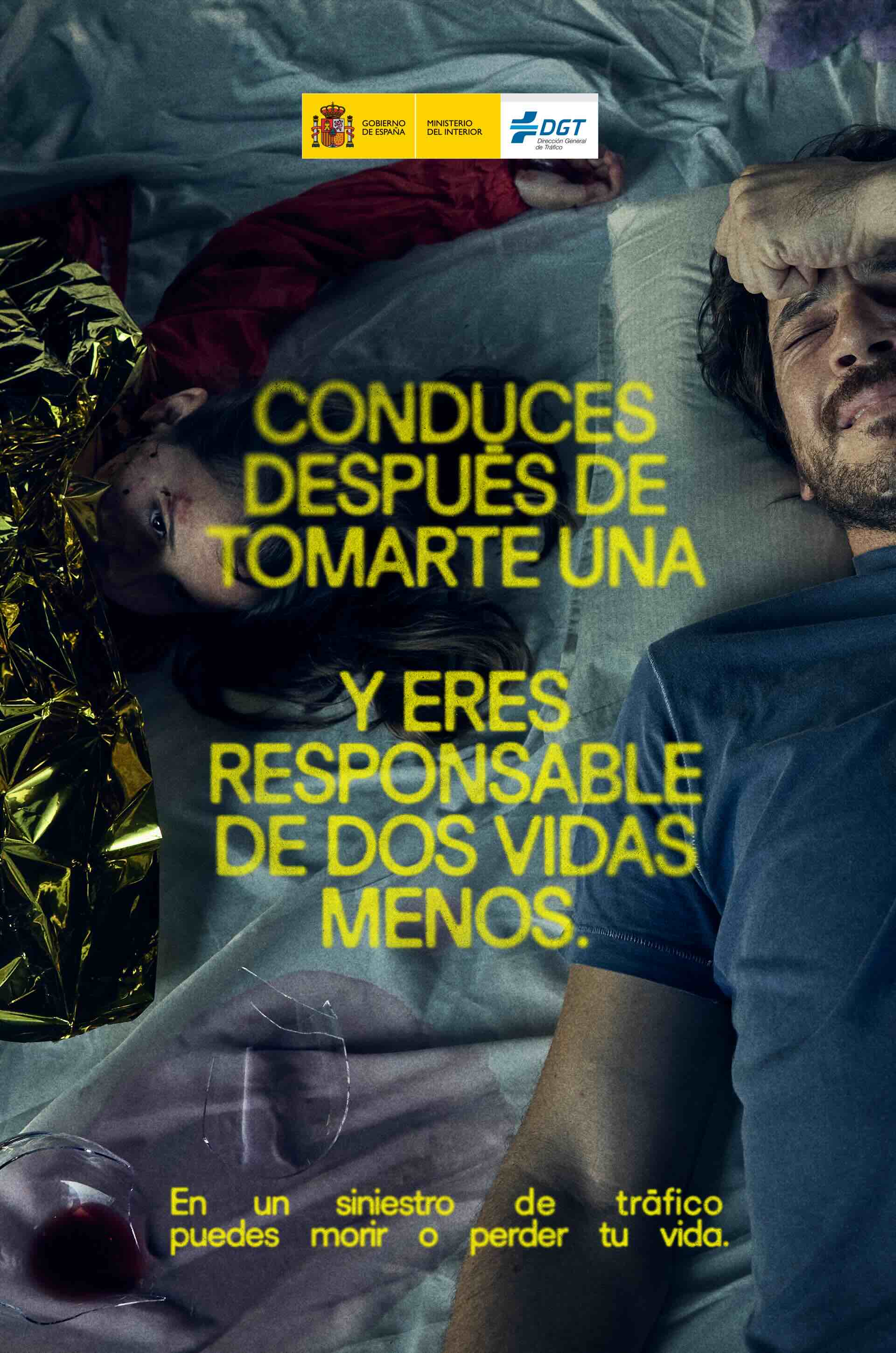
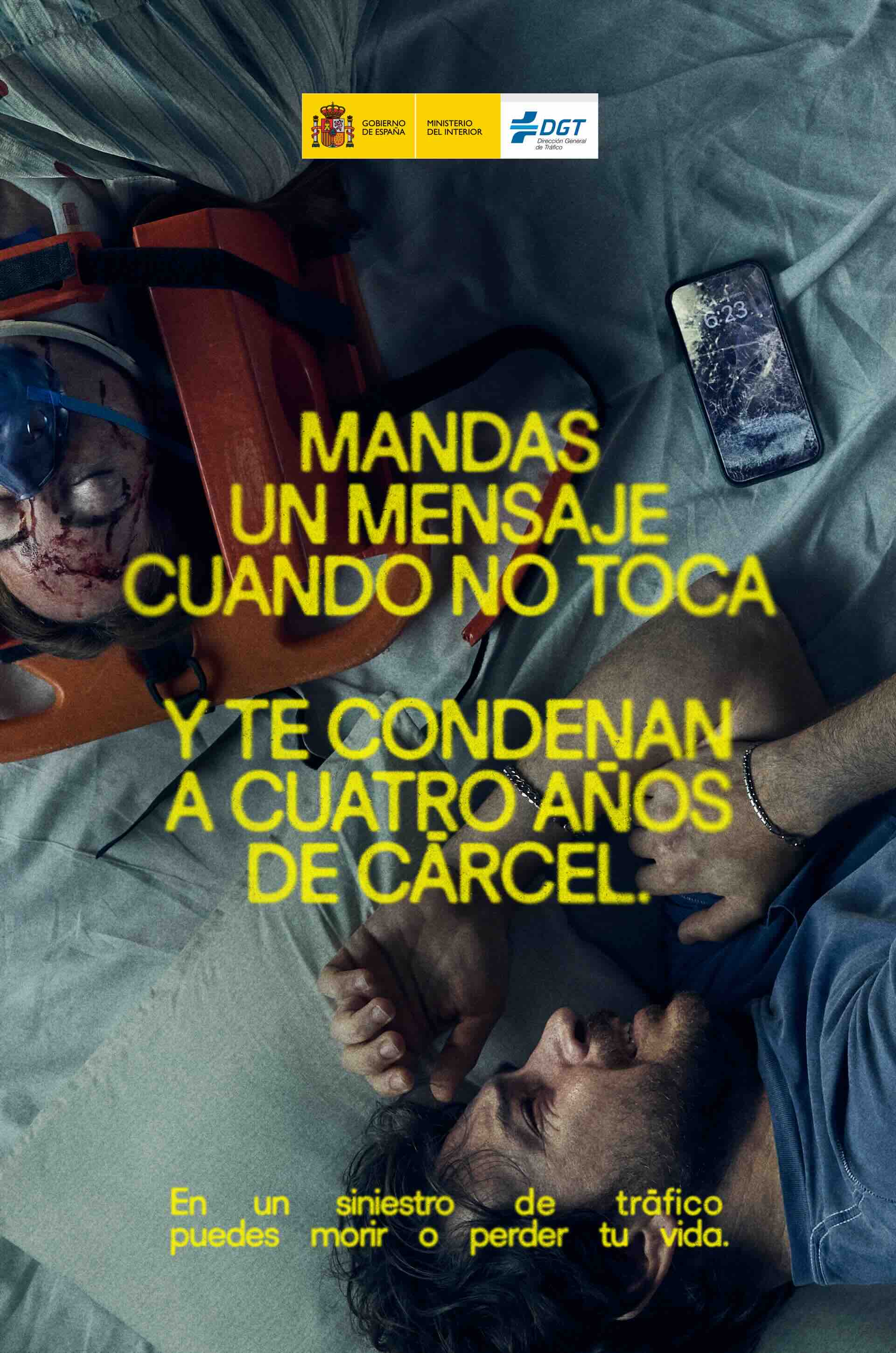
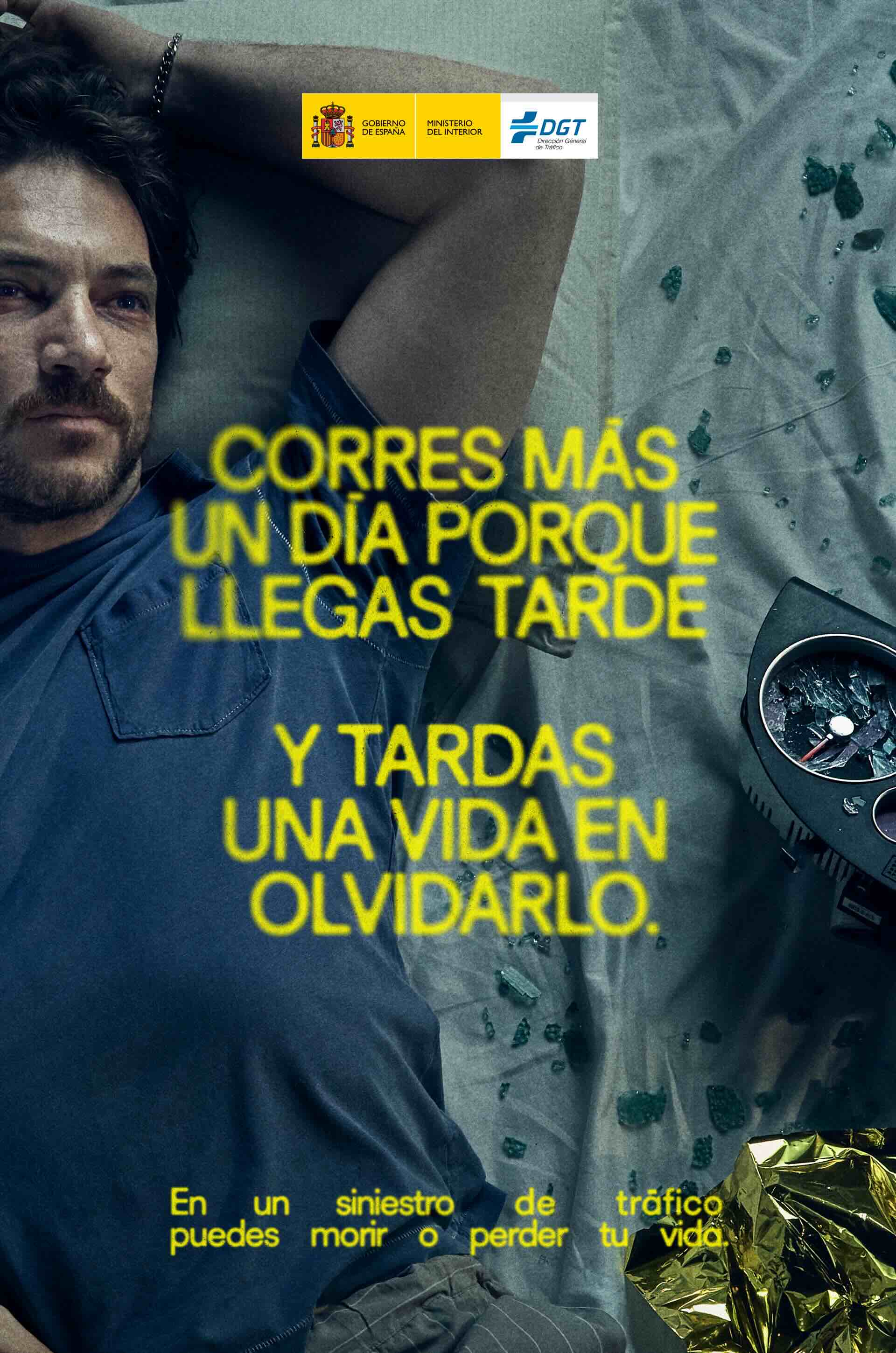

These are the radio spots:
Judge wedge
psychologist wedge
“Die or lose your life” is active from October 22 to December 14.