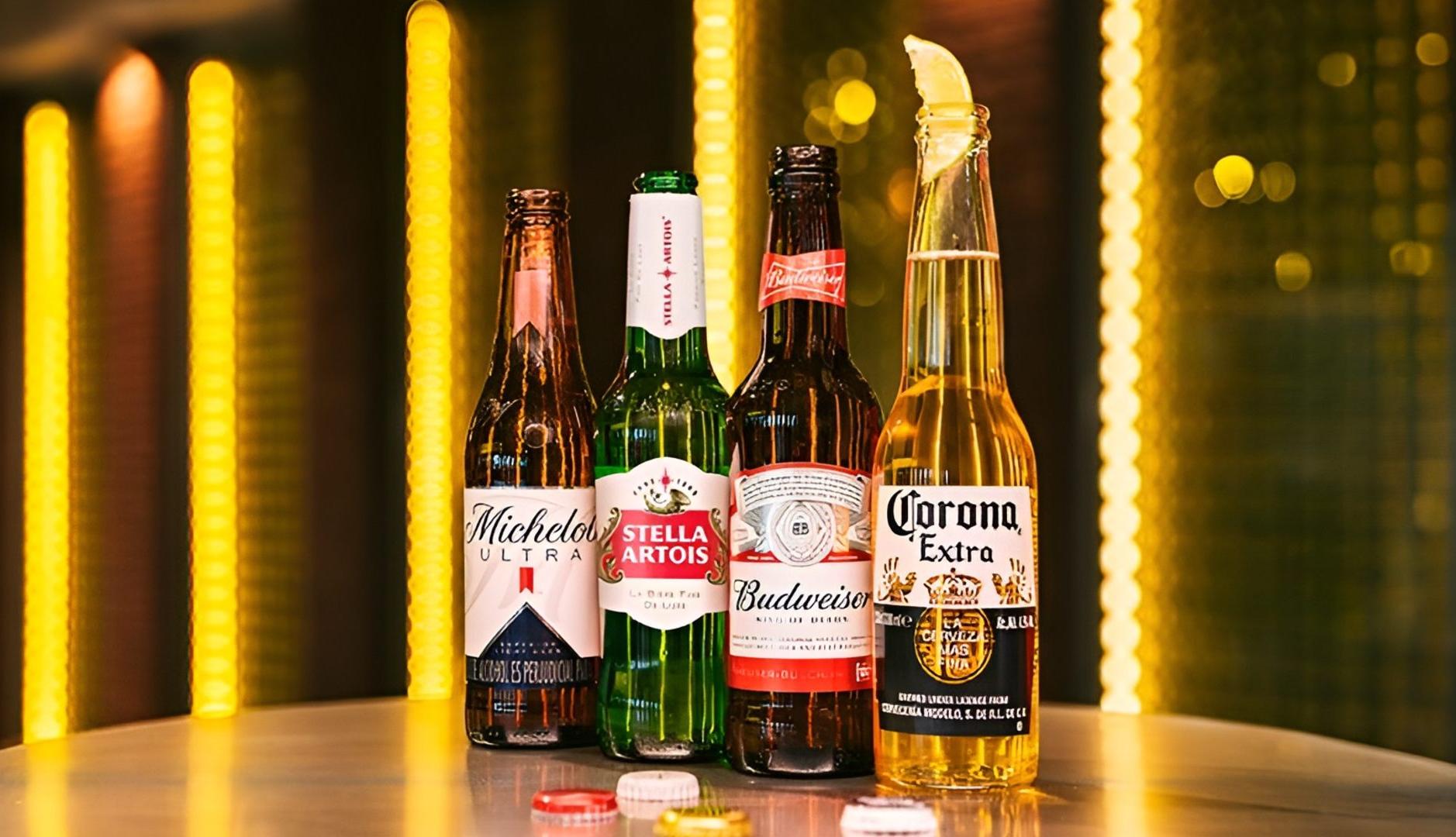
The brewing company AB InBev, based in Belgium and which markets brands such as Budweiser, Corona Extra, Stella Artois and Beck’s, has been in charge of inaugurating the Creative Brand category, one of the novelties of Cannes Lions for this year. The multinational thus sees recognized an internal philosophy focused on creativity and the fact of being a lever for business success sustained by brands.
As the organization explained in November, when the new section was presented, Creative Brand recognizes brands that are building systems, cultures and capabilities that make top-level creative marketing “inevitable and replicable” said Simon Cook, CEO of Lions; as well as the practices that transform creative potential into lasting business impact.
>> Follow the Cannes Lions 2026 Results live <<
“As the industry continues to evolve rapidly and economic uncertainty has intensified the focus on creative ROI, we must highlight the brands and companies that are developing the capabilities that allow commercial creativity to thrive.“Cook explained regarding the category.
According to the official Cannes Lions website, the work nominated for this new category must demonstrate how brands strategically use creativity throughout their organization to achieve measurable business growth, a clear return on investment, meaningful interaction with the audience and long-term brand value.
In this sense, instead of evaluating individual campaigns, Creative Brand values strategic approaches that generate business growth and long-term brand value. When examining the cases, the jury considered innovation and creative originality (25%); strategic alignment (25%); scalability and sustainability (25%); and commercial efficiency (25%).
Following these criteria, the jury has awarded the first Creative Brand Grand Prix to AB InBev, which is also the Advertiser of the Year of the contest. It is the first company in the history of the international festival to receive this recognition three times, given that it was also awarded in 2022 and, again, in 2023.
It should be noted that Marcel Marcondes, who is Global Marketing Director of AB InBev, has served as President of the Jury for the new category. About the category and the award, he said. “This Lion is unique because it evaluates the capabilities and processes behind creative work that generates results. Not just in one campaign or quarter, but over years, brands and geographies“, the organization states in a statement. “Since no gold, silver or bronze prizes are awarded, we treat the finalists as if they were winners, and the Grand Prize selected by the jury represented the best definition of the category”.
The Creative Brand category has only awarded two Lions at its premiere at the festival. In addition to the Grand Prix for AB InBev, the jury also awarded a Golden Lion for Mastercard.
It has been the category that has received the fewest entries this year, with only 73. And only ten brands have achieved a Shortlist, among them Coca-Cola, KitKat or Renault. It is also notable that the Spanish creative industry had no options to receive an award in this new section as it had not achieved any short list.
How did AB InBev become a creative company?
What has made AB InBev stand out in this section has been the creation and development of a model that, instead of conceiving creativity as a final phase of the strategy, places it at the center of the operating system. Thus, he created and developed Creative X, a model shared throughout the company that integrates creativity into daily workflows through joint standards and replicable systems.
The main lever, as the company has pointed out in the case presented to the festival and collected on The Work platform, was the organizational and cultural transformation. As explained by AB InBev, creativity stopped being a “marketing responsibility” and became the way to build stronger brands and, therefore, drive business growth.
Previously, the company’s teams understood creativity as something subjective and led by agencies and creative partners; but now it will be assimilated as a shared capability, supported by common processes, tools and objectives.
At AB InBev, creativity stopped being a “marketing responsibility” and became the way to build stronger brands
Under this framework, it focused on creative training and training with Creative Critiques, weekly sessions in which teams from different markets analyze reference campaigns, both internal and external, to promote constant inspiration and learning. Also in the development of new processes with Brain Trusts, transversal sessions in which ideas in the initial phase were improved in a collaborative and open way, instead of being simply approved.
On the other hand, it also established creativity evaluation formulas through the Creative Councils, held twice a year and made up of external creative experts who evaluate the finished works using the Creative Spectrum, guaranteeing objectivity and responsibility. Additionally, the company has sought to celebrate creative work with the Creative X Awards to recognize the most effective ideas, teams and partners in more than 50 markets. Winning ideas are shared and adapted globally.
As a complement to all this, AB InBev also created the One ABI Way of Marketing (OAWM), a comprehensive operating system that guides the company’s marketing practice. It covers all the key disciplines of marketing, codifying best practices into clear, actionable programs with tools, templates and frameworks that teams use every day to develop strategies, reports and campaigns.
The 5 lessons from AB InBev’s Chief Marketing Officer
Marcel Marcondes, Global Marketing Director of AB In Bev, participated in the presentations on the first day of the festival and shared all these keys to the international creative industry. In addition, he has shared the five lessons that he has extracted from the company’s transformation process, and that guide the creative day-to-day life of the multinational beer company.
They are the following:
- Dreaming big, but remaining humble: according to Marcondes, AB InBev’s dream was to become the company with the most effective creativity in the world, but they were aware that they had to achieve it by simultaneously managing 500 brands in 50 markets.
- Solve business and consumer problems: having the best creative capabilities is of no use if they are not put at the service of the right reasons. The main one of all of them must be to respond to the needs of users, solving their day-to-day problems and, with this, also solving business problems.
- Work on long-term consistency: Marcondes has reminded marketing directors and creatives that they are the guardians of brands and that they must overcome the temptation of seeking to leave their individual mark on them. Respecting the positioning and legacy of the brands must be the priority.
- Go beyond ads and create experiences: Brands are not built on one-way messages alone. Consumers must be involved, creating emotional connections and offering unique and relevant moments that transcend the screens.
- Creativity is a human business: in the era of artificial intelligence, the Marketing Director of AB InBev has recalled that technology is enabling, but that the reason for creativity begins and ends with people.
The results of AB InBev’s transformation
The company ensures that the transformation has led to a circulation of ideas and good creative practices between countries and brands; and that creativity now goes beyond the limits of advertising and is perceived in commercial strategies, in sponsorships and alliances, in innovation and in organizational culture. He maintains that creative effectiveness is now a leadership priority in all business units and an operating philosophy throughout the company.
Among the results, the internal recognition of creativity stands out, which is now supported from the highest levels of the organization, being mentioned in conferences with investors, financial presentations and strategic planning. As a curiosity, he points out that Michel Doukeris, CEO of AB InBev, was the first CEO to speak at Cannes Lions.
He also points out that more than 33 brands in 17 countries have already been recognized at Cannes Lions, which he understands as a sign that creativity has escalated and does not remain isolated. In addition, he explains that the transformation has resulted in the company going from winning 9 Lions at Cannes Lions in 2017 to an average of 40 Lions annually over the last five years; or that it has become the first company in history to win Creative Marketer of the Year recognition three times.
Click to view the data in full screen.
Among other things, it refers to the Effie Worldwide ranking to highlight that it has gone from 24th place in 2017 in the list of most effective advertisers to taking first position on four consecutive occasions between 2021 and 2024. And based on the Kantar BrandZ report, it ensures that it owns 8 of the 10 most valuable beer brands in the world.
Beyond the creative level, the company explains that the change has translated into business results. In 2025, the company recorded a 2% increase in revenue. Specifically, its “megabrands” recorded a year-on-year growth of 4.1% in net income and represented 57% of the company’s turnover.
Furthermore, the company’s total net revenue showed a compound annual growth rate (CAGR) of 4.8% between 2020 and 2025.
More info: Creative Brand winners at Cannes Lions 2026