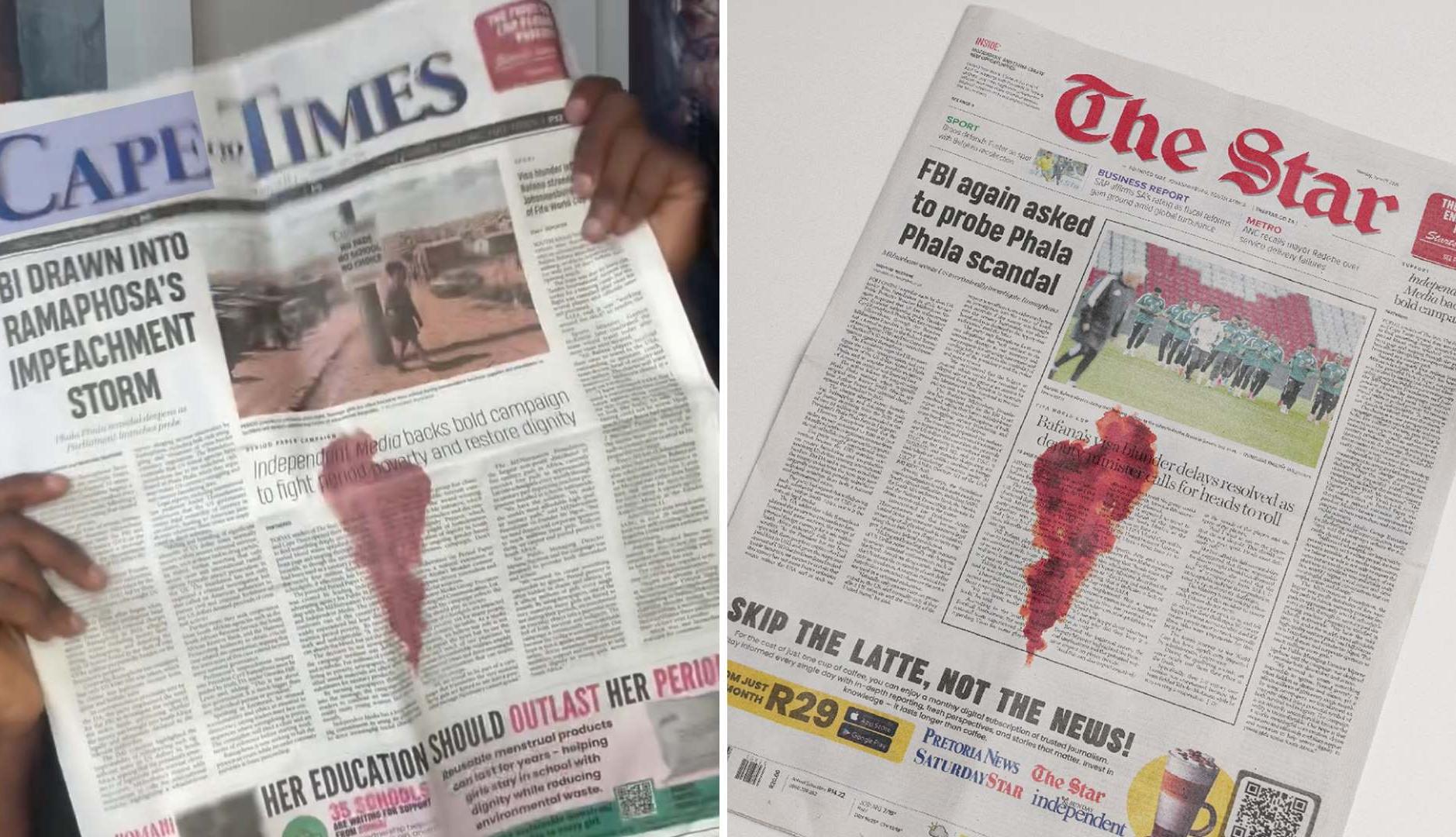
Newspapers with menstrual blood stains on the cover is the powerful image that the South African organization Menstruation Foundation has created to make visible the lack of access to personal hygiene products among a large part of the population and the social inequalities that this causes among entire generations of women.
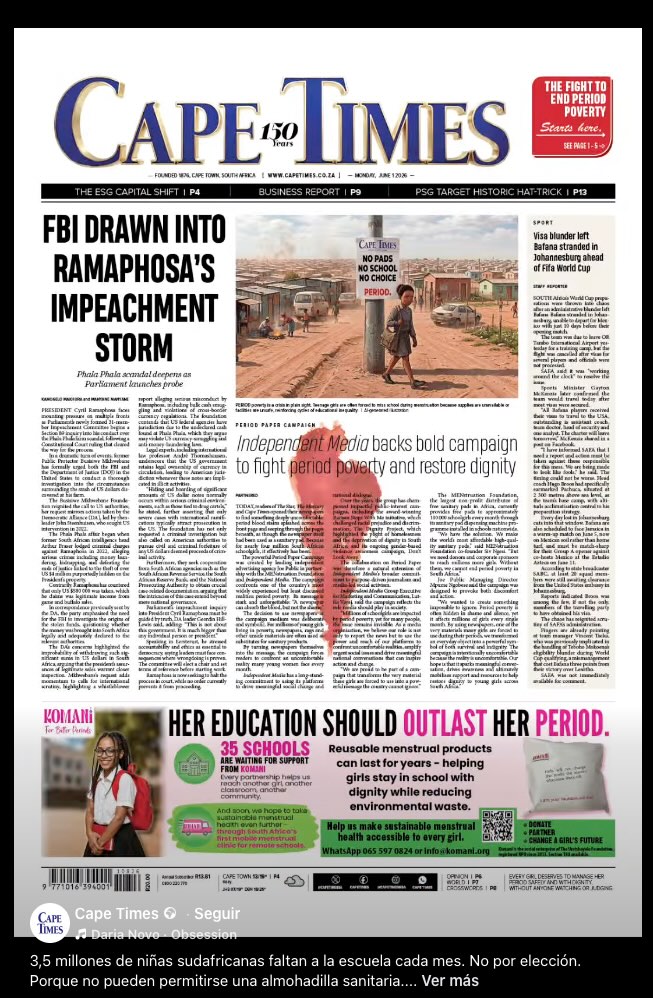
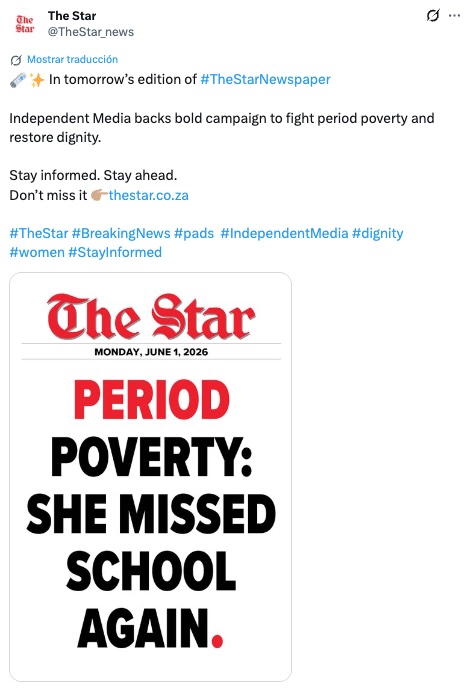
The campaign, titled “Period paper”, has been devised by the creative agency Joe Public and is being developed in collaboration with Independent Newspapers, owner of the newspapers The Star, Mercury and Cape Timesthree of the most read print newspapers in the country. Its June 1 editions appeared converted into sanitary pads as a symbol of so-called “menstrual poverty.”
The creative concept is based on the fact that thousands of South African women are forced to use newspaper or rags in the absence of pads, tampons or menstrual cups, putting both their hygiene and their health at risk. Thus, the publications have shown a blood stain on their covers that crossed the pages, simulating the situation in which more than three million students find themselves, according to the organization.
The blood stain permeated from the front page to an advertising page in the newspapers that displayed the text “A newspaper can absorb blood, but not shame.” The strategy has turned newspapers into the campaign’s own message, forcing readers to confront an uncomfortable reality that many young women face every month.
The action has been amplified on the Menstruation Foundation’s social channels, as well as with the collaboration of influencers and content creators, who have explained the initiative and conveyed the organization’s awareness message. The campaign has featured, among others, the rugby player Nadine Roos and the actor Siv Ngesi, who is also Co-Founder and Director of the foundation.
Original post by Siv Ngesi
The campaign has also focused on the consequences of period poverty. Thus, he recalled that the lack of access to hygiene products can lead to a school-age girl missing up to five days of school each month, causing a cumulative educational disadvantage that limits her opportunities and worsens gender inequality. He also points out that many families are forced to choose between food and sanitary pads, and in extreme circumstances, some young women are exposed to sexual exploitation in exchange for hygiene products.
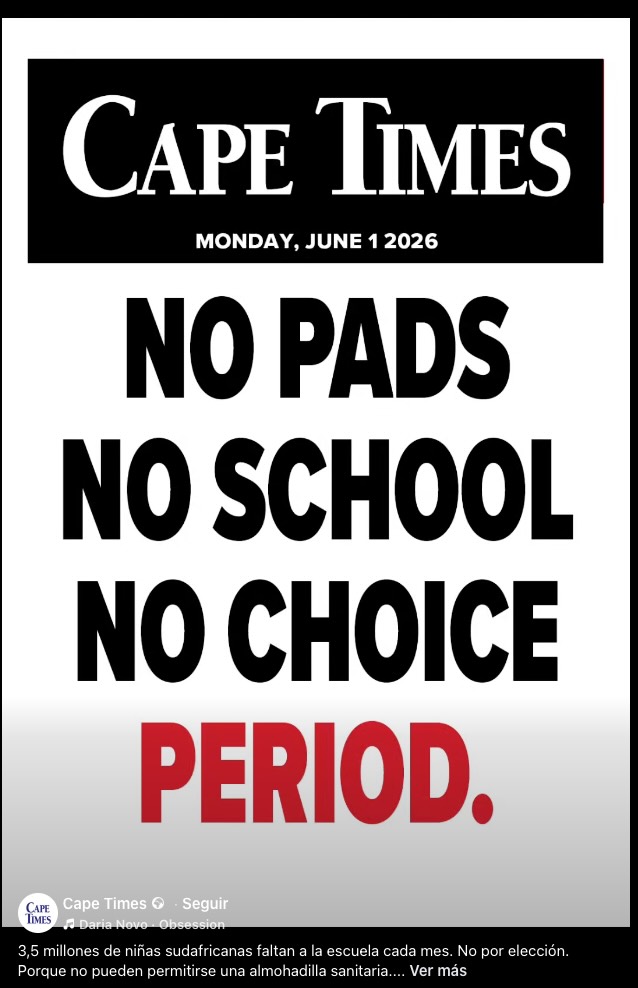
Newspapers have echoed this situation with creatives in different formats that they have shared on their profiles on social networks. “Today, Cape Times and Independent Media put period poverty on our front page, because this country can no longer look the other way“, commented the newspaper through Facebook. “We are proud to support the ‘Period Paper’ campaign using the power of journalism to fight for dignity across all classes in South Africa”.
MENstruation Foundation fights menstrual poverty by distributing free pads to school-aged girls and young women through its dispenser program installed in schools across the country. “We have the solution. We manufacture the most affordable high-quality sanitary pads in the world“, commented Siv Ngesi in a statement. “But we need donors and corporate sponsors to reach millions more girls. Without them, we cannot eradicate the problem”.
In this sense, the campaign has sought discomfort and provocation to drive action and participation. “We wanted to create something impossible to ignore. By using newspapers, one of the materials that many girls are forced to use during their menstruation, we transform an everyday object into a powerful symbol of survival and indignity.“; commented Mpume Ngobese, Managing Director of Joe Public. “The campaign is intentionally uncomfortable because reality is. We hope it sparks meaningful conversations, raises awareness, and ultimately mobilizes support and resources.”.