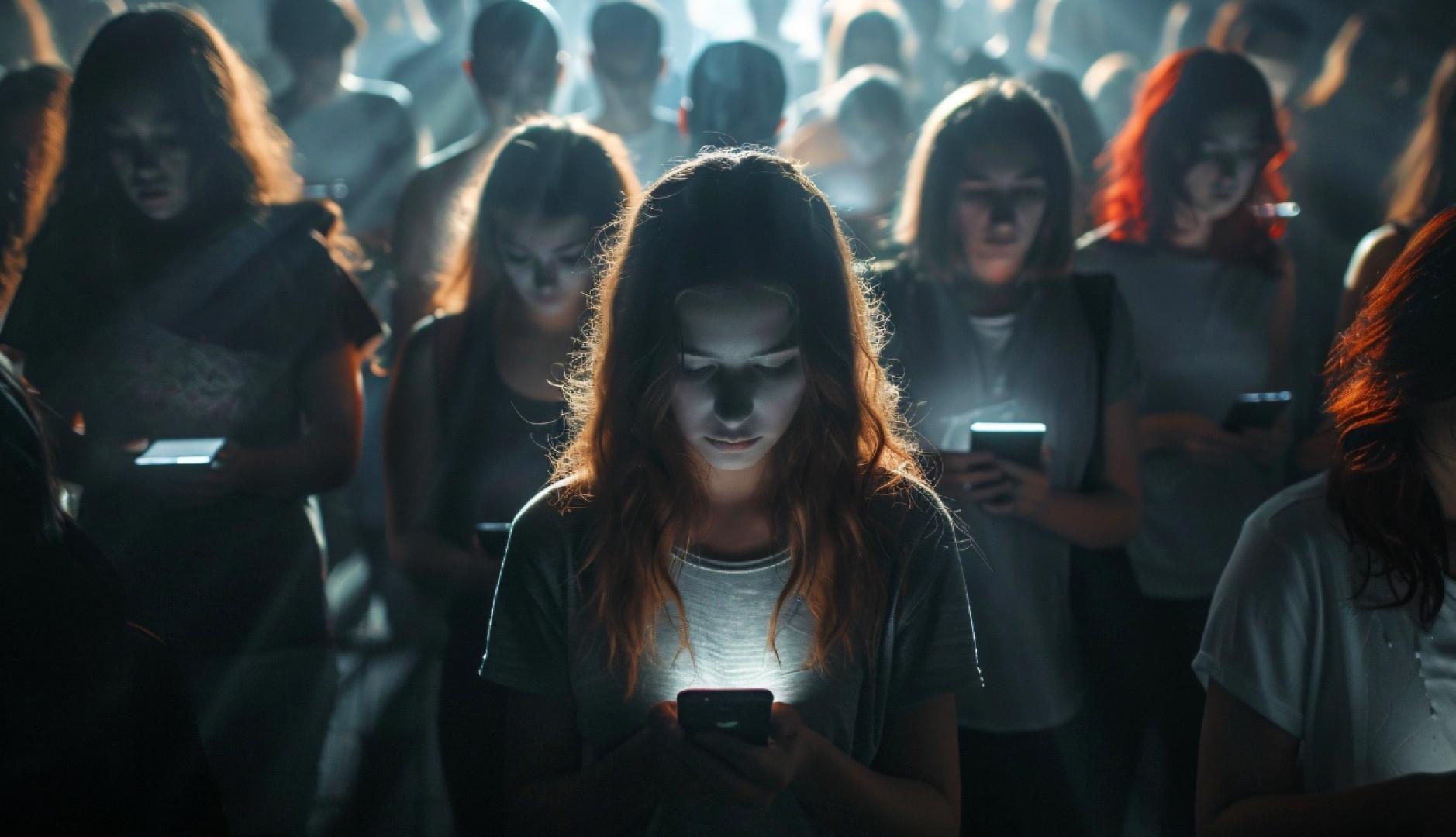
Social networks were born around a promise: connecting people and making it easier for them to share parts of their lives. Two decades later, this component seems to be losing ground compared to another use model. Less is published, who can see what is published is more restricted, and platforms increasingly function as spaces to consume entertainment, current affairs, and content selected by algorithms.
The change does not necessarily mean that users are abandoning social networks. It’s more subtle: they are withdrawing from public participation.
This is according to research by Incogni carried out between June 1 and 9, 2026 on a sample of 1,000 adults representative of the US population by age and geographic distribution. The study analyzes everything from the frequency of publication to the reasons that would lead to deleting an account, including the emotions associated with disconnecting from applications.
The result shows an increasingly ambivalent relationship with digital life: 55% say they publish less than five years ago and 53% have become more restrictive regarding who can see their content. It is not so much the end of social networks as a transformation of what is done within them.
From publishing life to consuming content
The displacement has been brewing for some time. The original network model was built around contacts: friends, family or acquaintances published and the user came to see their updates. The progressive algorithmization of feeds has altered that dynamic.
Platforms have been incorporating more and more content from accounts that the user does not follow, especially short videos and publications recommended according to their interests. The result is an environment that is closer to a personalized entertainment platform than to a space articulated exclusively around personal relationships.
Generation Z is the only one who claims to post more frequently now (16%)
Incogni data brings another dimension to that change. Not only do platforms offer more professional, algorithmic or entertainment content: users themselves are reducing what they publicly contribute to the ecosystem.
Generation Z presents, however, a peculiarity. It is the only generation analyzed that is partially moving in the opposite direction: 16% say they publish now more frequently than five years ago and 13% say they have become less selective regarding who can access their publications.
Generally speaking, however, the movement detected by the research is towards quieter and more controlled participation: fewer publications, more restricted audiences and greater caution. And one of the most revealing data of the study is related to the perception that exists behind the networks: 51% of the participants consider that maintaining an online presence feels like work. The sensation is increasing among the younger generations: it reaches 60% of Generation Z, compared to 38% of Baby Boomers.
The formulation is significant because it introduces a different dimension to the debate on digital fatigue. Staying active is no longer just about opening an app for a few minutes. It also involves responding to messages, following conversations, deciding what to post, managing who will see it, and anticipating how it may be interpreted. Digital participation thus acquires the characteristics of a task that requires attention and maintenance.
And that pressure seems to have consequences. Almost half of those surveyed, 47%, say they have deleted a social media or messaging application due to stress or anxiety. The proportion reaches 61% among Millennials and 56% among members of Generation Z.
However, the contradiction appears especially clearly when the study asks what users feel after spending a prolonged period without consulting their messaging applications. The most frequent response is peace, mentioned by 27%. It is followed, however, by two practically opposite emotions: anxiety, with 22%, and relaxation, with 21%. Another 20% experience fear of missing out -FOMO-, while 16% feel relief and 15% discomfort.
The data expresses the paradox well. Stepping away from digital communication can alleviate the pressure of being permanently connected, but that same connection has become so integrated into everyday life that leaving it temporarily also causes concern. The tension is especially pronounced among the youngest. 34% of Gen Z experience anxiety when not checking their messages and 29% feel FOMO. Among Millennials the figures drop to 26% and 21%, respectively.
Politics also pushes us to disconnect
Fatigue does not seem to be explained solely by the volume of content or the perceived obligation to stay present. It also matters what type of conversation users encounter when they enter the platforms.
44% of those surveyed say that political content and polarization make them want to withdraw from social networks: 14% completely agree with this statement and another 30% agree.
Digital fatigue arises from repeated exposure to conflict, hostility and polarizing content
The data introduces an important question to understand the evolution of the platforms. Digital fatigue does not respond solely to excessive screen time. It can also arise from the emotional climate of digital spaces and repeated exposure to conflict, hostility and polarizing content.
Algorithmic logic adds another layer to the phenomenon. Platforms compete for attention and content capable of provoking emotional responses can generate more interaction. In this way, infrastructure designed to maximize engagement can come into tension with users’ desire to find less exhausting digital environments.
Privacy and security: the main red line
What would have to happen for users to go beyond posting less and decide to directly delete their accounts?
The first answer is not excess time or fatigue. It’s privacy and security.
51% point to concerns related to both issues as a reason that could lead them to delete their profiles. The second major trigger would be suffering harassment, bullying or hate speech, mentioned by 41%.
Next are excessive use or the feeling of wasting too much time and mental health problems, both with 32%. 31% mention conflicts derived from the use of networks with family, friends or partners.
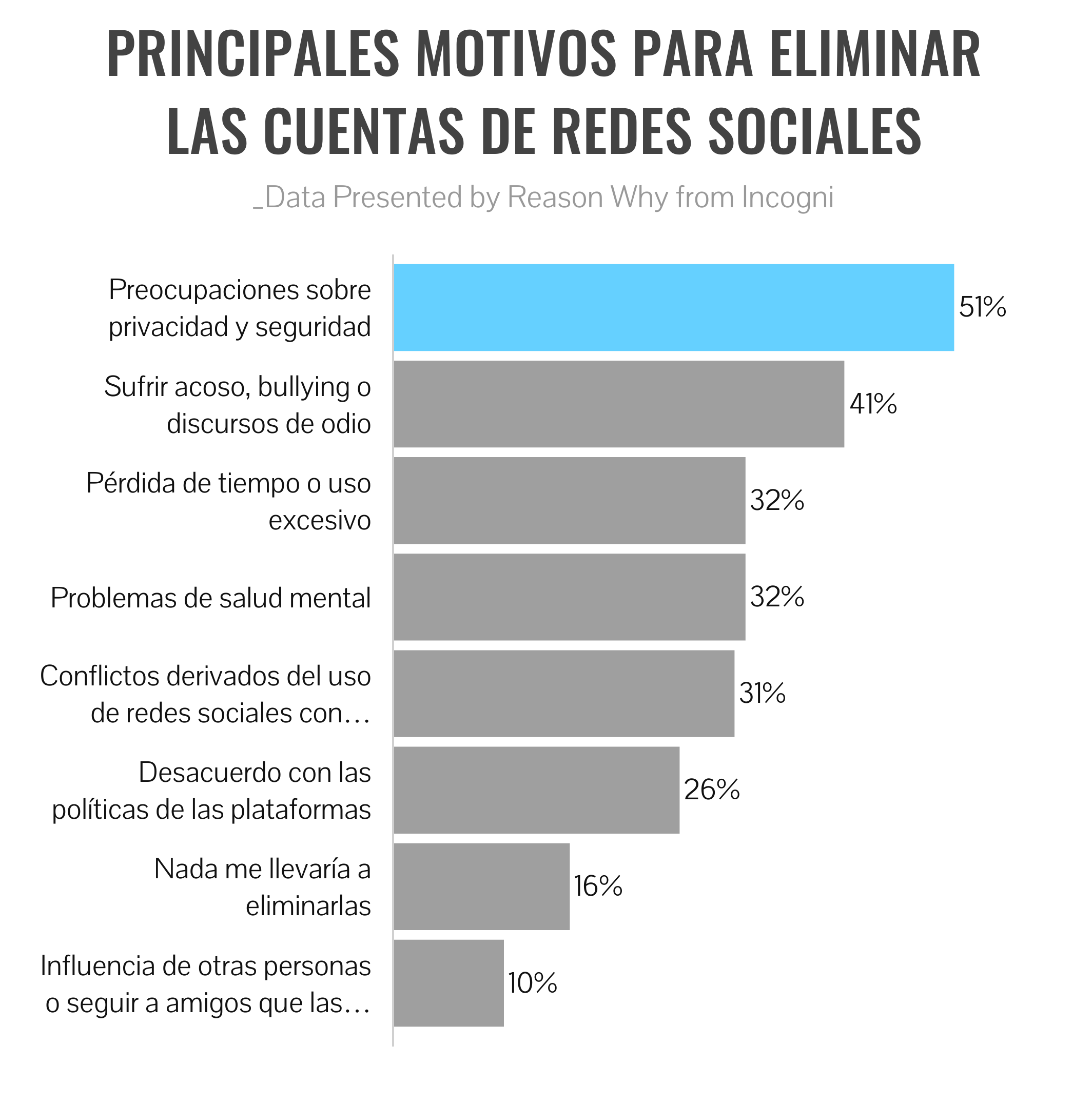
Mental health once again shows a considerable generation gap. It is a possible reason to delete accounts for 44% of Generation Z and 42% of Millennials, compared to 25% of Generation X and only 12% of Baby Boomers. At the same time, there is a particularly resistant core: 16% say that nothing would lead them to delete their accounts.
Less exposure does not mean less consumption
The study detects a withdrawal from active participation, but this can coexist with intense content consumption. In fact, Social Media Today Remember that Meta has reported increases in time spent on Facebook and Instagram in recent years, driven, among other factors, by a greater presence of short video in feeds.
The paradox helps explain where the model is headed: less everyday creation by the average user and more consumption of content produced by a limited proportion of accounts and distributed algorithmically.
Inequality in participation is not new either. Data from Pew Research from 2019 indicated that approximately 80% of Twitter tweets came from just 10% of its users. Long before, the well-known 90-9-1 rule on online communities already stated that an immense majority of participants watched while a minority concentrated on the creation.
What the new data suggests is that this asymmetry may now be encountering another phenomenon: the exhaustion associated with the obligation to produce and maintain a digital public identity.
For brands, media and marketers, the change has implications that go beyond individual behavior. For years, a good part of the differential value of social networks resided precisely in their participatory nature: brands not only published to an audience, but entered spaces where people also shared, commented, recommended and publicly constructed their identity.
If a growing proportion of users prefer to watch rather than post, restrict their content to smaller circles, and shift certain conversations to private channels, viewable metrics may represent an increasingly less complete part of audiences’ relationship with content.
Competition for attention also changes. A brand no longer appears only among photographs, opinions or updates from the user’s contacts. Compete with professional creators, entertainment, current affairs, algorithmic recommendations and a growing stream of short video.
The challenge is no longer simply being present on a social network. It means being relevant within platforms that behave less and less like contact networks and more like personalized content distribution engines.