Social networks are one of the main sources of fashion inspiration, but constant exposure to the same content can also end up making everyone dress similarly. It is the idea on which Skittles has built “Flip Your Fit”, an action that invites Generation Z to escape trends driven by algorithms and experiment more with their personal style.
The initiative has accompanied the launch in the United Kingdom of Skittles Flavor Flip, a new proposal from the brand based on surprise: the candies maintain a recognizable appearance on the outside, but hide unexpected flavors inside. Skittles has translated that concept into fashion to encourage consumers to try combinations that they might not initially consider their own.
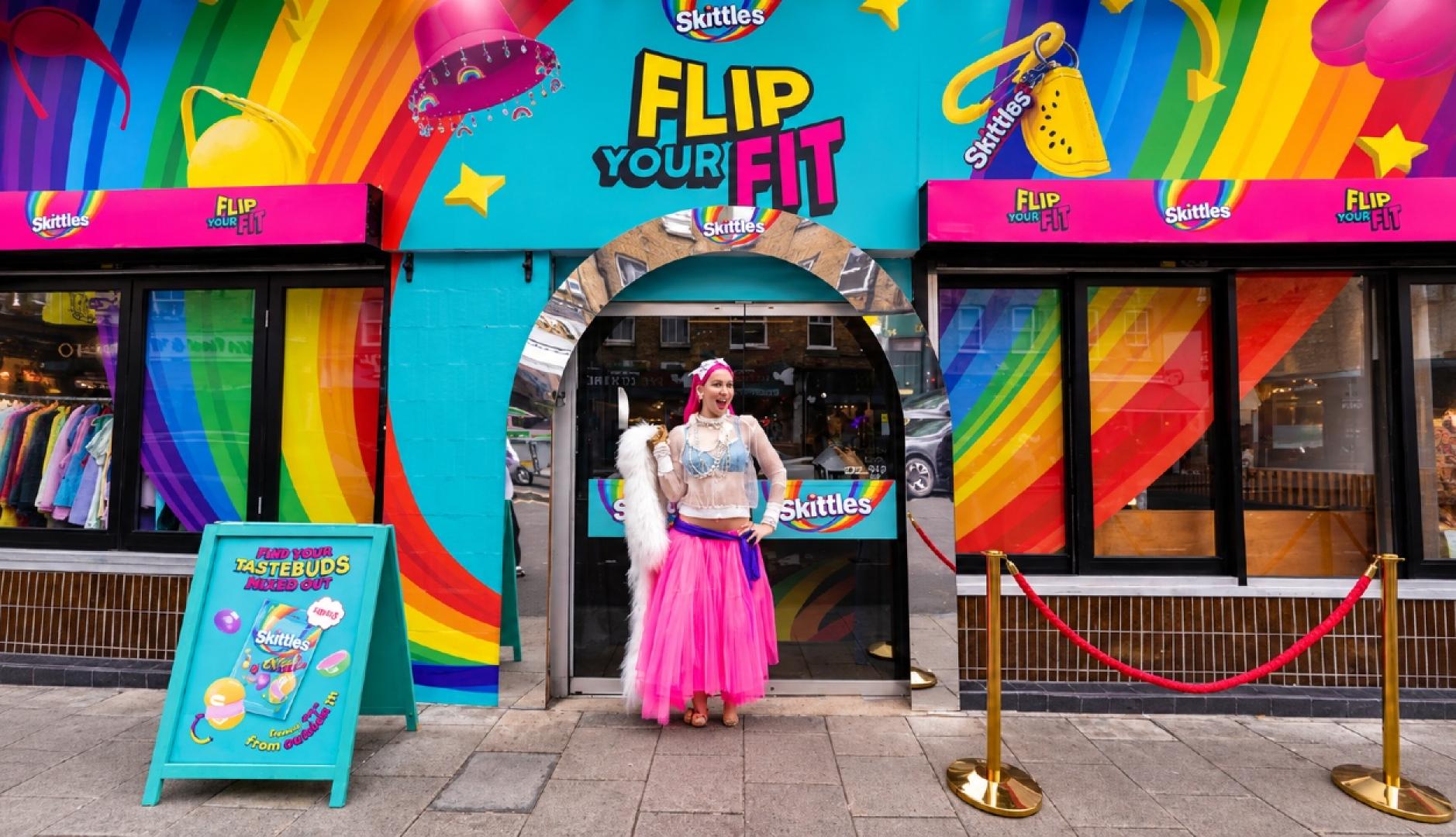
The action, developed by Weber Shandwick, had as its physical axis the “Skittles Flip Your Fit Salon”, a space opened in London on September 15, coinciding with the dates of London Fashion Week.
The campaign is based on research commissioned by Skittles among 1,000 British Gen Z adults under 30 years of age. The results reflect the extent to which trends circulating on social networks condition both inspiration and decisions related to clothing.
42% say they come across the same fashion trends on their feeds several times a day, while another 19% see the same or similar outfits at least once a day. Additionally, 48% believe that social media has made their personal style less creative or expressive.
The influence also carries over to the need for approval. 57% recognize that social validation, from “likes” to compliments or positive reactions, influences what they decide to wear, and 39% feel pressure to dress according to the trends they find on platforms.
65% find styles they would like to try, but say they don’t feel safe wearing them
This concern can even modify specific decisions: 51% have ever ruled out wearing an outfit or publishing a photo with it for fear of how it might be received. The research indicates, however, that there is no lack of interest in experimenting. 65% find styles they would like to try, but say they do not feel confident enough to wear them, while 56% point out that the fear of being judged for dressing differently limits their experimentation.
Without conditions related to confidence, budget, networks or trends, the styles that young Britons show the most interest in exploring include Old Money or Y2K aesthetics, both with 16%, and vintage fashion, with 13%.
A room to escape the uniform of the algorithm
Skittles has used that data to build an experience around what it calls the “algorithmic uniform”. The “Flip Your Fit Salon” proposed that visitors temporarily put aside what their networks suggest they should wear and experiment with other possibilities.
Content creator and self-described “happy maximalist” Abigale Masters served as the action’s stylist. Known for her use of intense colors and striking silhouettes, she offered personalized advice to help attendees try out proposals far from their usual aesthetic. “Social media can be an incredible source of inspiration, but when you see the same trends over and over again it can be easy to forget what you really like”said Masters. “Personal style should be about experimenting, making mistakes and finding unexpected combinations that make you feel good.”
Original video on TikTok: @abigalemasters1
The experience also included hairdressers, makeup artists, manicure specialists, and color and styling experts. Attendees could try everything from unexpected color combinations to fruit-inspired manicures or beauty proposals linked to flavors. The intention was to transfer the same mechanics of Skittles Flavor Flip to the personal aspect: question what seems predictable at first glance and discover a result different from the expected.
Skittles will continue working alongside Abigale Masters and other creators to pose different challenges on social networks that encourage young Britons to move away from the choices that usually determine their algorithms.
The suggestions can be as simple as wearing a color that you would normally avoid, trying an unexpected combination or finally wearing one of those outfits that have been saved in your inspiration folders for a long time.
“Skittles has always celebrated color, individuality and the unexpected”explained Emily Owen, Senior Brand Manager at Skittles. “Flavour Flip is all about defying expectations – what you see on the outside isn’t necessarily what you find on the inside – and ‘Flip Your Fit’ brings that same spirit to personal style.”
With the action, Skittles uses the product launch to transfer its brand positioning to a behavior identified among young people, linking the Flavor Flip concept of surprise with the pressure generated by repeated trends on social networks and the opportunity to experiment outside of them.