Advertising comes to ChatGPT. After monetizing the tool through subscription plans, OpenAI seeks to capitalize on the use of the free version of its chatbot through the inclusion of ads and, in this way, consolidate new sources of income. The company has announced that it will carry out tests with advertising in the United States, which it will likely expand to other markets in the coming months.
As announced in a statement, over the next few weeks it will test ads in the Free and Go plans, the cheapest subscription plan already present in more than 170 countries. The goal, as expressed, is that more people can use the chatbot with fewer restrictions or without having to pay.
The Plus, Pro, Business or Enterprise subscription versions of the tool will not include ads.
Ensures that the chatbot’s responses will be based on what is objectively useful and never on advertising
Given the movement, OpenAI has affirmed its willingness to “preserve what has made ChatGPT valuable from the beginning“. In this sense, it ensures that the chatbot’s responses will be based on “in what is objectively useful and never in advertising“, and that data and conversations will be protected and will not be sold to advertisers. Likewise, it also points out that users will have control over their experience in order to see relevant ads or deactivate personalization if they prefer.
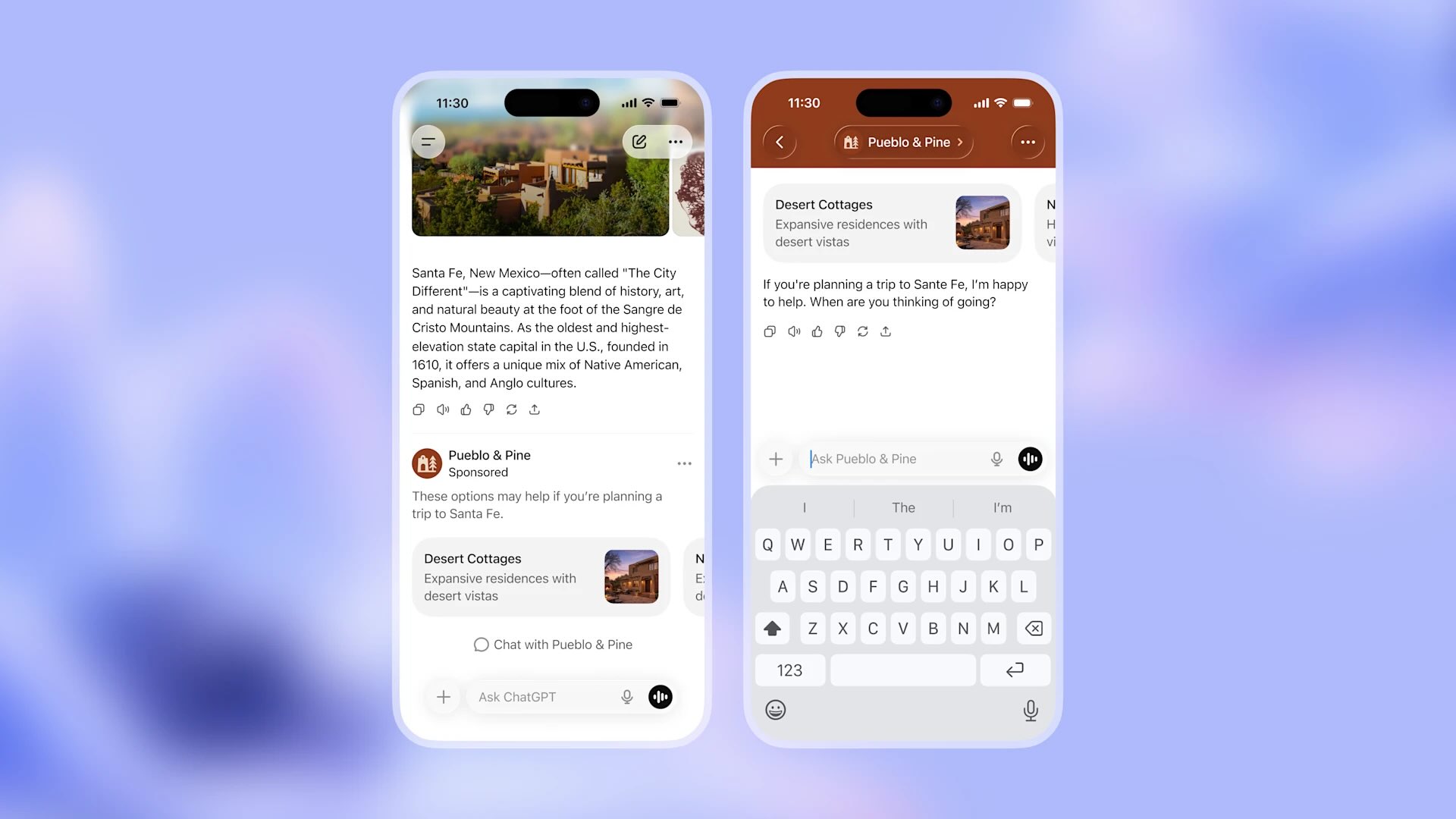
In addition, the company has taken the opportunity to transfer the approach that will guide its management of ads in ChatGPT from now on. The advertising will be aligned with OpenAI’s mission regarding general artificial intelligence that benefits all humanity, and will not influence the answers offered by the tool, so that they remain useful. This will materialize in that the ads will be visibly separated from the organic responses and clearly identified, as evidenced by an image shared by the company.
As explained, for now, the ads will appear at the end of the responses in ChatGPT, when there is a relevant sponsored product or service according to the conversation. Users will be able to learn more about why they are being shown an ad or dismiss it, and advertising will not be displayed on accounts where the user indicates that they do not want it or when the tool estimates that the user is under 18 years of age. The company is also committed to ensuring brand safety, preventing ads from appearing near sensitive or regulated topics, such as health, mental health or politics.
From OpenAI they defend that the ads will be useful, entertaining and will help discover new products and services. He points out that AI opens the possibility for users to go beyond static messages and links and points out that the experience will progressively improve, reaching, for example, being able to see an advertisement and directly make the responses needed to make a purchasing decision.
The company claims that advertising on ChatGPT will help small business competition. “Ads can also make a difference for small businesses and emerging brands looking to compete. AI helps level the playing field, allowing anyone to create quality experiences that make it easier for people to learn about options they might never have found.”explains in the statement.
The inclusion of ads in ChatGPT represents a notable change in the company’s business model, which seeks to diversify its income in order to offset the enormous costs associated with the development of artificial intelligence. The company’s model has so far been based on subscription, and the commitment to ads is a notable shift in OpenAI’s philosophy. Sam Altman, CEO of the company, even referred to advertising as “the last resort” in order to maintain the viability of the business.
With this movement, OpenAI adopts a model very similar to that chosen by other large technology companies, especially social networks or streaming platforms. Advertising will help monetize the free versions of your products, pushing users to adopt the monthly subscription in order to avoid the impact of ads.