Backrooms have gone from being a phenomenon born on the Internet to becoming one of the most recognizable imaginaries of contemporary horror. Its infinite hallways, empty offices and depersonalized spaces function as a metaphor for loss, anxiety and disconnection. Revolut has resorted to this visual language in its new campaign, “Build It Better”, to transfer to the audiovisual field the anguish that many people experience when relating to their finances.
The campaign, created by Anomaly London, takes advantage of the cultural trend and the theatrical release of the film “Backrooms” to make a parallel exploration of its same codes. The agency wanted to represent a financial context marked by uncertainty, overinformation, volatility and the feeling of being trapped in systems that are difficult to understand. Faced with this reality, Revolut is presented as a tool to find a way out and recover a clearer and more optimistic relationship with money.
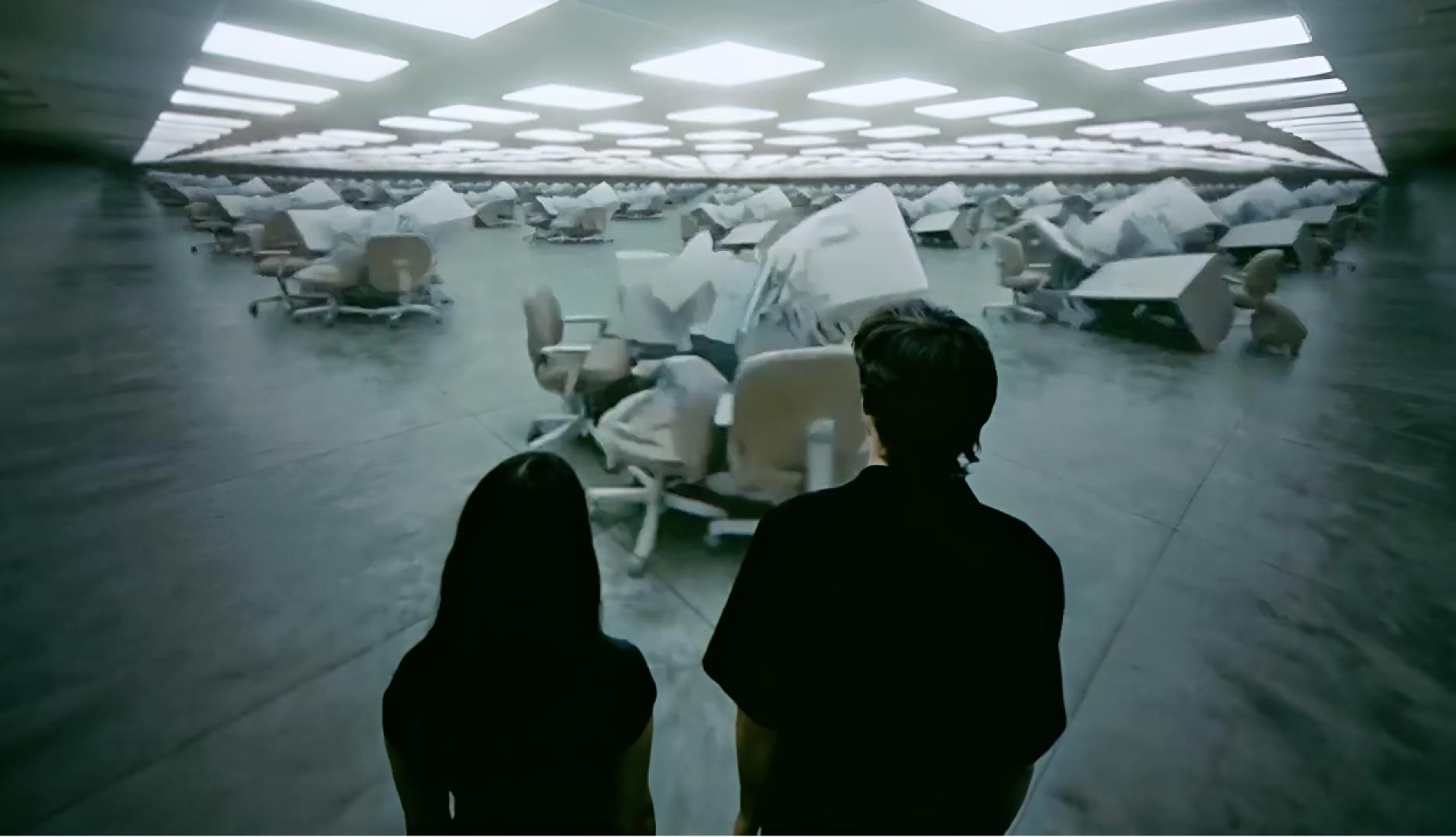
To build that universe, Anomaly has worked with director Leigh Powis and Jeremy Cox, director of photography for “Backrooms.” The objective was to reproduce the aesthetics of the phenomenon and rely on its visual resources to create a world of its own: endless corridors, uninhabited offices, impersonal spaces and scenarios that seem to belong to a financial system as abstract as it is oppressive.
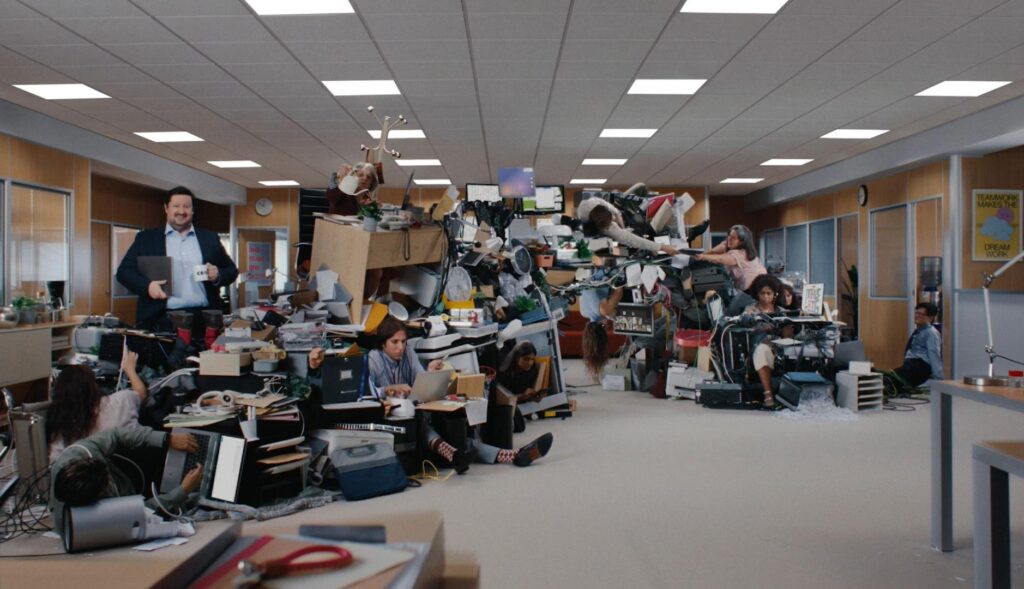
In this environment, different elements appear, converted into symbolic threats. A monolith of cell phones represents the constant anxiety caused by information overload; slow-moving card readers suggest continuous withdrawal of money from accounts; Dysfunctional office furniture alludes to permanent corporate restructuring; and an unstable stock market embodies economic volatility and uncertainty.
A terrifying language to talk about money
The campaign takes to the extreme the idea that, for many people, managing money can feel like navigating a space without clear instructions. Revolut turns that sensation into a visual landscape, where the protagonists appear trapped in a cold, excessive, fragmented and difficult to control universe, until the brand functions as an escape route.
The work is supported by large physical sets and the actual construction of several of the monoliths that appear in the pieces. From there, Brussels-based visual effects company 1080p was in charge of expanding and strengthening the scenes. The approach therefore combines practical production and digital effects, avoiding an overly polished appearance and seeking a more imperfect feel.
Sound also plays an important role in conveying that anxiety to the viewer.
“It wasn’t the classic shoot perfectly captured with green screen. It was something practical, and then it was complicated with plates. I wanted to create a feeling of imperfection that, hopefully, made the audience want to go in there and put it together.”said Leigh Powis, campaign director.
In addition to large spaces and structures, Powis and Cox used water, mirrors, and various physical elements to introduce layers between the camera and the action. This decision reinforces the distance between the characters and the environment, generating a perception of disconnection and discomfort. Sound also plays an important role: the sound design, worked with 750mph together with Sam Ashwell and Mike Bovill, seeks to transfer that anxiety to the viewer and capture their attention even in a context of distracted consumption.
The visual tension is broken in the final moments, when Revolut allows the protagonists to escape this oppressive universe. The camera then changes language: it goes from the disturbing rigidity of liminal spaces to a more fluid, close and human approach. The exit from the financial labyrinth thus translates into movement and optimism.
“Revolut is at the forefront of finance and deserves a job at the forefront of culture. Instead of waiting for a trend to emerge and reacting to it, we saw it coming and decided to work directly with one of the creatives responsible for shaping it. The result is unlike anything the industry has seen before.”said Toby Allen, Chief Creative Officer of Anomaly London.
The choice of Backrooms as a reference is especially significant in a category, the financial category, which usually relies on visual codes of clarity, security, control or efficiency. In this sense, “Build It Better” uses the codes of digital terror to visualize the pressure of making decisions, interpreting constant information or moving within systems that are often opaque.
The campaign is already active in France, it will be launched globally and will soon reach the British market.