Barely ten days after Spain’s coronation at MetLife Stadium, FIFA detonated a new bomb. On Tuesday July 28, world football’s governing body confirmed its intention to create a commercial company open to private investors to manage the World Cup. A project valued at 20 billion dollars which, over the past 24 hours, has set the world of football on fire.
What the project plans
Baptized FIFA Forward Enterprise (FFE)this subsidiary wanted by Gianni Infantino would manage the major competitions: men’s, women’s and club World Cups. It could raise up to 4.2 billion dollars this year, on an initial valuation of 20 billion, by opening its capital to long-term investors only acquiring minority stakes, without power of control. According to The Timesat the origin of the revelations, the range would be 20 to 30% of the shares – a figure that FIFA does not explicitly confirm; its press release only gives the ratio 4.2/$20 billion, or ~21%.
FIFA would remain the majority shareholder. As for the 211 member federations, it evokes a “access to exceptional capital” — vague wording on which the media differ. She also promises a sharp increase in payments via the program “FIFA Fast-Forward” : from 8 million dollars today to 20, 22 then 24 million until 2038.
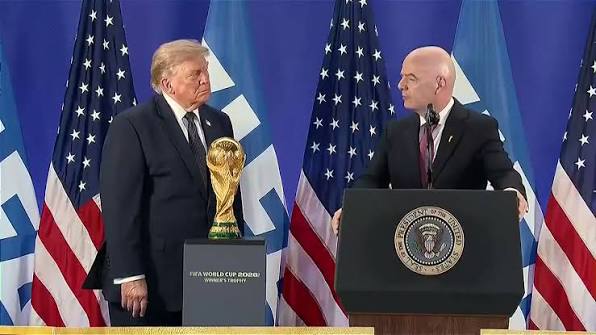
“It’s a question of democratization of football on a global scale”defended Infantino, specifying that a consultation of the member federations – whose agreement is necessary – has just been launched.
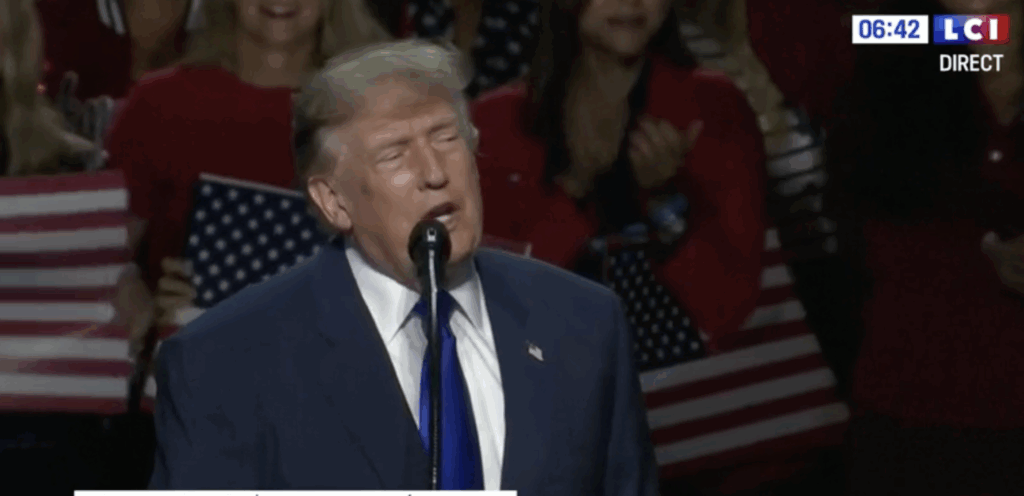
Investors close to Donald Trump
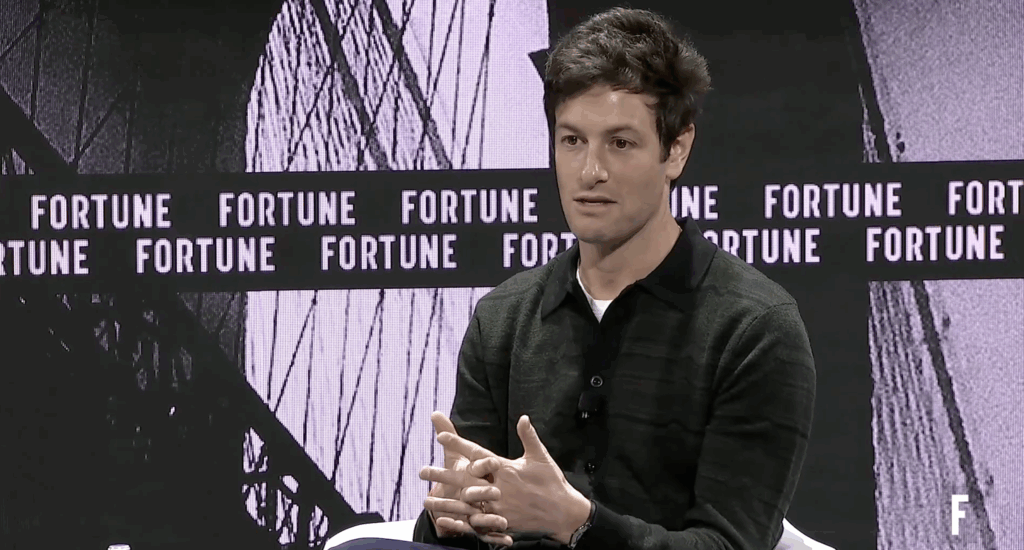
This is the element which crystallizes the most criticism. FIFA is working with JP Morgan, but the investor expected to pilot the operation is Thrive Eternal, the fund of Joshua Kushner – whose brother Jared is married to Ivanka Trump. According to The TimesInfantino himself could receive around 10 million pounds (~€11.7 million) via this arrangement. Democratic elected officials from the House of Representatives denounced this new episode of links deemed problematic between Infantino and Donald Trump’s entourage.
Another sensitive point: depending on The Timesa position of “commissioner” could be created at the head of the structure and tailored for Infantino, whose mandate ends in 2031. FIFA denies any discussion in this direction, while recognizing that its president “will have, and must have, a leading role”. The federations would have until September 19 to rule, with each support rewarded with a $40 million grant — an allegation not confirmed by FIFA.
An outcry that goes beyond football
UEFA judged that this project “crosses a line that football governing bodies should never cross”taking it “extremely seriously”like each of the European federations according to her. The controversy has spread to the political sphere: this Wednesday, the European Union officially denounced a “frantic commercialization” football has become “harmful”its Sports Commissioner Glenn Micallef warning X against risks linked to competition law. British Prime Minister Andy Burnham was even sharper, saying that football does not belong to investors but to supporters, and that selling it would amount to betraying it.
In France, the president of the FFF Philippe Diallo, more measured, said on France Inter that he had discovered “through a press release a very important project on which we have no details”. He was to meet the major European federations and UEFA on Wednesday — an emergency meeting where, according to several media, the possibility of a boycott of the next Women’s World Cup would have been mentioned.
A precedent which questions
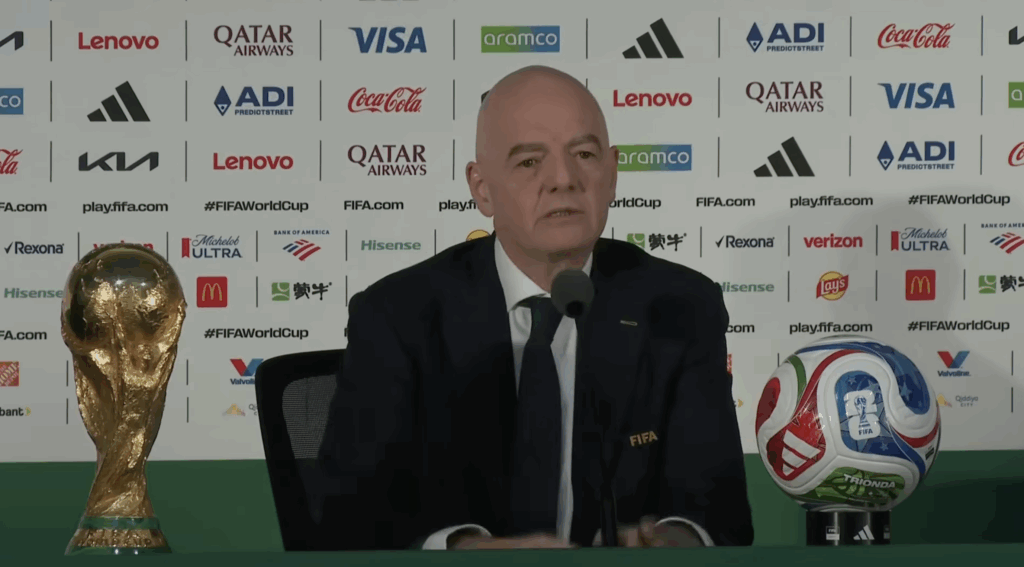
This is not Infantino’s first attempt: in 2018, a similar offer with SoftBank and Saudi capital collapsed in the face of UEFA. The press also mentions a possible pressure towards an expansion to 64 teams from 2030, or even a more frequent World Cup. The timing is not trivial: FIFA is coming out of a record 2026 World Cup (~$12 billion), a position of strength for Infantino before a fourth mandate.
The project must still be validated by the FIFA Council and then by the 211 federations, whose approval is essential before September 19. The standoff between the historic governance of football and the financialized model, modeled on American private leagues, is only beginning.