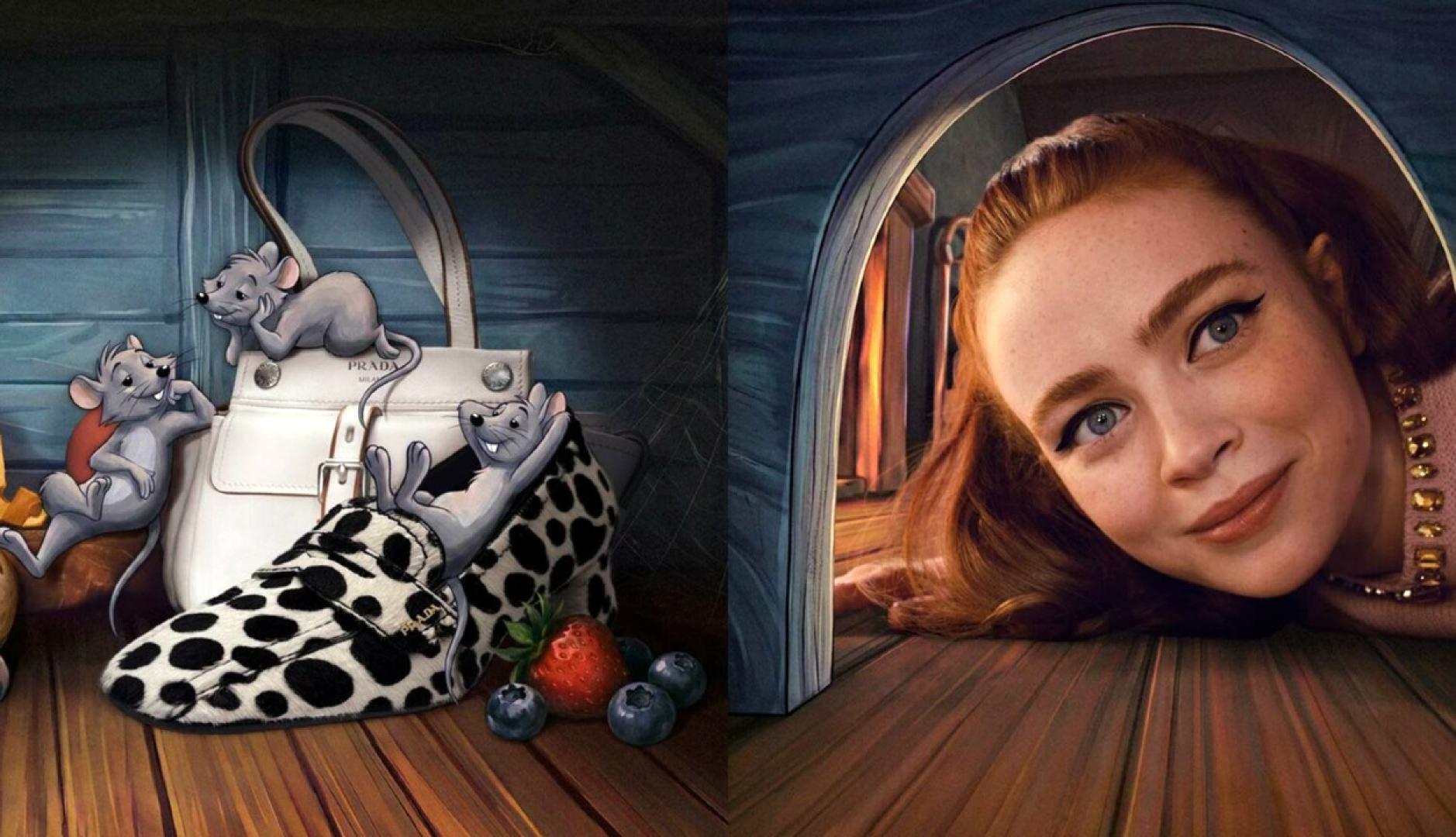
With artificial intelligence expanding the possibilities of audiovisual creation and automating part of the production processes, Prada has decided to resort to a traditional technique to shape its Christmas campaign. The Italian firm has opted for hand-drawn illustration and the language of classic animated cinema to build a fantasy universe in which real characters and imaginary scenarios coexist.
The proposal is presented under the title “Drawing Prada: Animated by Hand” and has had the participation of John Pomeroy, a renowned American animator whose career includes some of Disney’s most emblematic films.
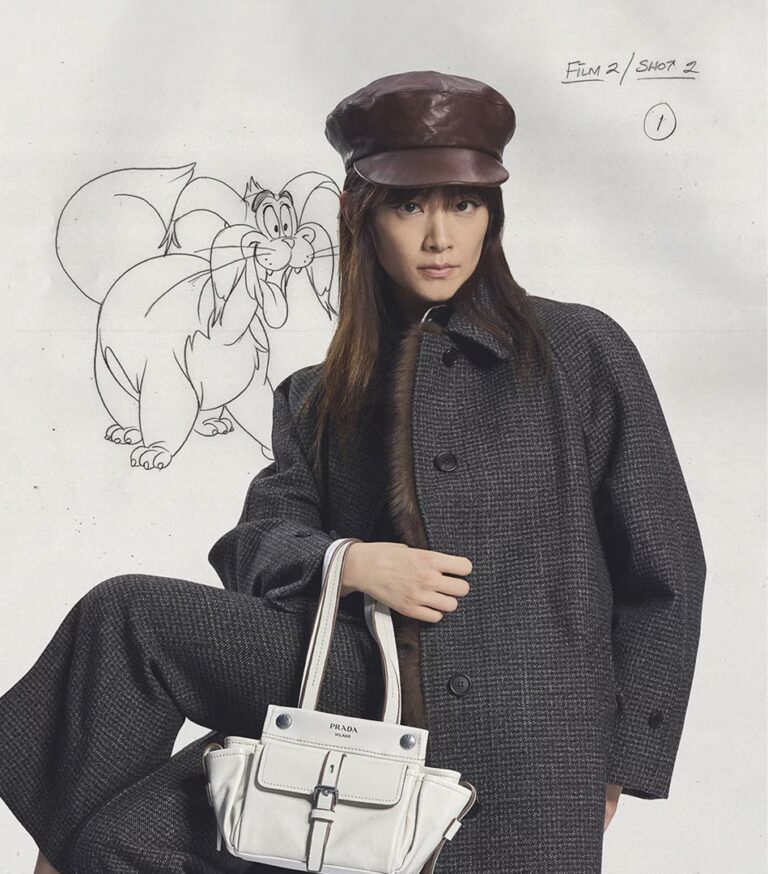
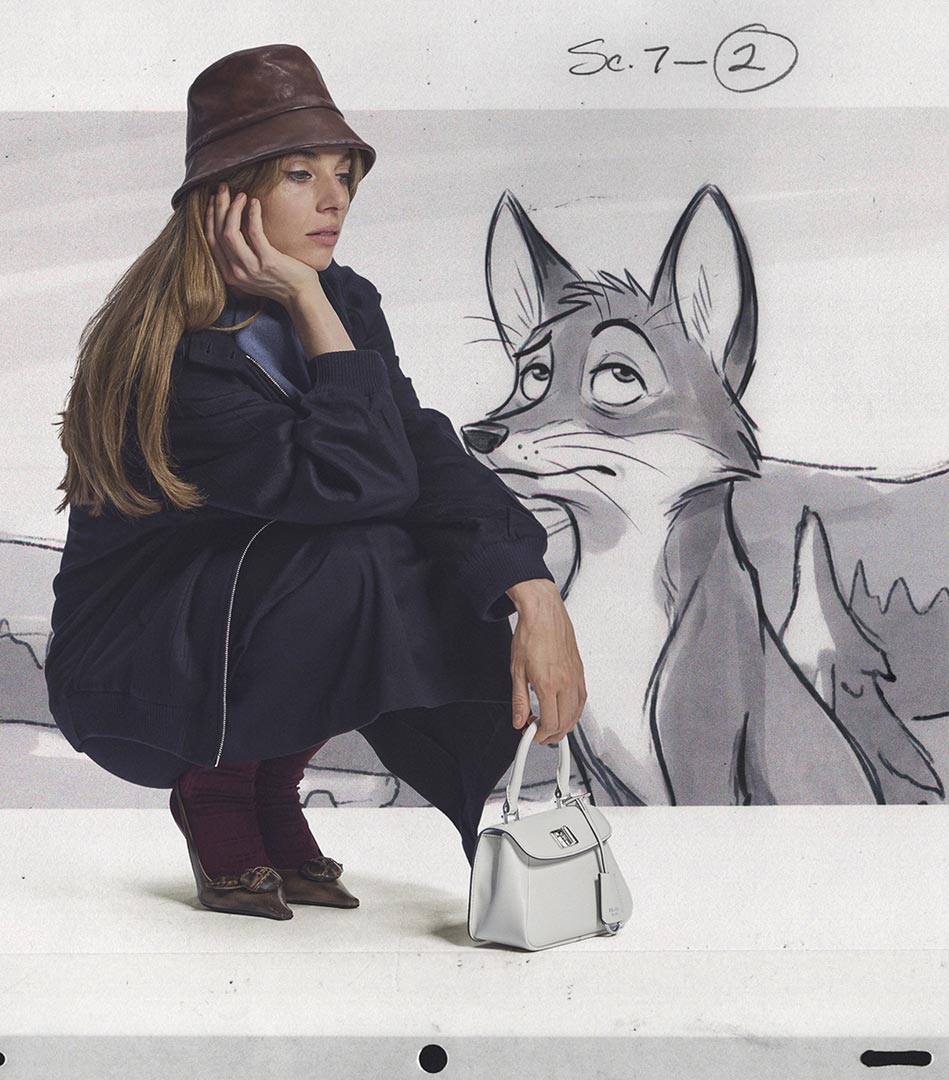
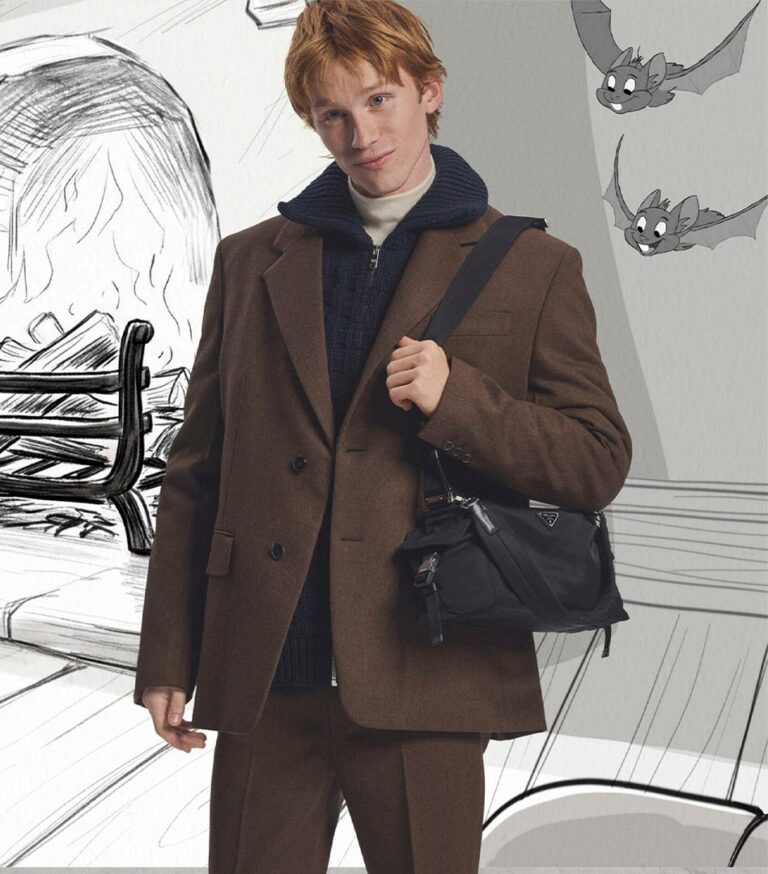
The campaign brings together actors Sadie Sink, Maya Hawke, Kelvin Harrison Jr., Luther Ford and Chen Haoyu, who star in a series of audiovisual pieces and photographs in which they interact with fantastic creatures, winter landscapes and illustrated elements.

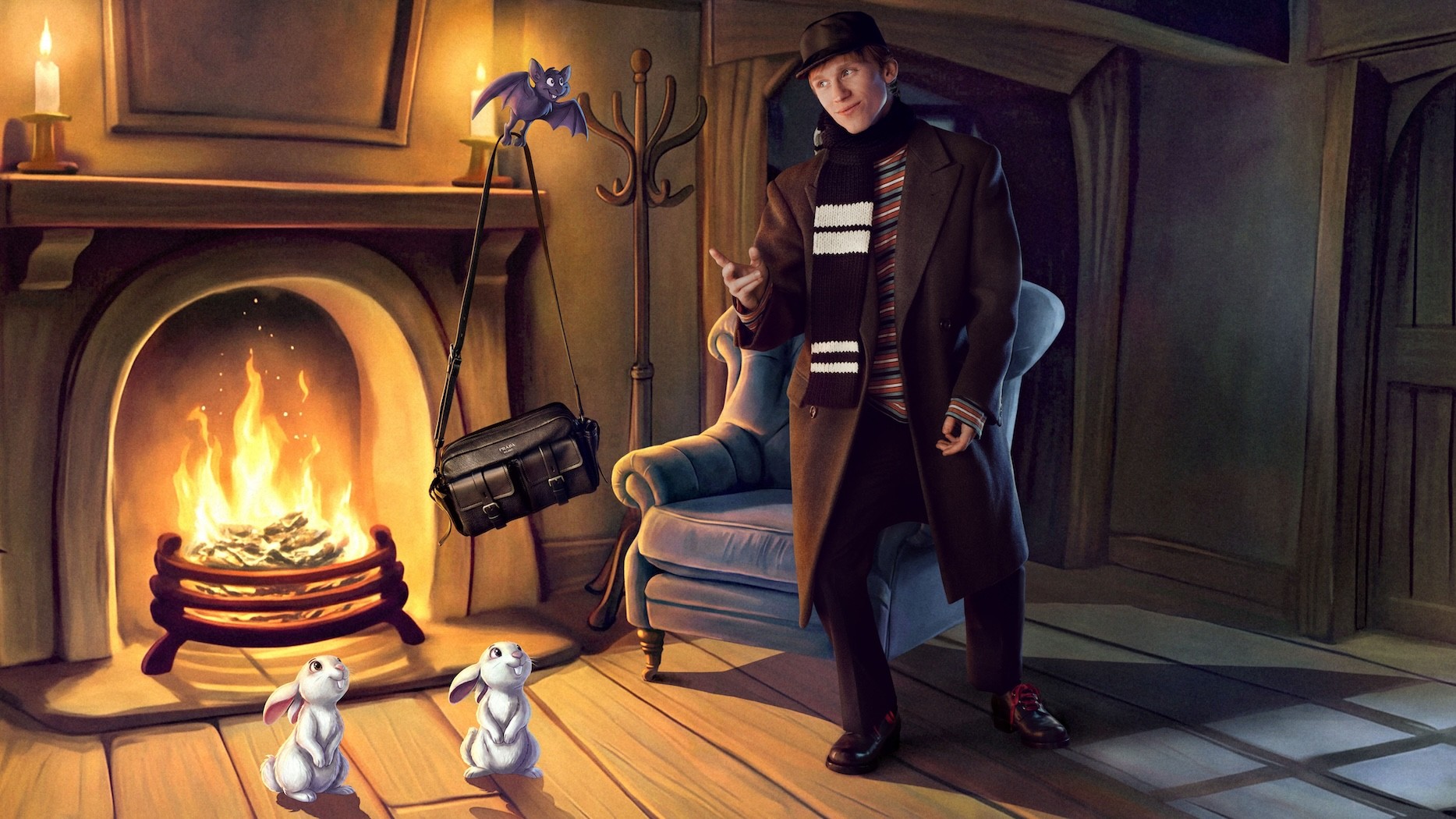
The creative direction of the campaign is framed in the brand universe developed by Miuccia Prada and Raf Simons, with the conceptual participation of Ferdinando Verderi and the photographic work of Glen Luchford.
A Christmas universe between real image and illustration
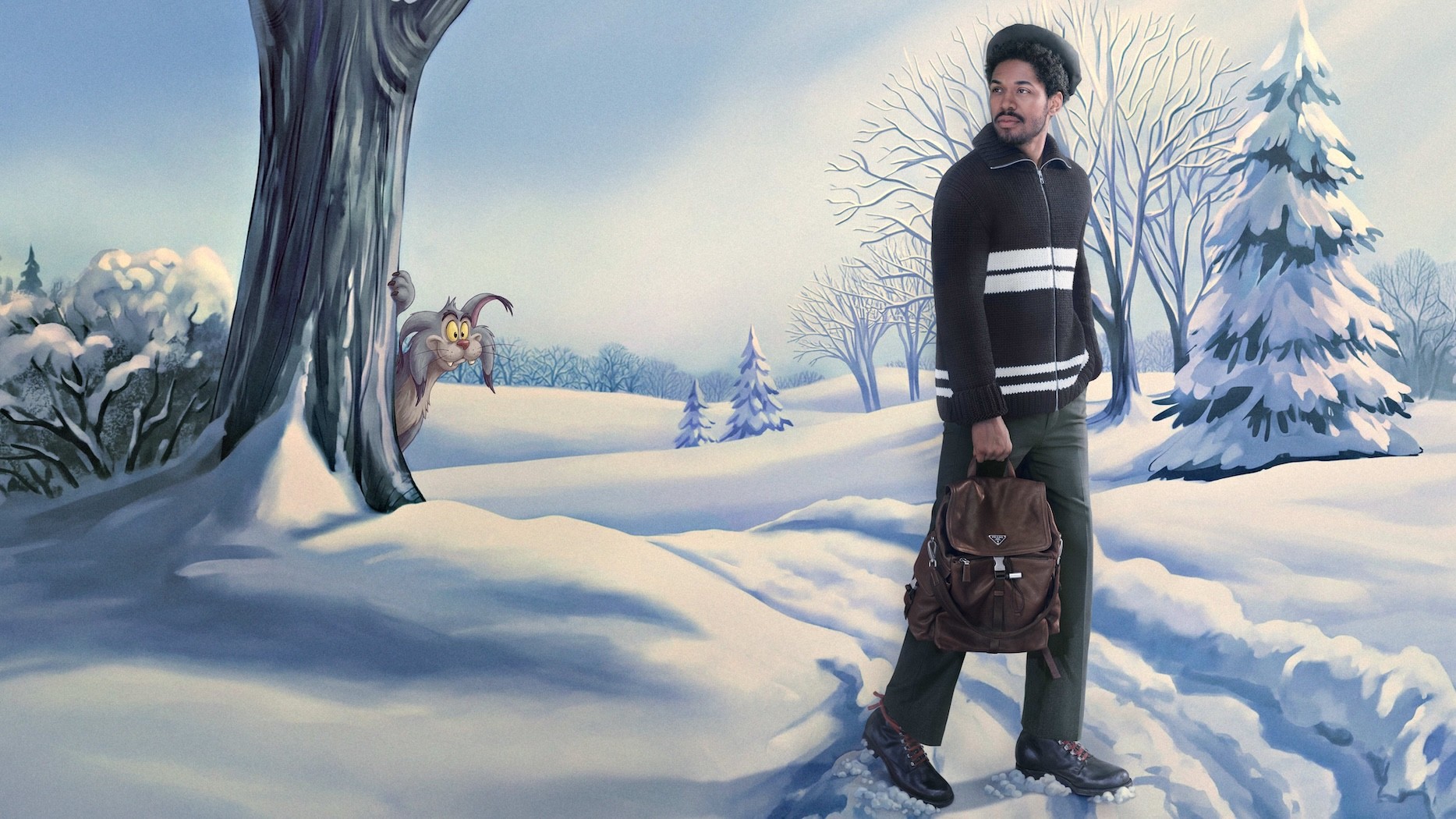
The visual proposal of “Drawing Prada” is built from the coexistence between live action photography and traditional animation. The protagonists appear integrated into fantasy settings that evoke children’s fables and classic cinema, surrounded by imaginary animals and landscapes created through illustrations.
The contrast between both techniques is one of the main resources of the campaign. The photographic images provide a realistic representation of the performers and the clothing, while the drawn elements introduce a fantastic dimension that transforms the settings.
The work of photographer Glen Luchford has been fundamental in integrating both visual languages, through lighting and composition planning that allows the protagonists to relate to the illustrated spaces.
The choice of traditional animation also establishes a connection with the Christmas imagination, a time especially linked to fantastic stories, tales and stories transmitted between generations.
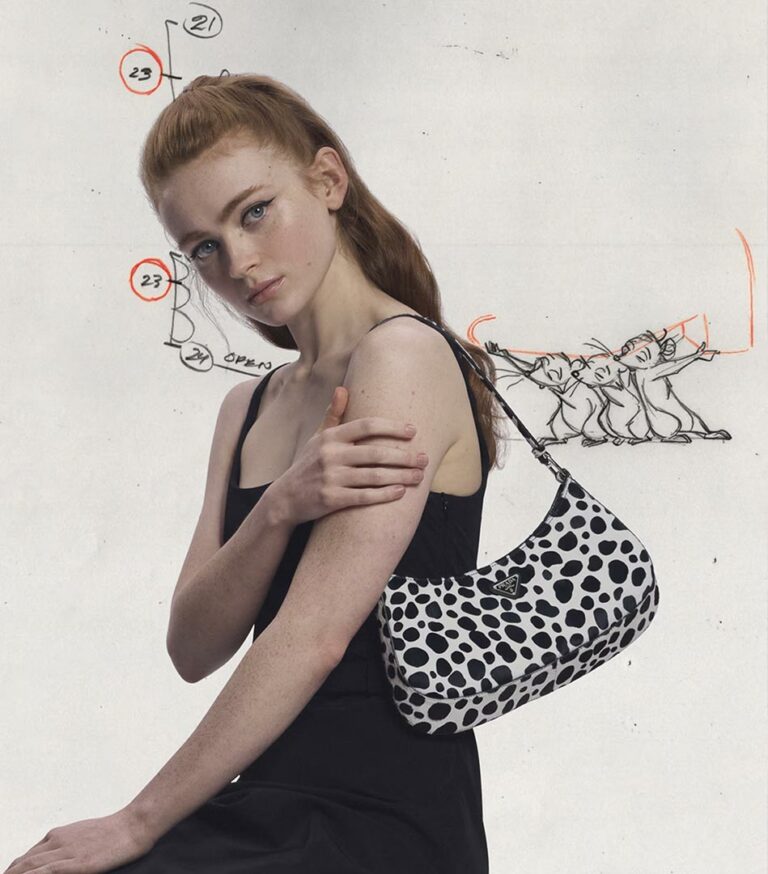
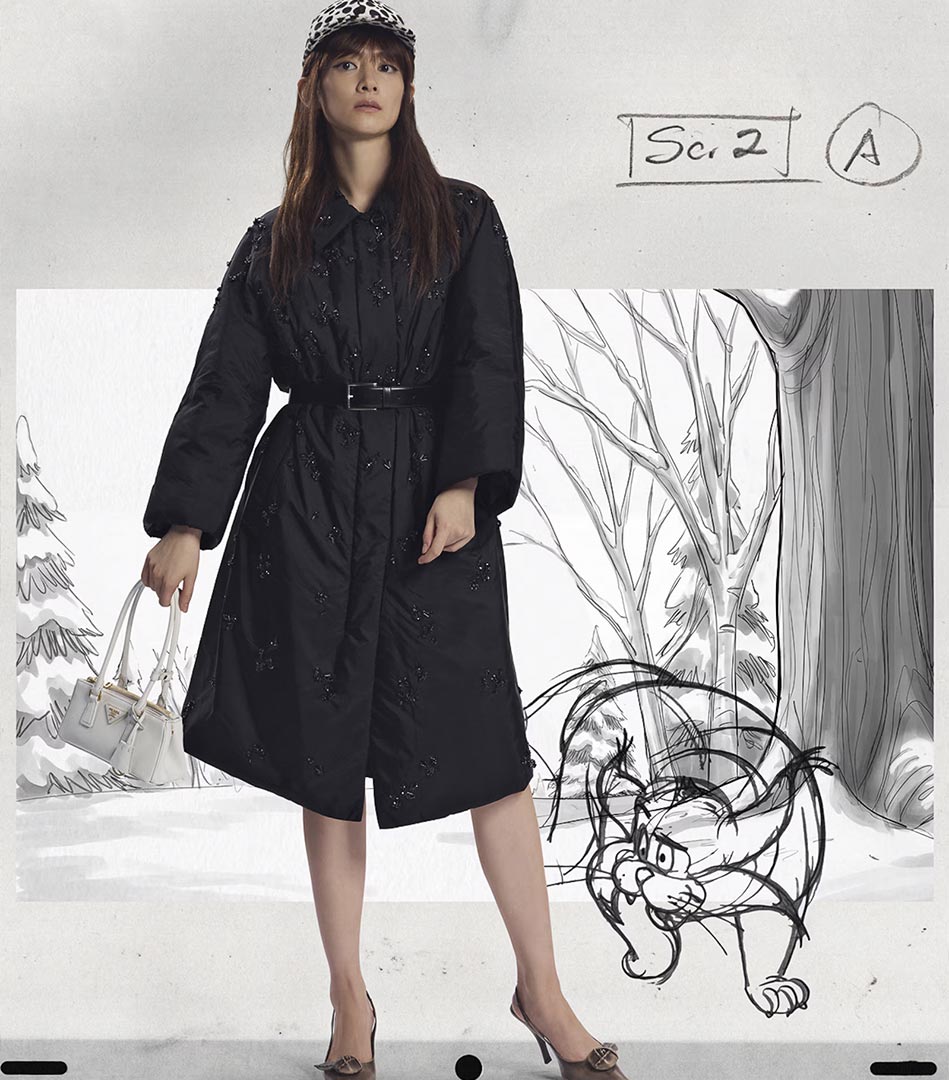
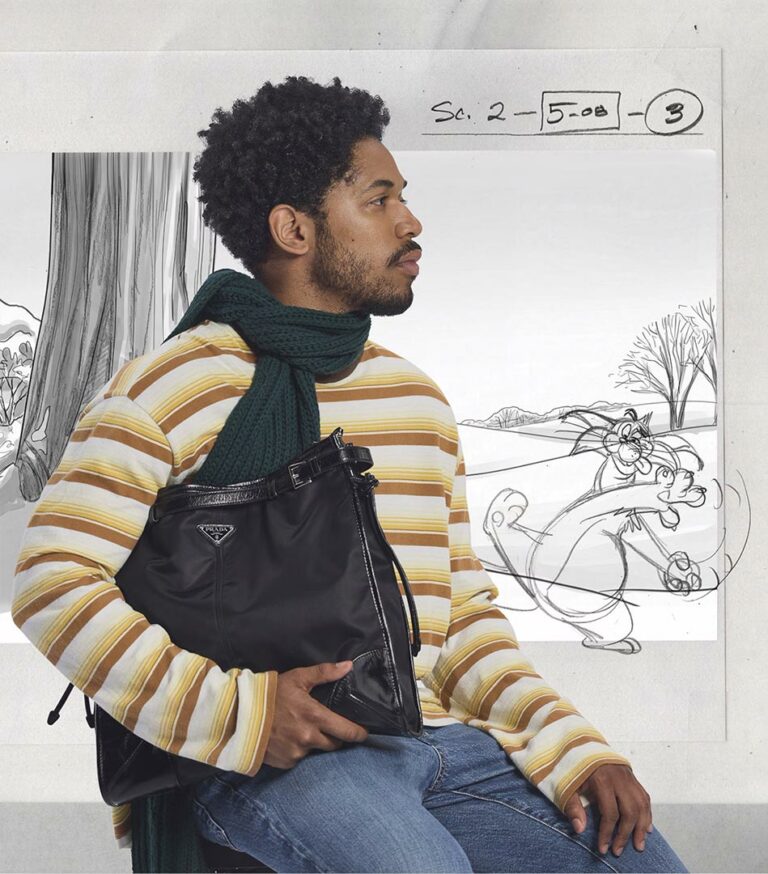
One of the most relevant elements of the project is the participation of John Pomeroy, who has led the team of artists responsible for the illustrations.
Pomeroy began his professional career at Disney in 1973 and participated in productions such as “The Rescuers” and “Tod and Toby.” He later left the studio with Don Bluth and Gary Goldman to launch an independent production company that developed films such as “Nimh, The Secret World of Mrs. Brisby,” “Fievel and the New World” and “The Land Before Time.” Years later he returned to Disney, where he supervised the animation of the character of John Smith in “Pocahontas” and participated in other projects such as “Fantasia 2000” and “Treasure Planet.”
Its incorporation into “Drawing Prada” allows the brand to draw on an artistic tradition closely linked to the development of animated cinema and transfer its expressive resources to a contemporary advertising campaign. The result combines the work of illustrators with the presence of performers from a younger generation, including Sadie Sink and Maya Hawke, known for their participation in the series “Stranger Things.” Along with them appear Kelvin Harrison Jr., Luther Ford, who played Prince Harry in “The Crown”, and the Chinese actress and singer Chen Haoyu.
Craftsmanship as a differentiation resource for a luxury brand
Beyond its aesthetics, the campaign raises a relationship between the technique used to create the images and the values traditionally associated with luxury. Attention to detail, specialized knowledge and craftsmanship are common attributes in the communication of large fashion brands. But on this occasion, Prada transfers them from the product to the advertising production process itself.
This choice takes on a particular dimension at a time when generative artificial intelligence tools make it possible to produce images and audiovisual sequences through increasingly automated processes.
Without necessarily posing an opposition between both forms of creation, “Drawing Prada” demonstrates how a traditional technique can acquire a new expressive value precisely due to its artisanal nature.