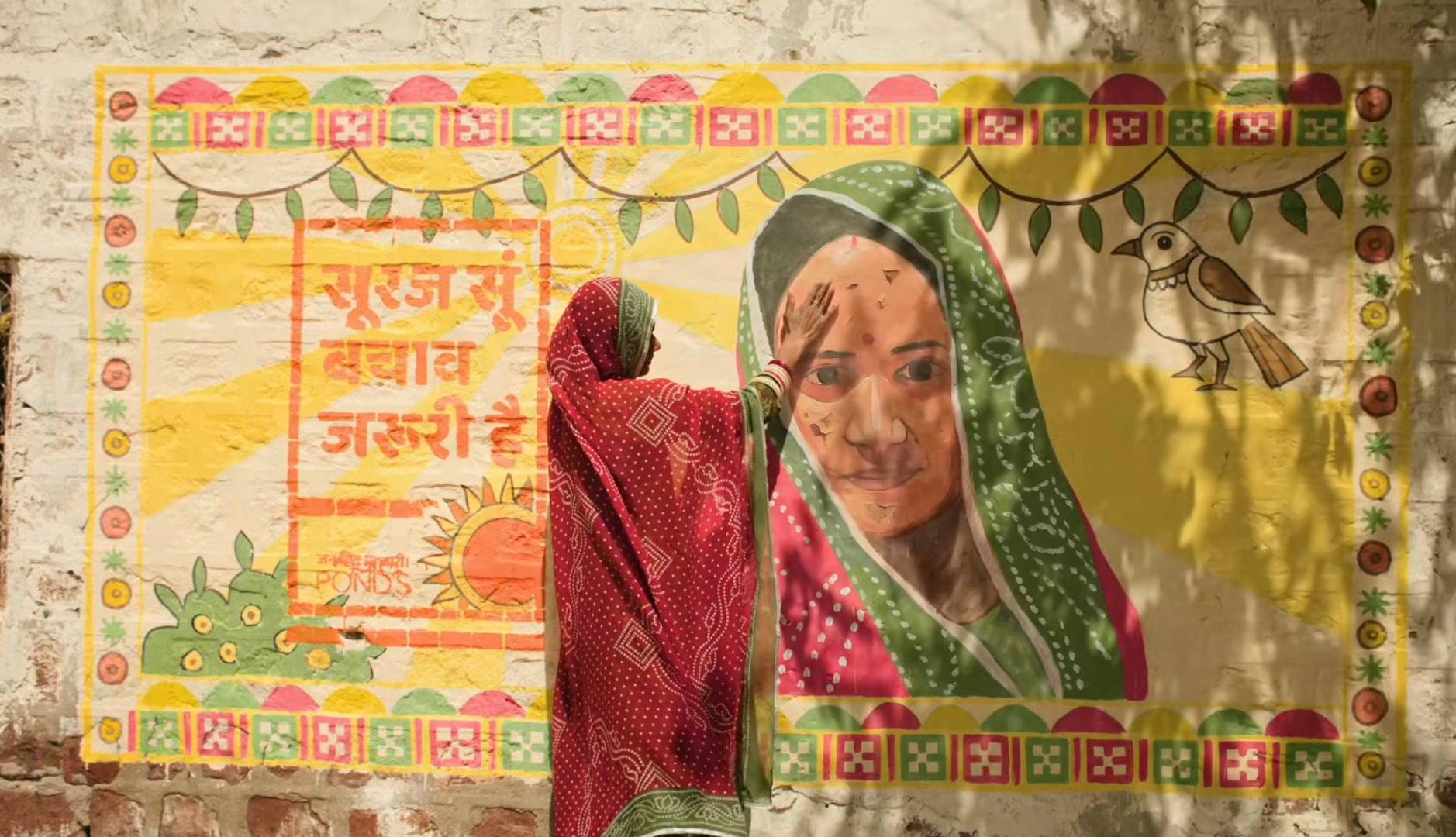
Artistic murals created with UV-sensitive paint have been the way that Pond’s, Unilever’s skin care brand, has chosen to make visible the impact of prolonged exposure to the sun. It has done so in India with an action that has sought to raise awareness among the population about the use of sunscreen, but whose execution has revealed a gap between communication and purpose.
“Sun Portraits” was created by the Ogilvy Bombay agency and had the Phalodi district, in the state of Rajasthan, as its setting. It is one of the warmest regions in the country, with historical records of up to 51°C, converted for the occasion into a canvas to make visible the importance of protection among local women, whose long days of work under the sun can involve health risks.
To do this, they have created murals with large portraits of some women together with local artists specialized in phad, a traditional style of the region. The creativity has been placed on the walls of their homes and has been carried out with special UV-sensitive paint. With prolonged exposure to the sun, the paint begins to reflect the effects, including stains or cracked skin.
Thus, Pond’s communicates that what the sun does to the walls, it also does to the skin, but in a less visible way. In addition, the brand has distributed samples of its Sun Miracle sunscreen, seeking to connect the awareness action with access to products that can really protect the skin from the impact of the sun.
The objective of the campaign has been to link to art and local culture with the intention of transcending communication and awareness to promote a change in mentality that integrates sun protection as an essential habit in everyday life. The brand’s intention has been to go beyond conventional advertising, and turn it into an educational formula.
However, the action has not been received in the same way among the public, who have criticized the initiative for its superficiality and lack of real impact. On social networks and digital platforms, dozens of users have expressed that the campaign seems deliberately aimed at captivating juries and obtaining awards at advertising festivals, rather than focused on carrying out a significant intervention with benefit for the protagonists.
They also question the brand’s real involvement with the problem, and wonder what Pond’s has done beyond distributing ephemeral product samples to a population that probably cannot afford continued access to sun protection. In this sense, they suggest that the brand should have launched educational initiatives to educate about sun protection, as well as sessions with health professionals about regular skin check-ups, early detection of damage and basic advice on treatments.

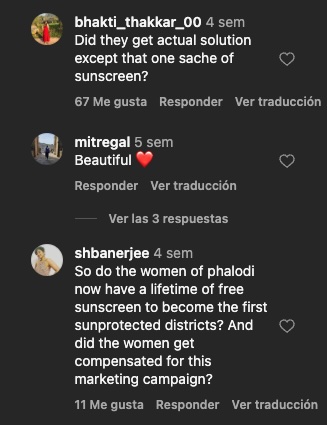
Some users even consider it offensive that the action transforms women’s homes into canvases. They understand that placing faces on murals that are progressively degraded carries risks associated with public shame, especially in a conservative and rural society like that of Rajasthan.
At a time when purposeful creativity is defining what the advertising industry understands as effectiveness, Pond’s campaign demonstrates the importance of real commitment to generating trust in the audience. The case shows that the true impact is found in the continuous presence in the daily lives of consumers, and not just at a specific moment.