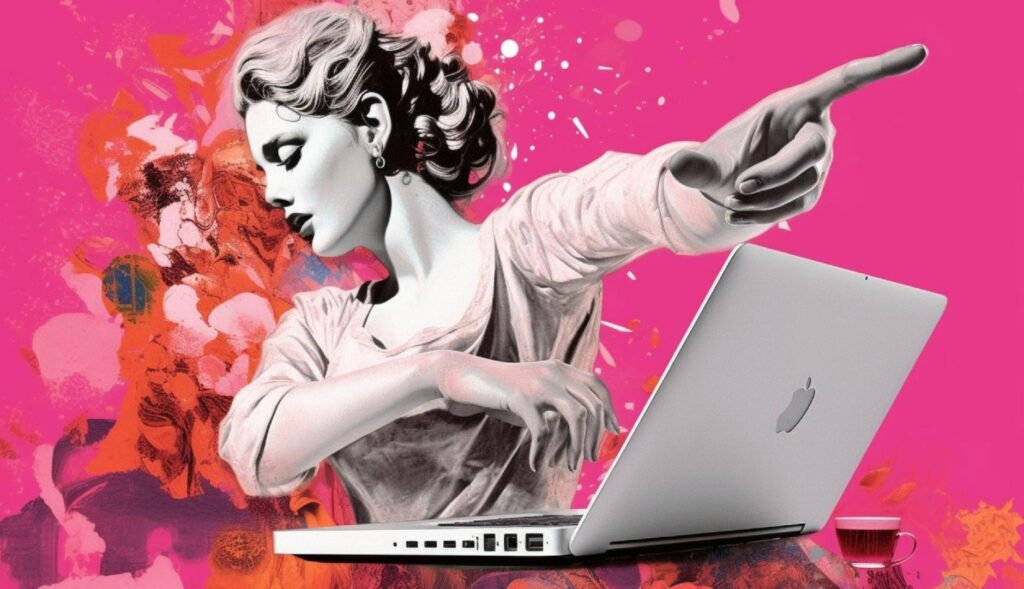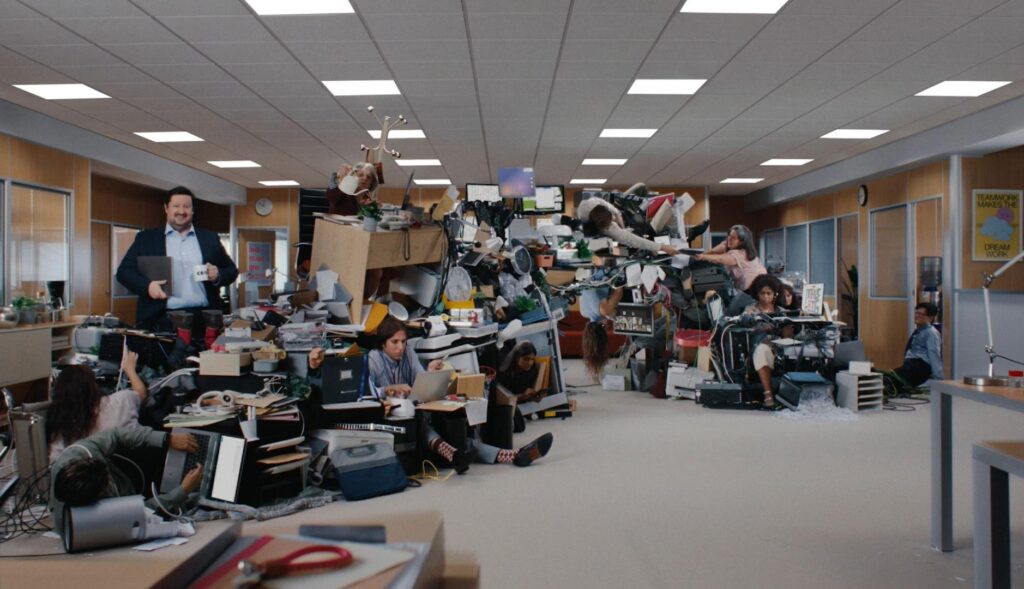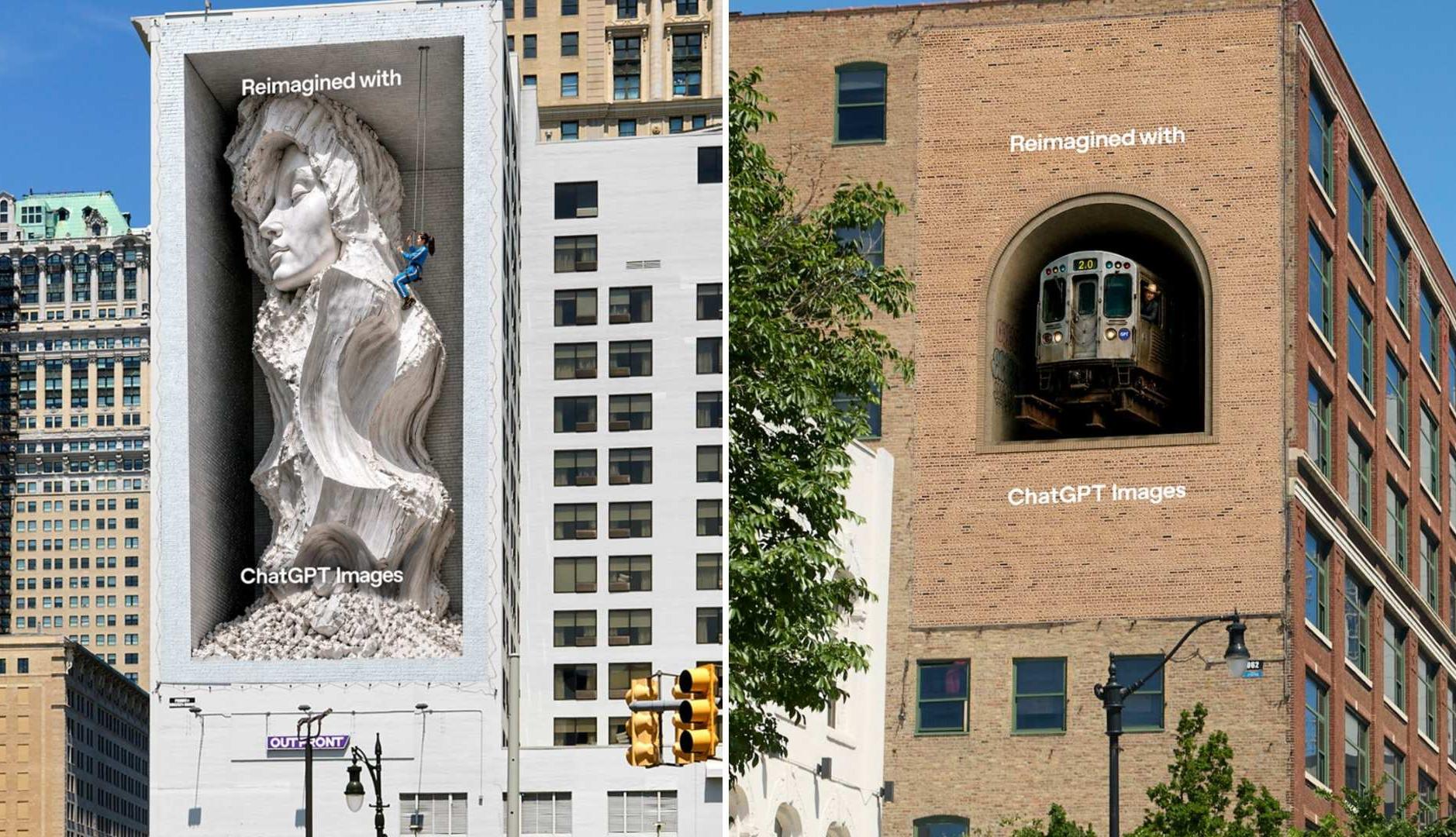
What would this façade reimagined by ChatGPT look like? That is the question that OpenAI answers in its new advertising campaign to promote ChatGPT Images 2.0, the new version of its artificial intelligence model for generating images with the chatbot. Moving away from its native online environment, the company is once again betting on outdoor advertising to make an impact with the capabilities of its tool.
Created by OpenAI’s internal team, the campaign has created a series of images that aim to elevate the support on which they have been deployed on an aesthetic level. The pieces propose trompe l’oeil, in such a way that they are imaginatively integrated into the environment, thereby transferring the creative possibilities of the function available in ChatGPT.
Under the concept “Reimagined with ChatGPT Images”, the campaign proposes, among other things, a giant bust being sculpted by an artist rappelling down; or a train coming out of a tunnel in a brick wall. Some of the pieces are projected on digital screens, and present adaptable creativity according to natural light.
The graphics have been deployed on media managed by Outfront Media in the cities of Detroit, New York, Chicago and Los Angeles. Unlike conventional outdoor advertising, which uses advertising space as a mere support, OpenAI’s action uses architecture and the environment to convey a feeling of authenticity. Instead of simply occupying the space, the company’s advertising is integrated into it creating visual games.
“Our latest ChatGPT campaign brings imaging to the physical world, transforming familiar outdoor formats into something more imaginative, surprising and alive.” commented Cary Hudson, Design Director of OpenAI, through LinkedIn when sharing the campaign pieces.
This outdoor advertising campaign is part of the promotion of ChatGPT Images 2.0, which started at the beginning of May after the launch of the model at the end of April. OpenAI is focusing on the creative thinking capacity of the new model, and in the different advertising actions it is highlighting its ability to create more detailed, coherent images aligned with what the user requests.