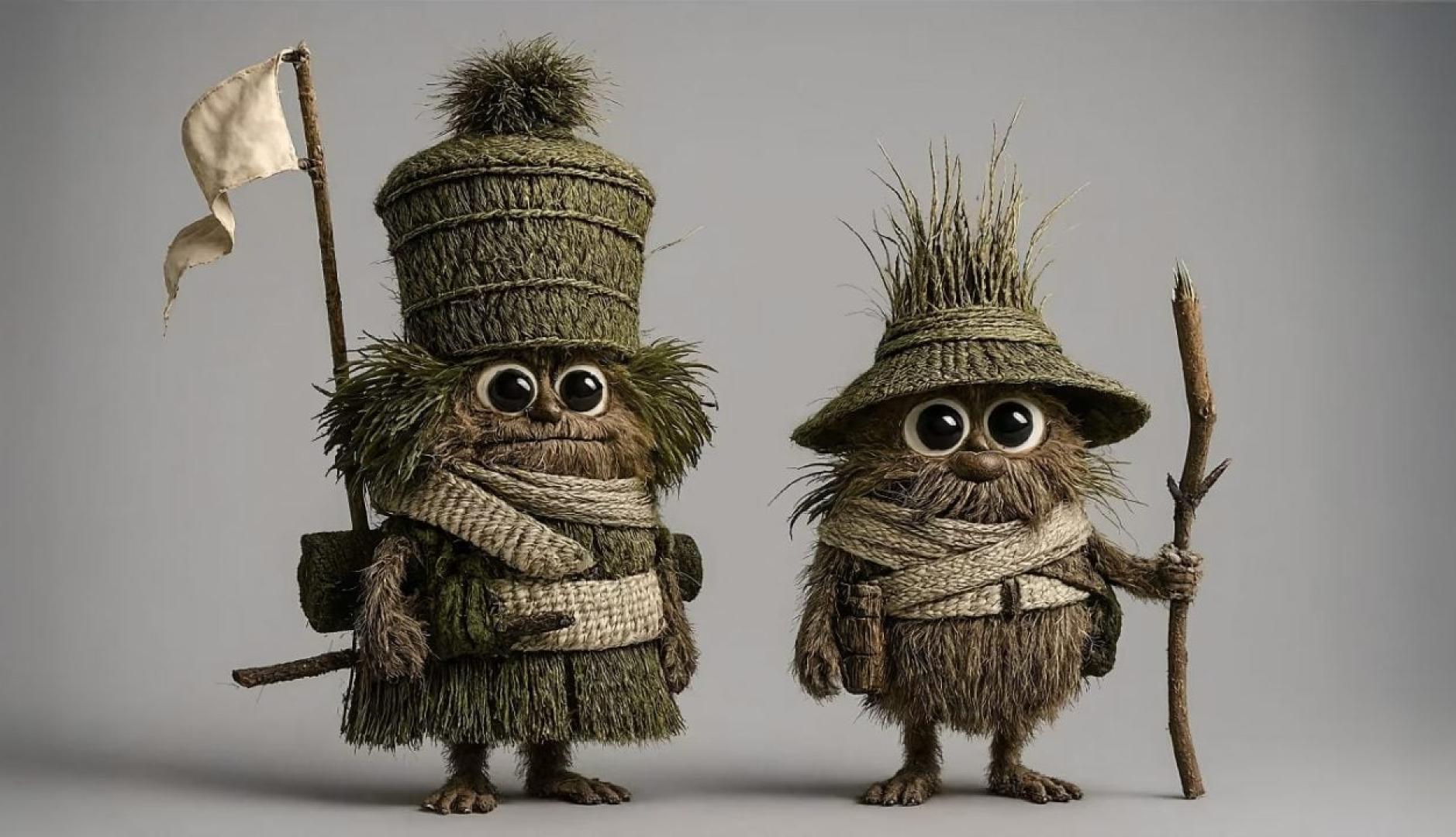
Openai aims to continue demonstrating the potential of generative artificial intelligence in the film industry. Hence, Sam Altman’s company is going to finance “Critterz”, an animated film made almost entirely with its own tools such as GPT-5 and image models, with a budget of 30 million dollars and a production window of just nine months. The feature film, produced by Vertigo Films (London) and Native Foreign (Los Angeles), will be released at the Cannes Festival in May 2026 and is a direct commitment to compete with the traditional Hollywood production models.
The project management is in charge of Chad Nelson, current creative in Openai and promoter of the initiative. His work with tools such as Dall · e began in 2021, and gave rise to a short film in 2023 that now evolves towards his first long format. Although technology will be the core of the creative process, production will have human voices and original art, which will allow certain copyright under current legislation.
Openai’s goal is double. On the one hand, demonstrate that it is possible to produce a commercial film using AI as the main creative tool and, on the other, to highlight an equation that challenges the logic of the industry: nine months of work, 30 million budget and a team of just 30 people, compared to three years and more than 100 million that usually require traditional animation projects in large studies.
“The impact is greater if someone demonstrates it, not only if we explain it”said Chad Nelson to Wall Street Journal. Producer James Richardson, from Vertigo Films, describes him as an unprecedented experience: “I had never found myself in the situation of starting a movie without having an idea what will happen.”
The script is carried out by the team that signed Paddington’s films
The script, however, has had the participation of the team that signed Paddington films, and a benefit distribution model will be applied among the people involved in the project. Despite technological prominence, the human approach remains key, both for current legal limitations and by creative barriers that AI is not yet able to overcome alone.
Between innovation and legal conflict
“Critterz” is launched at a specially delicate time for the entertainment industry. The unions of actors and scriptwriters in the United States maintain a critical position against the use of AI in the production of content, warning of their possible impact on creative employment. At the same time, giants such as Disney and Universal have initiated legal processes against companies such as Midjourney for improper use of protected material in AI training.
According to current regulations, works generated entirely by artificial intelligence cannot access copyright, except in those elements in which there is human intervention. “Critterz” moves precisely in that intermediate field: a project led by AI, but with human contributions that could guarantee some legal protection.
The choice of Cannes as a premiere place ensures the visibility and legitimacy of the work
In fact, Cannes’s choice as a premiere is not accidental. The festival ensures the visibility and legitimacy of the work, but a commercial distributor for its global launch has not yet been confirmed. If you achieve critical resonance, it could accelerate the adoption of similar models in other productions. If it fails, it would reinforce the arguments of those who argue that AI cannot replace creative talent.
“Thanks to tools such as GPT-5, we can reduce times, adjust costs and explore new forms of collaboration between humans and machines. But we are still far from dispensing with the human eye, narrative criteria or acting talent”they recognize from the producer.
The film will deal with how forest creatures end up living an adventure when a strange disturbs its village.