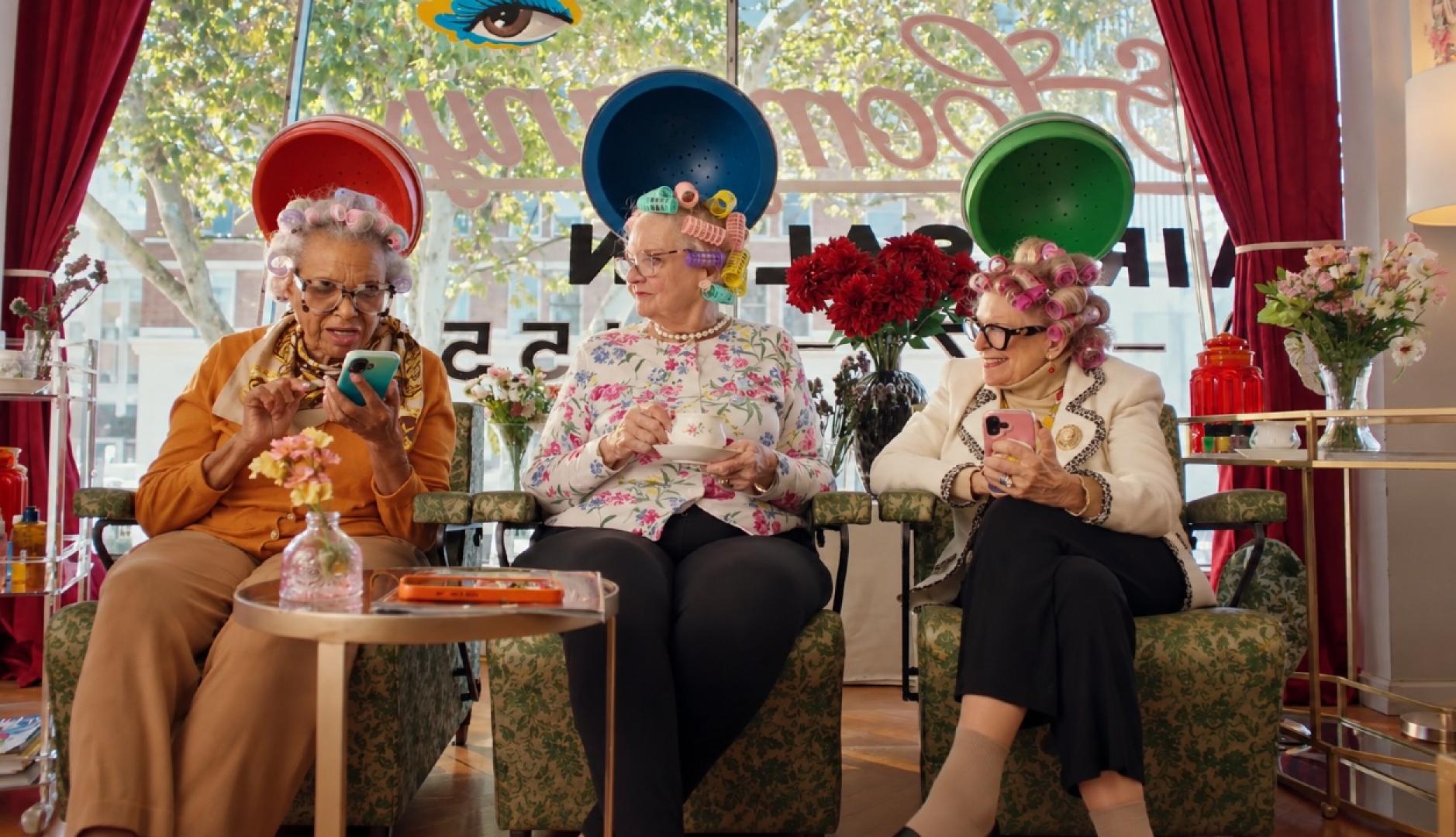
OpenAI once again turns to SJ Mendelson, Lavelle Roby and Constance Brenner, the three veteran actresses with whom it presented the capabilities of its new generation of voice last July. So the company used its interaction with ChatGPT to demonstrate how natural and easy a conversation with artificial intelligence could be. Now bring back the same protagonists to explain the next step: ChatGPT Voice no longer only answers questions, it can also execute tasks for the user.
The idea is embodied in a new two-minute piece written and directed by Daniel Fradin, in-house creative at OpenAI. The three women are shown using ChatGPT while continuing with everyday activities, from baking cookies and working with pottery to tending plants, going to the hairdresser or going boating.
“ChatGPT Voice has become much more useful. It’s no longer just answering questions, it’s better at doing things”Mendelson explains at the beginning of the piece, summarizing the change that OpenAI wants to communicate compared to the previous installment.
One asks ChatGPT to review her finances and another to make her a website
The first campaign starring the three actresses accompanied the launch of GPT-Live in July and focused on its architecture full-duplexwhich allows you to listen and speak at the same time to bring interaction with artificial intelligence closer to the pace of a conversation between people.
That communication showed quick exchanges, silences when the user needed to think or expressions that indicated listening and attention. The new delivery maintains the ease of voice interaction, but shifts the focus from conversation to action.
One of the scenes shows Constance Brenner working in the garden while asking ChatGPT to review her finances for any duplicate charges. The tool detects that you are paying twice for a magazine subscription and the actress then asks you to cancel one of them.
Lavelle Roby uses the tool while working with ceramics. In this case, you ask ChatGPT to build a website to sell your parts. Shortly after, “Lavelle’s Pottery” appears on the computer, a store dedicated to his creations. The protagonist continues the task by asking for a payment page to be added and, later, while she is at the hairdresser, she checks by voice if anyone has already made a purchase.
The film ends by taking the three protagonists to a marina. During the journey they ask ChatGPT about the weather conditions for sailing and then ask them to book a sailing trip. The last scene shows them in life jackets enjoying sailing.
In this way, the succession of situations allows OpenAI to show the behavioral change it wants to promote: going from using ChatGPT mainly to obtain information to delegating small actions and processes to it.
A new stage of ChatGPT Voice
The election of the three women gives direct continuity to the campaign launched in July. SJ Mendelson, Lavelle Roby, and Constance Brenner are all professional actresses, a status OpenAI keeps visible by presenting them under their own names.
Communication once again relies on profiles that are far from the stereotype traditionally associated with the first users of new technologies. The simplicity of the commands and the everyday context allow the capabilities of the product to be shown without resorting to technical demonstrations or complex professional environments.
The new piece also comes after OpenAI has expanded the possibilities of ChatGPT Voice through its integration with plugins and connected applications, as well as its incorporation into ChatGPT Work. These capabilities allow certain instructions given by voice to lead to actions, such as creating documents and presentations or working with other services.
The approach represents an evolution with respect to the first appearance of the three protagonists. In July they were the ones who demonstrated that anyone could talk to artificial intelligence; Now OpenAI recovers them to show that that same conversation can be used to delegate tasks.
With more than one billion people using ChatGPT, according to the data shared in the campaign information, the challenge now posed by the company is to expand the uses they make of the tool. The new communication tries to explain this change with the same formula used a few months ago: three older women, everyday situations and technology working in the background.