
Open Instagram to look at one thing and discover half an hour later that we are still scrolling through videos. Go on TikTok for a few minutes and end up losing track of time. Consult a news story and end up chaining negative content for much longer than expected. He doomscrolling It has become so integrated into the digital experience that it is also beginning to generate its own resistance movement.
A new generation of apps are tackling the problem with a particularly simple idea: if platforms have worked for years to remove any barriers that disrupt consumption, they may need to be reintroduced. Thus, some are jumping into the physical field with proposals such as walking 100 steps to get one minute on Instagram, doing squats to unlock TikTok, completing a workout before accessing YouTube or going outside and photographing grass before continuing to scroll.
There are tools that seek to change the relationship with the phone by creating barriers between impulse and reward.
These apps are part of an emerging category of tools that seek to change the relationship with the phone by placing small barriers between the impulse and the reward.
The proposal also connects with a broader cultural conversation. Brain rot, chosen Word of the Year 2024 by Oxford, went from being internet jargon to condensing concern about the effects of excessive, trivial and unstimulating digital consumption. Two years later, the reaction to this behavior also begins to take shape as a technological product.
From controlling time to earning it
Screen time controls are not new. Both operating systems and numerous applications allow you to set limits, block certain platforms or notify when a certain daily consumption is exceeded. The difference between some of these new proposals is in the mechanism: digital time is no longer simply limited and has to be earned.
Digital Carrot is probably one of the most complete examples. The application blocks apps, web pages and video games until the user meets certain goals for physical activity, productivity or use of the device itself. It can connect with health data and also use GPS to check, for example, that you have gone to the gym and stayed there for a certain time. It also allows you to link the unlocking to tasks carried out in tools such as Todoist or iPhone Reminders.
StepBloc takes the idea directly to exercise. The user selects the applications they want to restrict and establishes what they must do to access them: walk, do push-ups or do squats. Only after the move does he get screen time. The app uses the device’s sensors to check activity and is available on iOS.
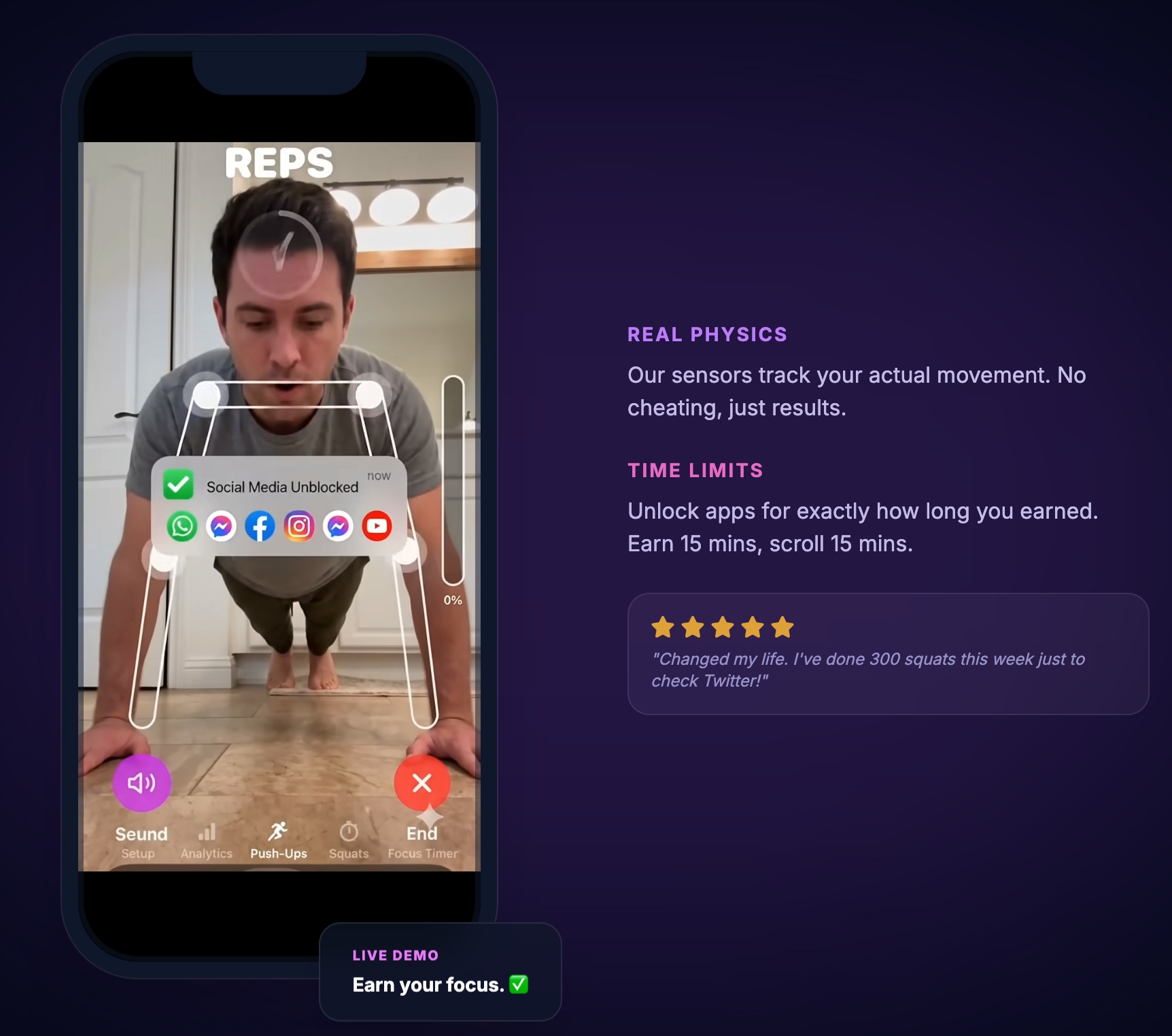
Steppin uses an even easier formula: steps in exchange for minutes. Its default configuration establishes that 100 steps allow you to gain one minute of access, although the user can modify the equivalence. You can also decide which applications are subject to this exchange.
This logic is interesting because it modifies the meaning of the restriction. Instead of simply telling the user “you can’t come in,” establish a transaction: you can come in, but first you have to do something in the physical world. Thus, other tools explore variations of the same idea:
WalkLock uses Apple Health data to prevent access to certain apps until you reach your daily step goal, while Walkly has a similar mechanic on Android. WeWard, for its part, was already using physical activity as an incentive system through its “Wards”, an internal currency that can be exchanged for rewards. Its “Walking Mode” function incorporates the possibility of restricting applications until certain step goals are reached.
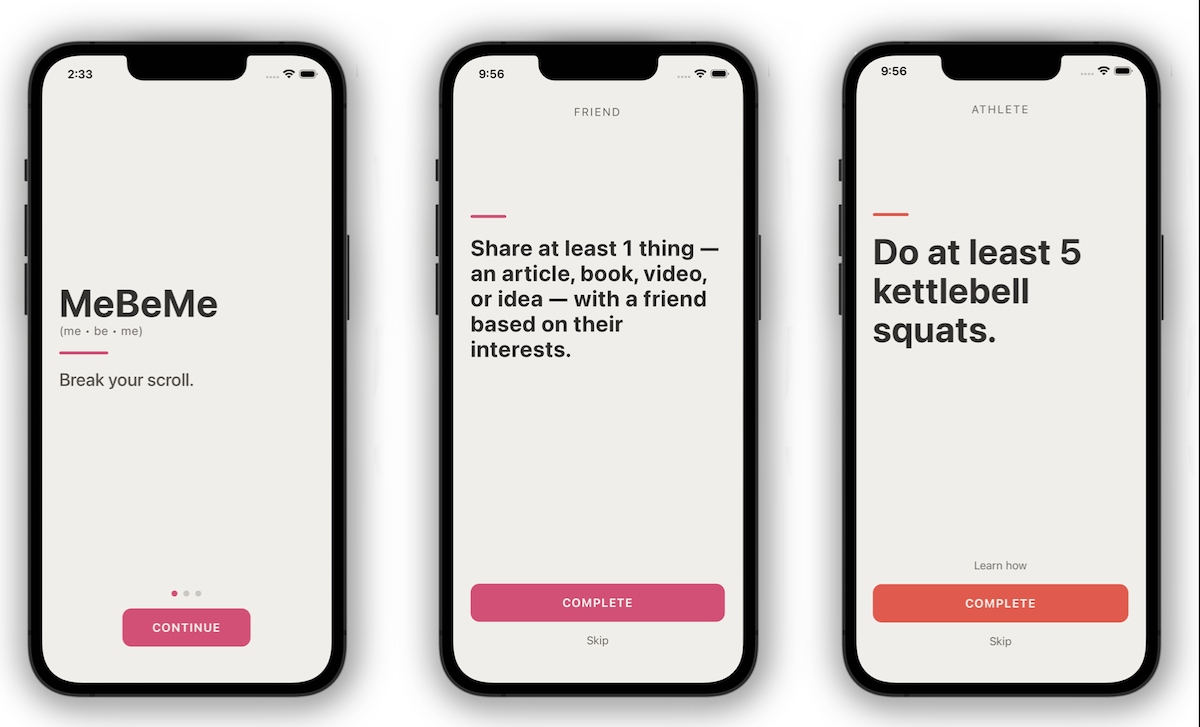
MeBeMe addresses the problem in a less punitive way. Instead of necessarily blocking the phone, it proposes small missions related to different areas of life. Within its category dedicated to the body, challenges linked to exercise appear, from warm-ups to activities for runners, cyclists or dancers.
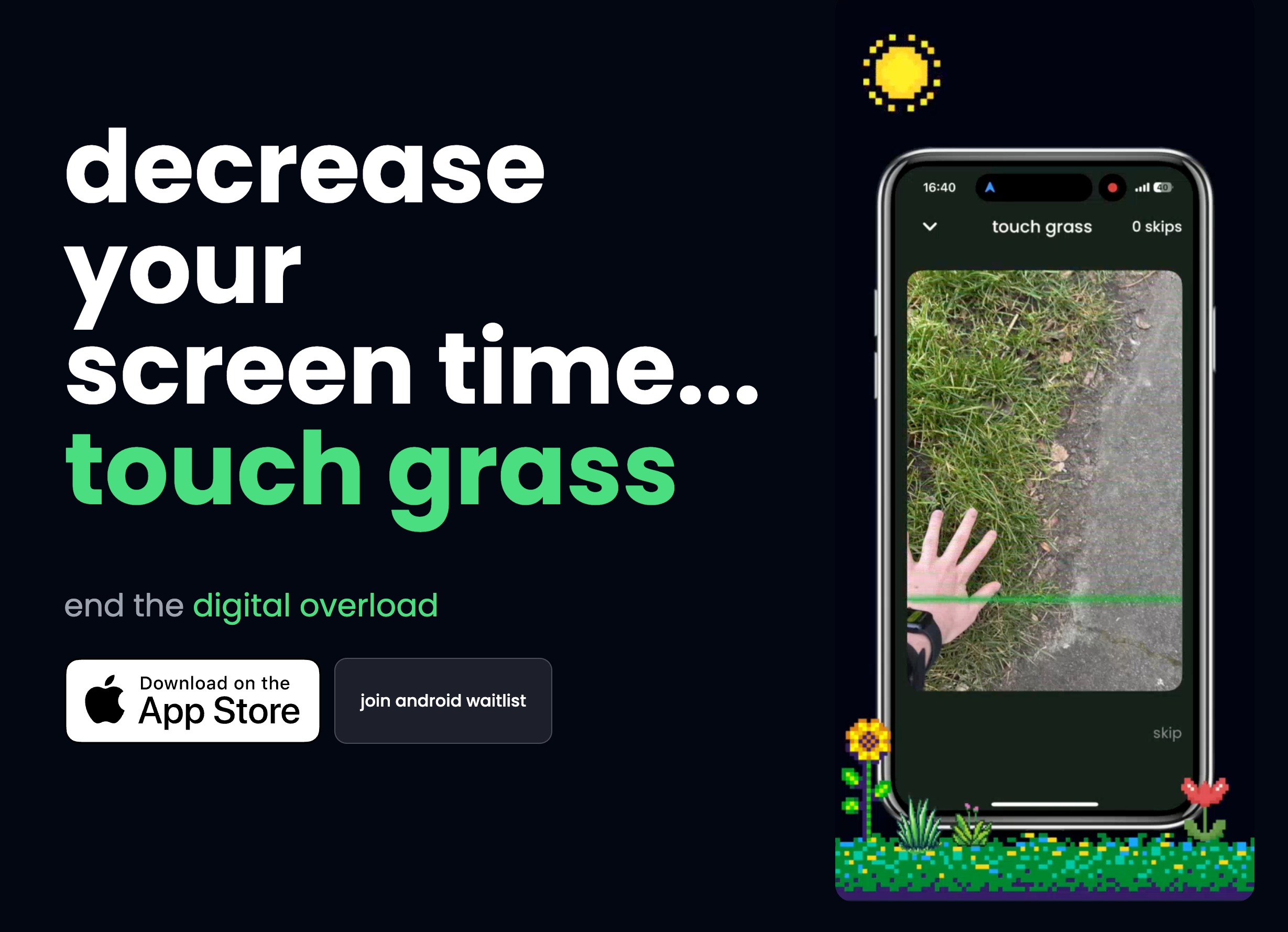
But if there is an application that takes these dynamics to the extreme, it is TouchGrass. Its name recovers the English expression used on the internet to tell someone to leave the digital world for a while and return to reality. To unlock certain apps, the user must go outside and take a photo of grass. The system uses artificial vision to verify that the image really corresponds to grass and not trees or other plants. The internet joke has thus ended up transformed into product design.
Physical activity as a tool against the algorithm
The interest of these proposals is not only that they encourage exercise. They also represent a reversal of some of the major conventions that have defined digital design over the past few decades. And the big platforms have pursued fluid interfaces, automatic playback, permanent recommendations and infinite scrolling.
These applications work in exactly the opposite direction, trying to introduce an obstacle to the experience. One Sec is especially interesting here, an application that, instead of necessarily forcing people to walk or exercise, introduces a small intervention before opening an application that the user has decided to control. You can also interrupt a session again after a certain time to prevent a short query from leading to doomscrolling.
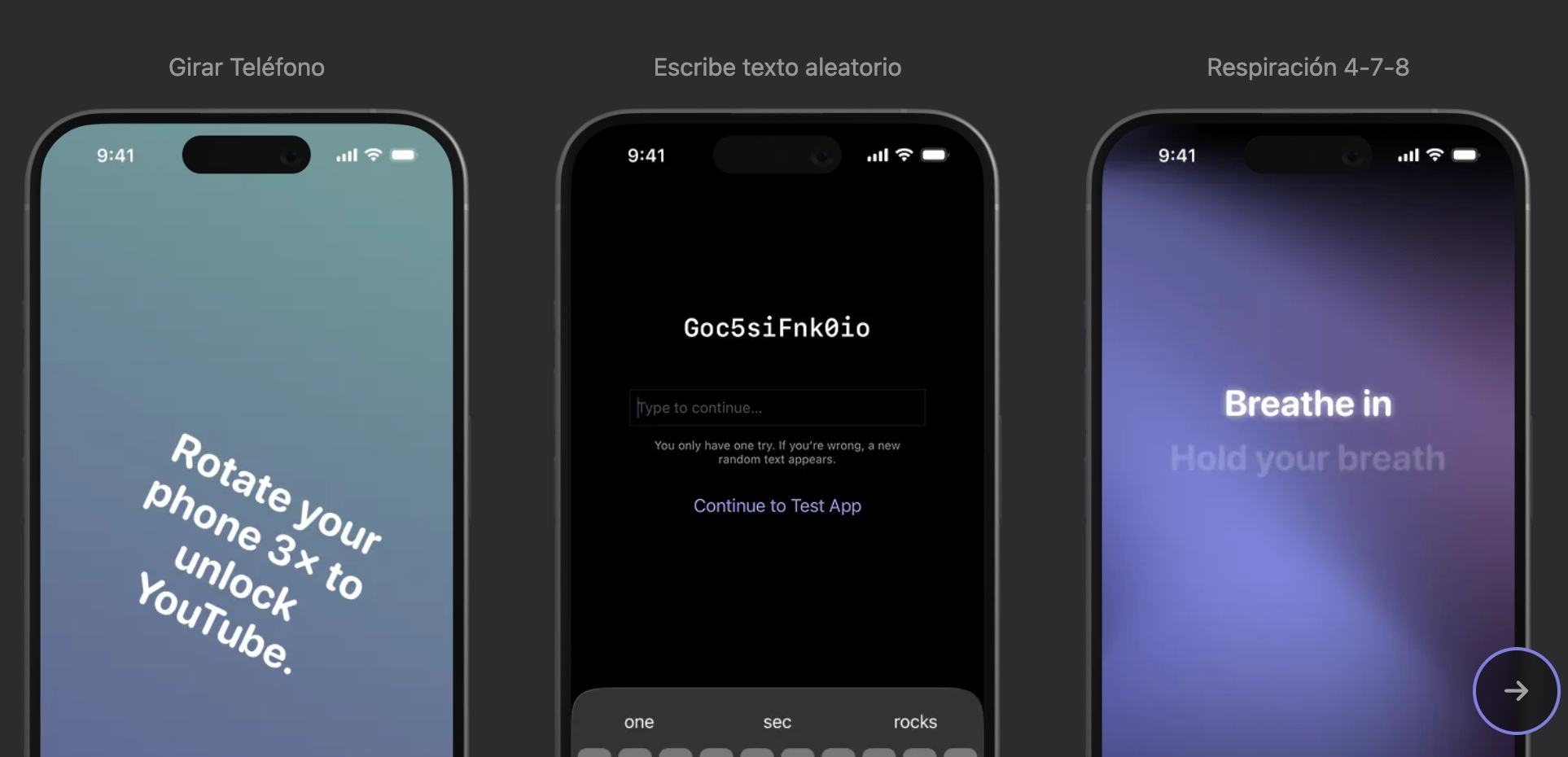
The proposal also has experimental support. The company reports an average reduction of 57% in application openings and refers, among other works, to research published in 2023 in the Proceedings of the National Academy of Sciences on the use of this type of intervention to modify smartphone habits. The objective is to break the automation that leads to applications. That extra second forces the user to decide if they really wanted to open Instagram or just did it reflexively.
The technology that confronts “brain rot”
This phenomenon is linked to the expansion of the concept brain rot. When Oxford chose it as Word of the Year in 2024, it defined it as the alleged mental or intellectual deterioration associated especially with excessive consumption of trivial or unstimulating online content.
Thus, the expression ended up encapsulating something broader than simple screen excess: a relationship with the Internet marked by ephemeral content, immediate gratification, repetition of codes and the difficulty of abandoning a flow designed to never end.
Paradoxically, the fight against brain rot It also ended up generating content. Videos on how to regain concentration, digital detox routines, reading, exercise or meditation recommendations and strategies to reduce screen time began to circulate precisely on the same platforms identified as the origin of the problem.
The applications that now link movement and screen time represent another step in that evolution, incorporating self-control into the operation of the device. And there is something paradoxical about using an application to get to use fewer applications, but that contradiction also explains why these types of tools are growing that try to give the user the conscious decision about when to enter and when to leave.
The battle against doomscrollingtherefore, is generating a curious technological category: applications whose success does not consist in making us spend more time in them, but in helping us spend less time in all the others.