“There are things that money can’t buy. For everything else, Mastercard”.
The idea that “Priceless” has supported since 1997 has accompanied Mastercard for almost three decades and has extended to territories such as sports, music or experiences. Now the company is reviewing one of the most recognizable communication assets in its history to focus on another type of aspiration: the dream of building one’s own business.
Mastercard has introduced “Dreams,” a new global marketing platform that focuses on small and medium-sized businesses and the people behind them. The campaign represents an evolution of the “Priceless” territory, although it does not imply its disappearance: the company itself continues to use “Priceless” in its new business proposal.
It’s one of the first big marketing developments pushed by Jill Kramer as new CMO
The move is one of the first major marketing developments pushed by Jill Kramer since she took over as Mastercard’s Chief Marketing and Communications Officer last December, after a decade at Accenture. The board took over from Raja Rajamannar, who led Marketing and Communication for 13 years.
As Kramer explained to Fast Companythe process has started precisely from questioning how “Priceless” could evolve while maintaining its legacy. The new interpretation transfers value from what can be bought to the effort involved in building a company. “What is really priceless is building the business of your dreams”he pointed out.
From “Priceless” to “Dreams”
“Priceless” was born in 1997 and its first campaign had a presence in the Super Bowl. Since then, Mastercard has developed the concept for almost three decades and has linked it to properties and collaborations with Major League Baseball, Formula 1 or the Grammys, until it achieved cultural notoriety that led the campaign to be parodied on shows like “Saturday Night Live” and series like “The Simpsons.”
“Dreams” now seeks to tell the trade from the other side of the transaction. Instead of focusing solely on what Mastercard allows consumers to do or enjoy, the company turns the camera on those who build the businesses in which that consumption takes place.
The first run focuses on two small Brooklyn businesses: The Meat Hook, a butcher shop, and Noble Signs, a studio specializing in the design and manufacturing of vintage-aesthetic signs. The campaign will be broadcast on linear and connected television, social networks, streaming audio and programmatic advertising.
The launch will also take place during the months prior to the New York Marathon, which takes place on the first Sunday in November. Mastercard will take advantage of major events like this to connect the platform with small businesses that face specific increases in demand.
The approach also responds to the desire to differentiate Mastercard’s communication within a category that, according to Kramer, tends to fall into a “sea of uniformity”with recurring messages around the purchase of a home, travel, retirement or access to certain experiences.
SMEs redefine what it means to grow
The creative platform comes accompanied by “Dreamonomics”, a new line of research with which Mastercard aims to analyze how the priorities of small and medium-sized companies are changing.
Its first report is based on a survey carried out by Hypothesis for Mastercard among more than 6,000 SMEs in 18 countries. The results point to a conception of growth less linked to speed and more related to the ability to control and sustain the business.
The “Dreamonomics” report will analyze the growth priorities of SMEs
68% of SMEs prioritize stability over growing quickly, while 54% say they actively avoid unnecessary financial risks. At the same time, 61% prefer to deepen relationships with their clients rather than reaching as many people as possible.
Digitalization appears as another priority. The companies consulted use an average of five digital tools, but 89% want to incorporate more and 78% consider it essential that these solutions are integrated.
Security also gains weight: 71% point to protection against digital threats as a priority, although only 37% currently use cybersecurity tools. For their part, 70% are interested in the possibilities of artificial intelligence, especially for fraud prevention and protection.
In Europe, furthermore, the study detects a relationship between business and personal well-being: 67% of SMEs prioritize work that also allows them to take care of health, relationships and personal life.
The data serves Mastercard to support the territory proposed by “Dreams”: small business owners continue to have growth ambitions, but these are increasingly being associated with stability, protection and management capacity.
Along with the campaign and the report, the company has presented Mastercard Collection for Business
“Small businesses provide the dream; Mastercard provides the infrastructure to help power it, protect it and make it work”says Mark Barnett, Global Director of Small and Medium Businesses at Mastercard.
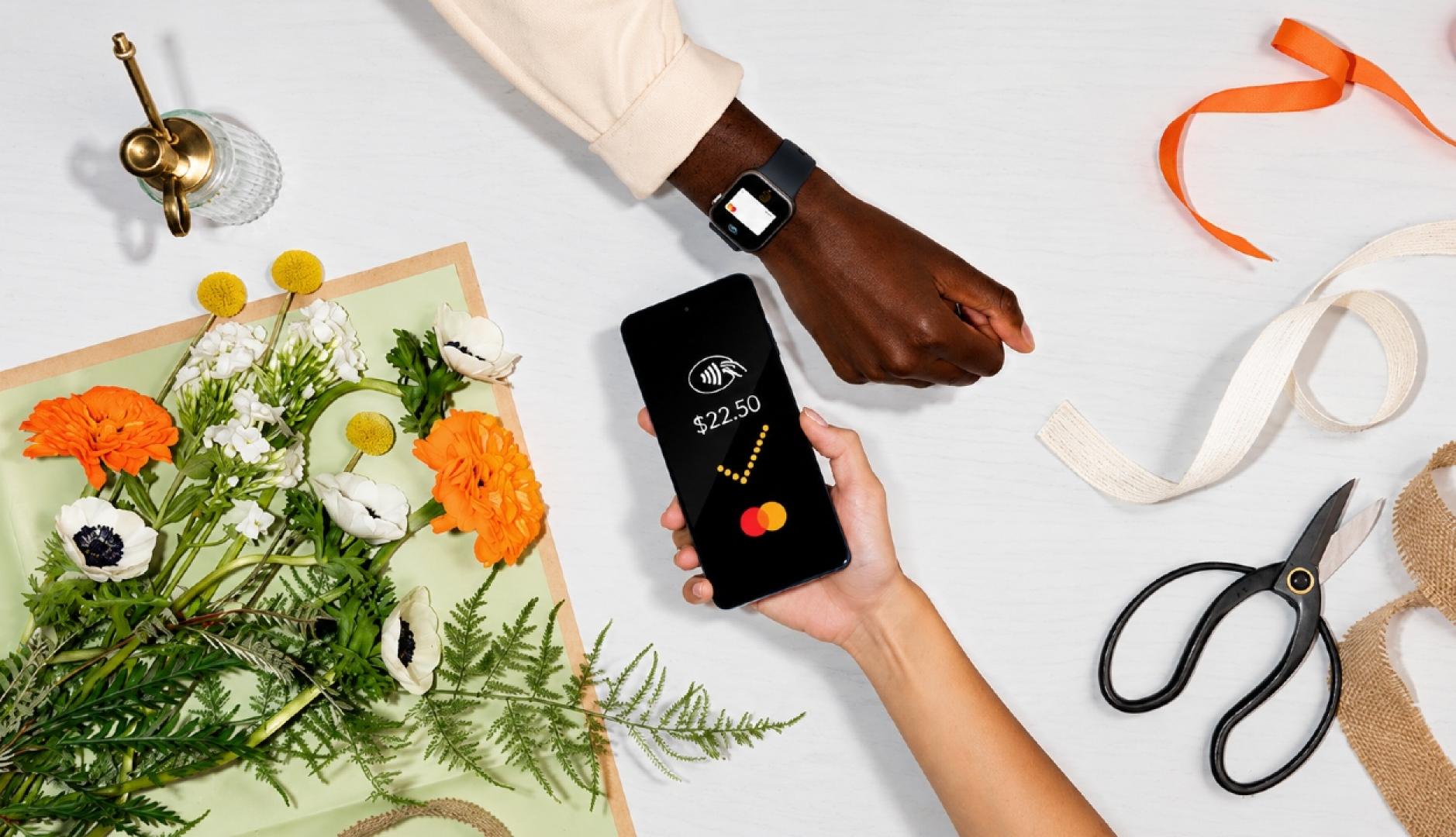
Along with the campaign and the report, the company has also presented Mastercard Collection for Business, a proposal that brings together productivity tools, experiences, benefits related to travel and restaurants and digital protection services for certain business card holders.
In this way, “Dreams” works as more than just a new campaign. Mastercard is building a territory around the concept that connects communication, research, products and experiences, and that reinterprets one of its historical assets without abandoning it. Almost three decades after asking what things are priceless, the brand now places a concrete answer at the center of its marketing: for millions of small business owners, one of them is to carry out the business they imagined.