“Pay little attention to communication. I would have dedicated more time”.
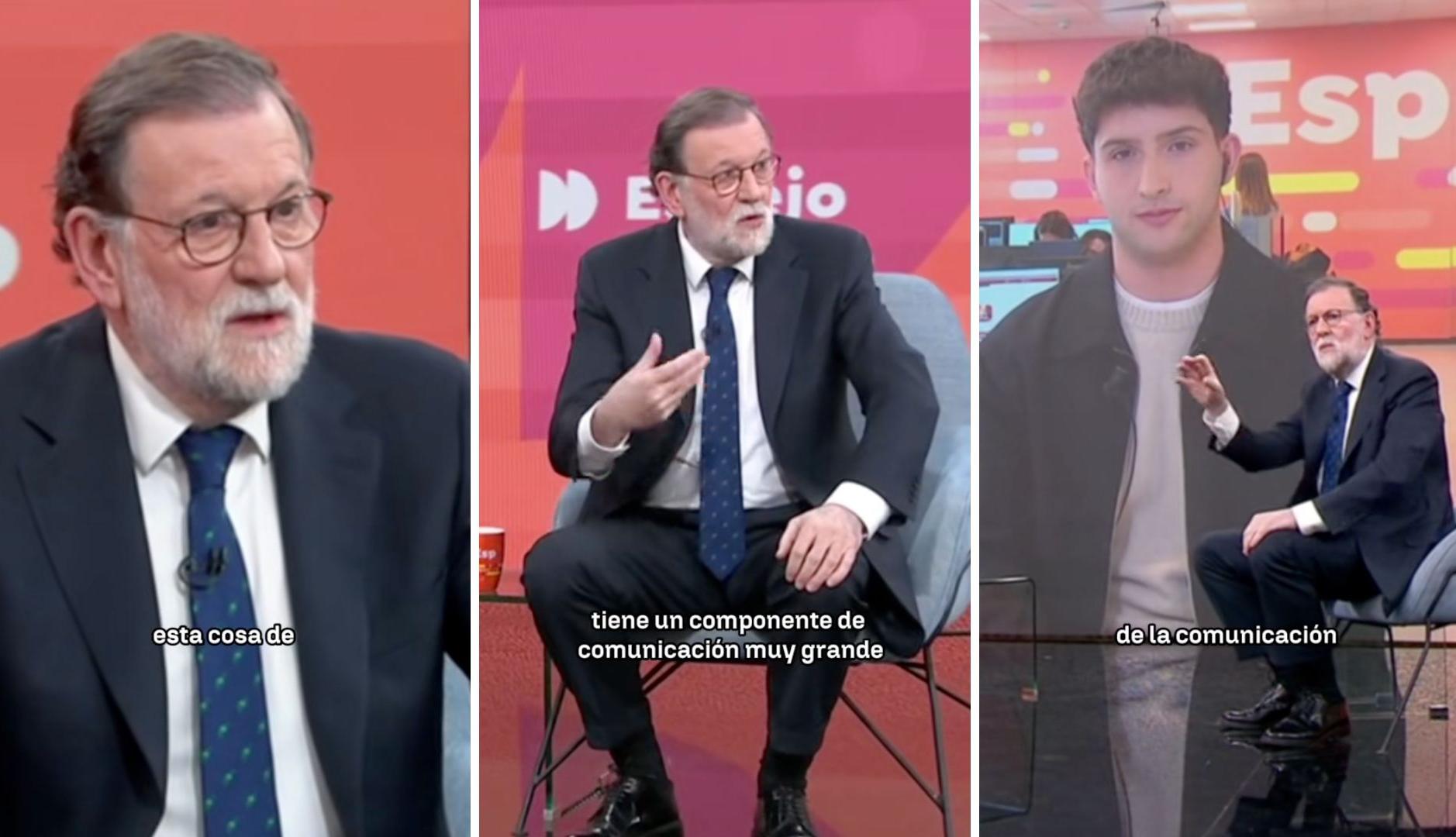
That has been the response of Mariano Rajoy, President of the Government of Spain between 2011 and 2018, to a question about a mistake that he would not make again if it premiered again at La Moncloa. And he has pointed to communication during an intervention in the program “Espejo Público”, hosted by Susana Griso and broadcast on Antena 3.
His presence in the space has been framed in the promotion of his new book, titled “The art of governing”, in which he collects his perspective on the exercise of power and his main learnings after four decades dedicated to politics and his experience as President of the Government and member of the Council of Ministers.
Among other things, Rajoy has analyzed the current political situation in our country and has reflected on the growing polarization or conflicts that Spanish society is going through. At the end of his intervention he responded to what the space calls “the intern’s question”which in this case has dealt with an error to avoid in the event that Rajoy returned to his previous position.
His response has been that in “the fundamentalreferring to the economic crisis, the succession process in the crown and the application of article 155, “I would have done exactly the same“However, he has highlighted communication as the point to which he would pay more attention. “Maybe I would take care of little about communication. I would have dedicated more time to it. I have never dedicated much time to the press and it is a mistake, because politics has a very large communication component.””.
Mariano Rajoy alludes to the “press” referring, in part, to traditional media such as television, on which he gave the interview. His words claim these channels as allies of politics, also extendable to other environments, to deliver their messages to the population and connect with citizens.
His position could be understood in light of some communication errors, lapses and gaffes committed during his mandate, some of which have even become part of the popular culture of our country. “We are feelings and we have human beings” either “Spain is a great nation and the Spaniards are very Spanish and very Spanish.”, are some of them.
It is possible that these mistakes and their media consequences undermined his confidence in his communication skills and distanced him from the media. It is worth remembering that Rajoy refused on more than one occasion to participate in electoral debates, such as those organized on November 30, 2015 by The Country and on December 7 of the same year by Atresmedia, sending in her place Soraya Sáenz de Santamaría, who was then Vice President of the Government.
However, part of the public opinion came to speculate about an intention behind these errors, pointing to a deliberate strategy aimed at generating visibility towards his figure. A segment of the population questioned the reality of the lapses and came to consider the phrases as part of the strategic construction of a media character.
The value of communication
The current media landscape is substantially different from that managed by Mariano Rajoy during his terms in office. Currently, communication is a critical pillar in political communication, as has been evident, for example, in the latest electoral processes in the United States. In them, social networks, new platforms and formats such as podcasts have been decisive in guiding the voting of different communities and groups.
An example of the value of communication in politics has been the electoral campaign deployed by Zohran Mamdani, recently elected mayor of New York. Its social media strategy has made video a key piece. In his publications, Mamdani has opted for humor, authenticity, the combination of languages and clear and simple messages.
The importance of the new channels has also been perceived by the current President of the Government, Pedro Sánchez, who last September inaugurated his official profile on TikTok. In it, it already brings together almost 243,000 followers, to whom it offers information about its daily agenda, messages of an institutional nature, or even more relaxed content, such as cultural recommendations. Some of these videos exceed 3 million views.
However, between the months of April and June Pedro Sánchez did not appear at a press conference, accumulating up to 40 days without doing so; and until the beginning of September he had not given an interview for a year, something that journalist Pepa Bueno reproached him for when he sat before her on Telediario 2. Despite this, the President claimed to have always been available and that he is “a pleasure to submit to journalists’ questions.”
Communication is also perceived as fundamental in the corporate environment. According to the report “State of Communication in Spain 2025”, prepared by Dircom considering the perception of more than 1,200 communication managers, 91% of those surveyed understand the communication function as important or very important for companies. The figure is 7.4 points above the figure obtained in 2017 and 10.6 points higher than in 2014. Furthermore, 51% of CEOs consider communication as “very important” for the future of their businesses.
An assessment that, making a simile with politics, could now be extrapolated to a political leader like Mariano Rajoy and the “company” that would mean taking charge of the management of the country again.