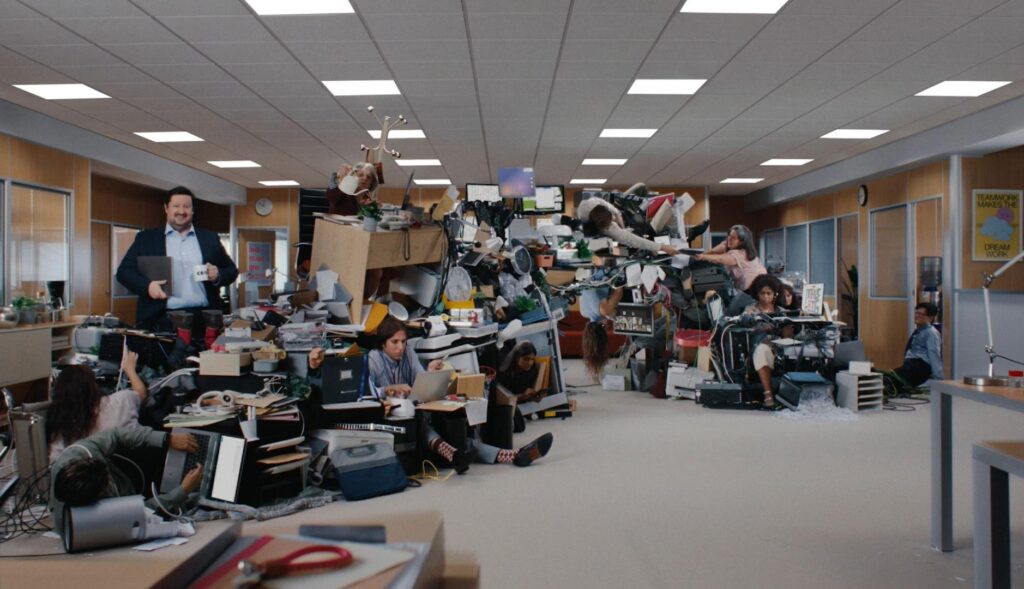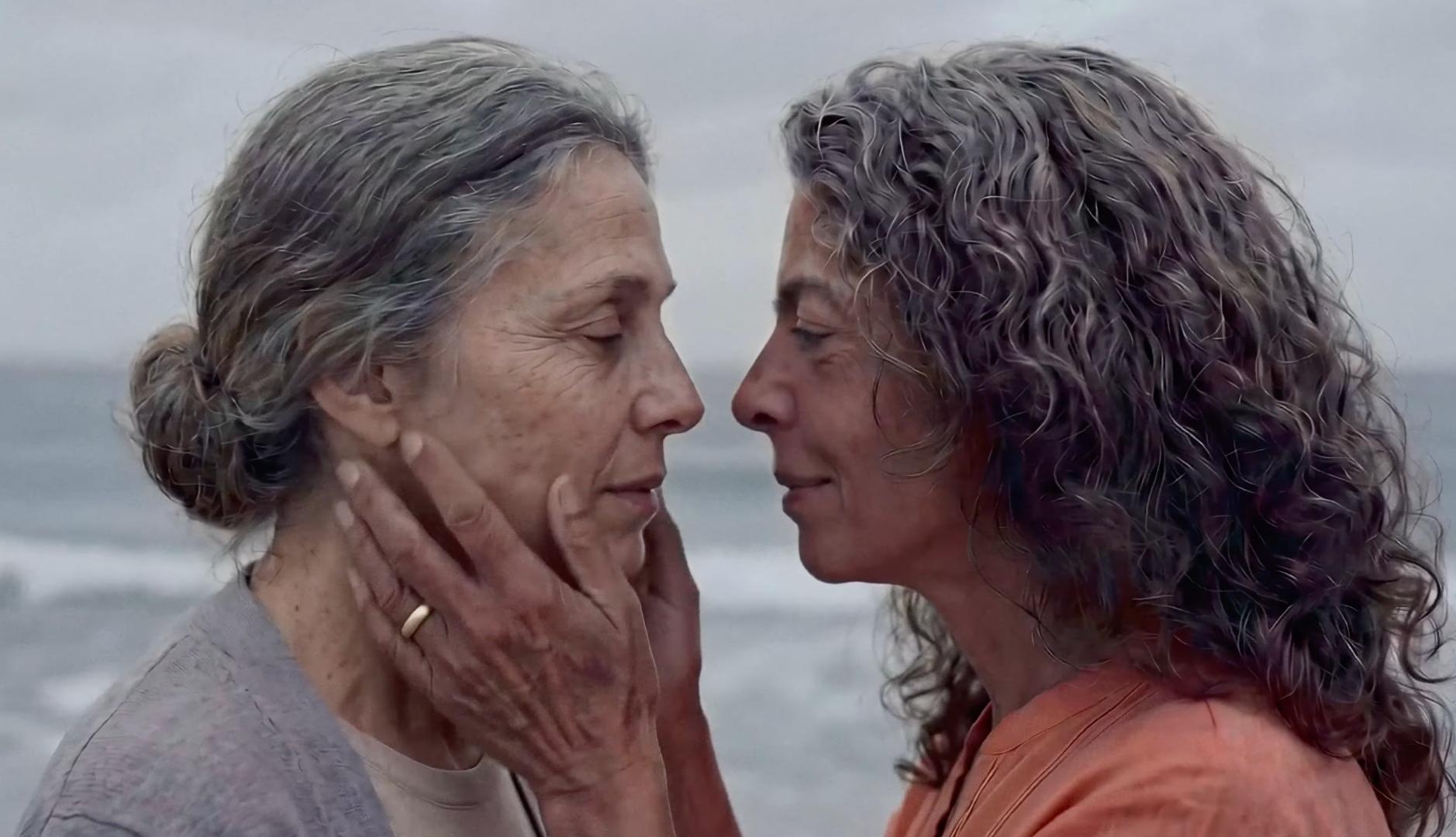
Three creatives who have worked for approximately ten days, without filming, actors or locations. That has been the process behind “Candela”, the new short film from Magnific -formerly Freepik-, the creative platform powered by artificial intelligence, which premiered at Cannes Lions 2026, demonstrating the new forms of content production and work models provided by new technologies.
“Candela” has been directed by the editor and graphic designer Myriam Mira and has been inspired by a personal memory linked to the San Juan festivities. To the rhythm of the song “No Lo Entido”, by Müxa, it tells a story in two planes of time that are connected by the love story of two women.
The three-minute piece, which could easily be a video clip, has been produced entirely with artificial intelligence and presents an intimate, emotional and recognizable story that moves away from the artificial narratives associated with this type of tools. It is produced by Carmen Callejón and Cristina Cortés, both parts of Magnific’s creative laboratory.
According to the company, the piece demonstrates the possibilities of new tools for brands, agencies, studios and independent professionals to produce content without losing control over any aspect of the creative process. Reinforce the idea by sharing by pointing out that “‘Candela’ is the result of someone who had never directed, with tools that did not exist two years ago, and which premieres at the most important advertising festival in the world”.
“I wanted the audience to forget that they were watching something generated by AI. The goal was not to create shocking images, but to tell a human story“; commented Myriam Mira, in a company statement. “‘Candela’ was born from an intimate and feminine perspective, and for me that was also important in a sector that was still very masculinized.”.
As Magnific points out, to make the short, 2,591 assets have been generated and 2.5 million credits have been consumed between Nano Banana 2 for images and Seedance 2.0 for video. In addition, the soundtrack was built from AI-generated material and was restructured and mastered by the creator herself. The company assures that in a traditional production context, the same piece would have required a complete team, physical locations, cast, costumes and post-production, with a significantly higher cost and longer production times.
In addition, Space has also been used, a functionality of the Magnific platform that allows you to organize plans, scenes and references in a single visual canvas. Mira assures that it has been a key piece in maintaining coherence in a production with thousands of generations, since, among other things, it has allowed her to see each shot within the set and maintain the global perspective.
For Magnific, “Candela” is an example of how new artificial intelligence tools break down traditional barriers associated with audiovisual production, such as budgets, team sizes or institutional access. “When execution is almost unlimited, creative teams are no longer limited by their budgets, but by the quality of their ideas.“said Joaquín Cuenca, CEO of Magnific, in the statement. “With greater speed of execution, lower cost and reduced teams, marketing departments have the power to produce films and develop campaigns that were previously completely unfeasible.”.
The company considers that works like the one it has presented at Cannes Lions confirm its positioning as a complete creative production platform, and not just as a content generation tool. Its capabilities have already been applied in campaigns by international brands such as Puma, Lenovo or Carl’s Jr., and set a new standard for marketing and advertising.
A new standard for marketing
Precisely this was reflected in the session “Creative Control: Premium AI Meets the Big Screen” held on Monday at Cannes Lions and which featured Glenn Wastyn, B2B Manager for EMEALA at Magnific; as well as with Billy Bohan Chinique, Vice President of Marketing and Digital Innovation at Virgin Voyages and Nik Kleverov, Creative Director of the Native Foreign studio. The latter are using Magnific tools in the cruise brand’s new marketing project.
Creatives argue that stories and human vision are still the most important thing
They all agreed that artificial intelligence has reminded the industry of the value of the basics of marketing and communication and maintain that stories and human vision and creativity continue to be the most important thing. They also consider that technology has a PR problem, since it is associated with low costs and time savings, when the reality is that projects really interested in providing relevance have multiple layers and require dedication.
“Premium artificial intelligence is focused on enhancing creativity, not on producing for the sake of producing. It is about giving control to creatives, facilitating their artistic expression with functionalities and tools that adapt to each individual process and, at the same time, also allow collaborative work.“explained Glenn Wastyn (Magnific).
He also points out that brands that are applying AI strategically “they do more, instead of less“.”AI allows you to create more, adapt messages to different markets, cultures and consumers“, he explains. “It is not about telling the same story for everyone in a cheaper way. It’s about telling more personalized stories that connect better to generate more impact.”.