Much of the creative work with artificial intelligence can begin already in a conversation with ChatGPT. There a briefing is developed, territories are explored, concepts or headlines are worked on and a visual direction is progressively defined. The problem appears when the time comes to produce: the team must move to other tools, reconstruct part of that context and repeat instructions to generate each piece, adaptation or format.
Magnific and OpenAI seek to reduce that gap by incorporating the creative platform’s tools directly into ChatGPT. The integration, announced jointly by both companies, allows Magnific to be used as an application from the chatbot and to continue the process of producing images, video and other assets from the conversation.
ChatGPT serves as an interface from which to direct work, while Magnific provides models, controls and flows
The connection has been developed on MCP (Model Context Protocol), an open standard that allows connecting external applications and tools with artificial intelligence systems. In practice, ChatGPT functions as a conversational interface from which to direct work, while Magnific provides the models, controls, assets and flows necessary to take it to production.
Magnific, which claims to have more than a million subscribers among creative professionals, studios, agencies and companies, proposes integration as a production layer around the ideas developed in the conversation.
From briefing in ChatGPT to the production of the pieces
One of the keys to integration is the possibility of preserving the context developed during a conversation. If a team has previously defined the objective of a campaign, its audience, the product, the references or the creative direction, they can call Magnific from that same space to begin producing the materials.
The process can start with the generation of an image and continue with successive instructions to modify the background, change the framing, increase the resolution or prepare versions in 1:1, 4:5 and 16:9 proportions. Once a result is approved, the same asset can be used as a starting point to generate a video.
The objective is to prevent each of these operations from behaving as an isolated generation that forces the project to be explained again. The briefing, references and feedback remain within the conversation, while the generated content remains linked to the Magnific account.
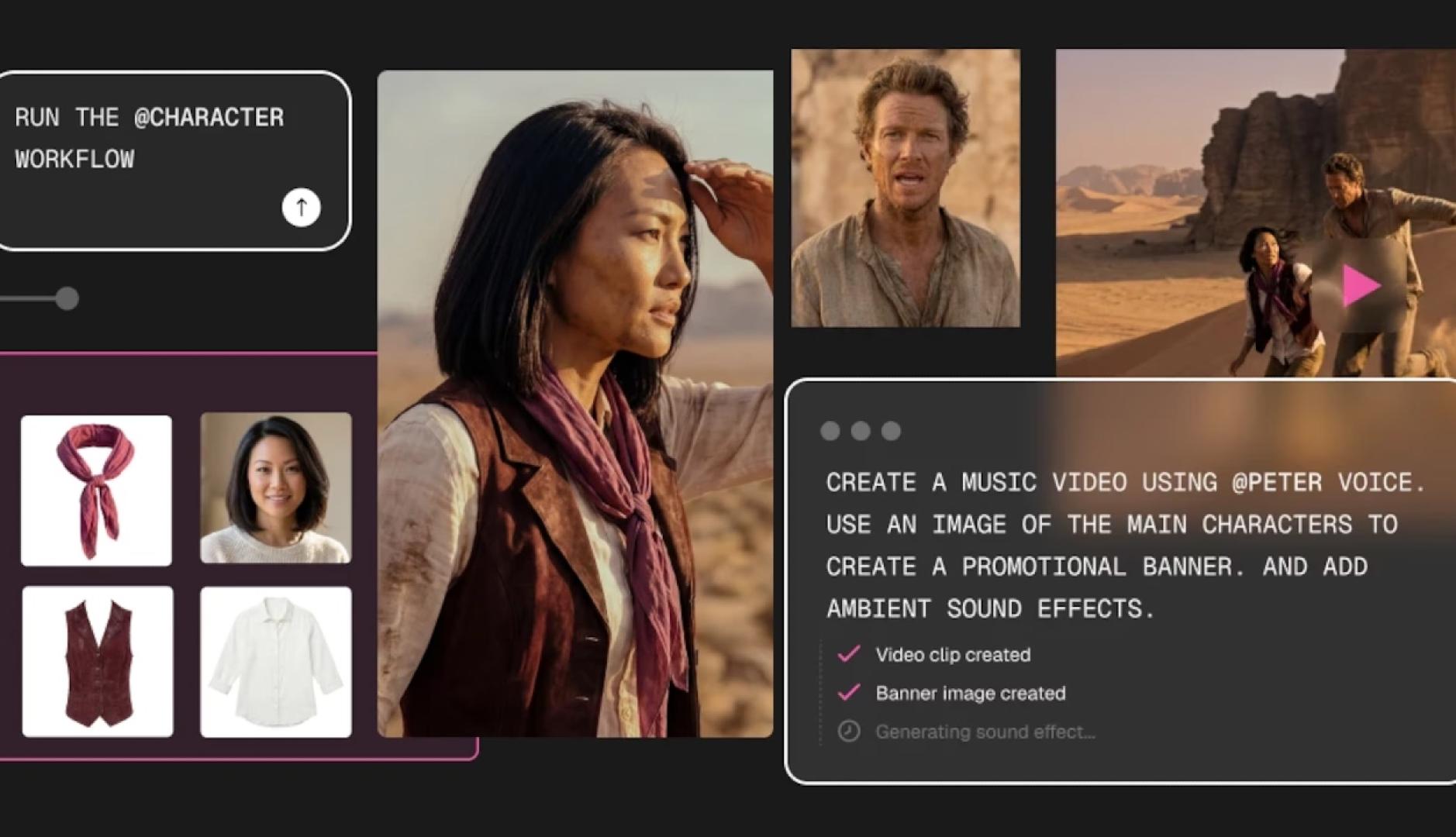
The integration also allows OpenAI image models, such as ChatGPT Images 2.0, to be used within the Magnific production environment. The underlying model remains from OpenAI, while Magnific adds tools to work with visual references, custom characters, proportions, editing and subsequent transformations. This allows, for example, to first establish the main image of a campaign, maintain the appearance of a product or character through references, develop variations and then use the approved result as the basis for a video.
Maintain consistency and reuse creative processes
The proposal becomes especially relevant in those jobs in which generating a good image is only the first step. A campaign may require that a product retain its exact appearance across numerous pieces, that a character maintain its identity between scenes, or that the same visual direction be adapted to dozens of media and markets.
The proposal becomes relevant in those jobs in which generating a good image is only the first step
To address this complexity, Magnific incorporates two of the elements of its platform into the conversation: Spaces and Flows.
Spaces function as visual environments in which source images, references, prompts, models and different transformations of a project can be gathered. A Space intended for the launch of a product could contain the main image, independent nodes for each format, a video piece based on the approved visual and even audio elements or voiceovers in different languages. From ChatGPT you can create or edit these Spaces through the Magnific connection. Afterwards, a designer can open them on the platform to intervene on a specific prompt, modify the model used or adjust a specific part of the process.
Flows, for their part, allow you to save a sequence that has worked and run it again with new materials. A team could create, for example, a flow for product launches that requests an image, a visual reference, the campaign message, and the necessary markets and formats. From there, the system can produce the main image, prepare adaptations, generate a video, and organize the results.
Magnific also approaches integration from a collaborative perspective. A strategist can develop the briefing within ChatGPT; a designer, then work on the resulting Space in Magnific; a creative director, select and approve the main image; and a production team, execute the agreed Flow to generate the different adaptations. The intention is that everyone works from the same process and that approved decisions can be preserved without necessarily imposing a rigid template for all projects.
At a logistical level, the generations and transformations carried out from ChatGPT use the credits associated with the Magnific account of the user or the team, and the assets produced remain available in the history, Projects and Spaces of the platform.
More info: Magnificent