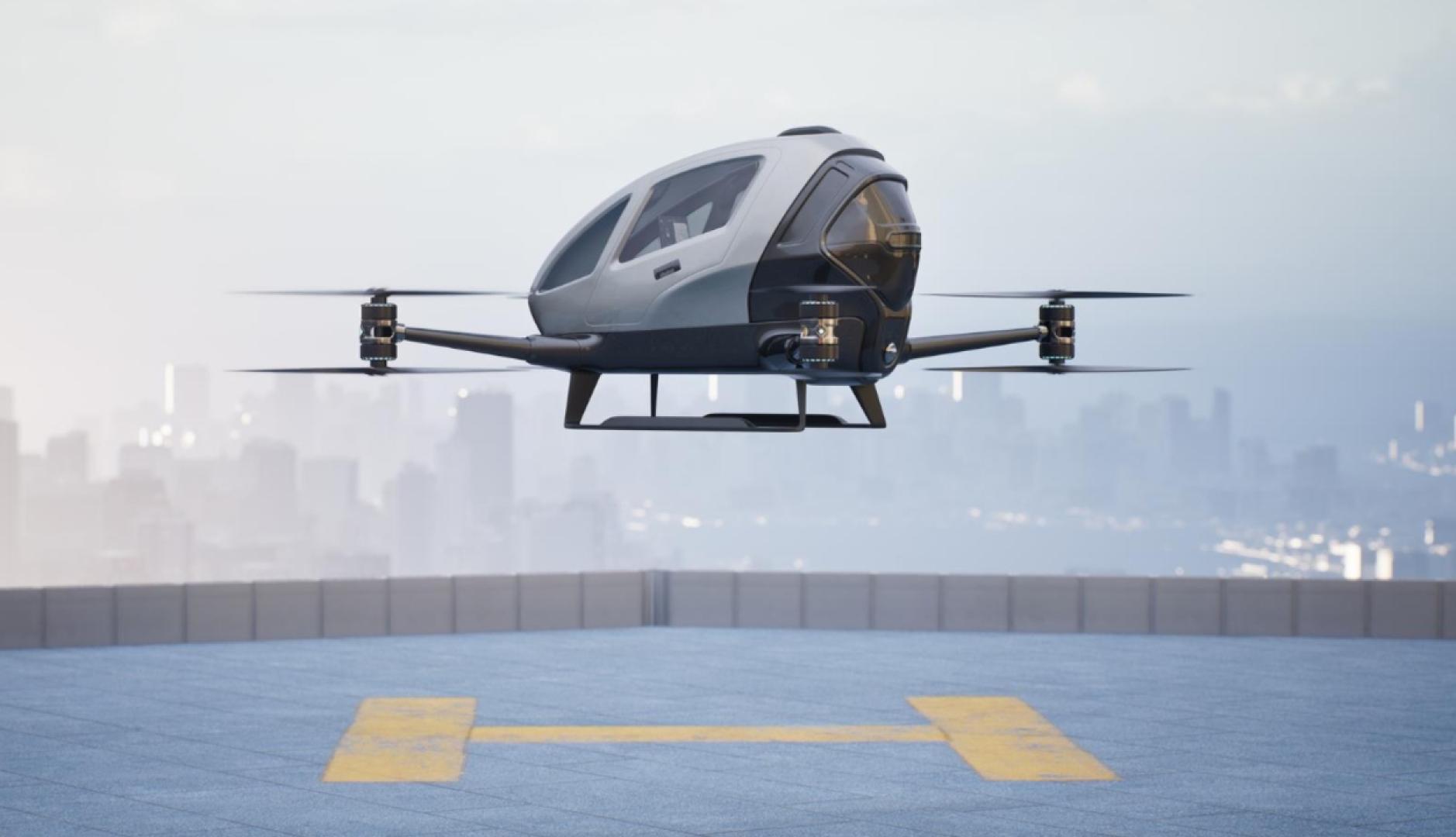
The “sky of Madrid” will soon cease to be just a poetic resource. This week the City Council presented the White Paper on Urban Air Mobility, a tool that seeks to position the Spanish capital as a European benchmark in the integration of urban air transport. The objective, according to Mayor José Luis Martínez-Almeida, is clear: “We want Madrid residents to be able to move around the city in unmanned ships in a decade.”
The measure is part of the ambitious transformation of mobility contemplated in the Madrid 360 strategy and was announced during the 1st Urban Air Mobility Forum held at the Palacio de Cibeles, where institutional representatives, experts and companies in the sector met. There, Almeida has described the book as a “fundamental milestone” and has announced that Madrid will have its own regulations on air mobility before 2028.
Three phases to conquer the third urban dimension
The document establishes a roadmap divided into three stages: between 2026 and 2028, the first governance structures will be created, procedures for the occupation of airspace by drones will be updated, and pilot projects will be launched under controlled test environments. The creation of vertiports, specific airports for drones located on rooftops or other strategic points in the city, is also planned.
Campaigns will be launched to promote social acceptance of the new transport model
During this initial phase, the Municipal Police Air Support Unit will be consolidated, environmental and urban security criteria will be established, and campaigns will be launched to promote social acceptance of the new transportation model. As the delegate of Urban Planning, Environment and Mobility, Borja Carabante, has pointed out, “The first thing is to establish regulations so that this system works safely.”
Between 2029 and 2031, the focus will shift to operational consolidation. It will be time to deploy U-space, an architecture of systems and procedures that will allow access to airspace by drones or autonomous aircraft to be managed safely and efficiently. The first supporting technological infrastructures will also be developed, such as specialized communication networks, weather stations or digital processing platforms.
And starting in 2032, Madrid is preparing for the maturity of the aerial ecosystem: eVTOLs (electric vertical take-off and landing aircraft, already manned) will be integrated, safe air corridors will be created and strategic infrastructure will be expanded to connect this new dimension with the rest of the city’s mobility system.
“Madrid is in a position to lead this revolution for three reasons: its institutional ecosystem, its powerful infrastructure and the strength of its aerospace sector”Carabante stressed. A vision that places the capital’s skyline as the next frontier of urban innovation.
The writing of the White Paper has been possible thanks to the work of the Urban Air Mobility Commission, created in 2023 and made up of nearly 80 members from all levels of the Administration, as well as universities, technology centers, companies and professionals in the sector. Its six groups specialized in regulations, operations, security, infrastructure, environment and citizenship, have crystallized into a comprehensive proposal that lays the foundations for intelligent mobility.
The uses that are already being explored in the city – such as the transfer of medicines between health centers, emergency management or the distribution of goods – anticipate a near future in which drones are a structural part of urban life. The new air circulation code will establish parameters such as maximum heights, permitted speeds or safe corridors. And, although it may sound futuristic, the mayor recalled that just two decades ago we could not imagine paying for the bus with our cell phone or reserving an electric bike from the couch.
In Almeida’s own words, “The future of mobility is also played in the sky.” And the challenge is no longer technological, because autonomous aerial vehicles exist, but rather regulatory, urban and cultural.